Wakefield Thermal 3.98" X 1.88" Flatback Heatsink - 17047 - 17047
"I looked at other machining equipment but chose Smithy because of the quality, size, and availability of tech support. It's compact yet it does the work of larger units. It's a lot of machine that takes up a little space and it will pay for itself in the long run."
Tungsten mill products, sheet, bar, and wire are all produced via powder metallurgy. These products are available in either commercially pure (undoped) tungsten or commercially doped (AKS-doped) tungsten. These additives improve the recrystallization and creep properties of tungsten, which are especially important when tungsten is used for incandescent lamp filaments. Wrought P/M stock can be zone refined by EB melting to produce single crystals that are higher in purity than the commercially pure product. Electron beam zone-melted tungsten single crystals are of commercial interest for applications requiring single crystals with very high electrical resistance ratios. Tungsten Heavy-Metal Alloys (WHAs). These are a category of tungsten-base materials that typically contain 90 to 98 wt% W. Most commercial WHAs are two-phase structures, the principal phase being nearly pure tungsten in association with a binder phase containing the transition metals plus dissolved tungsten. As a consequence, WHAs derive their fundamental properties from those of the principal tungsten phase, which provides for both high density and high elastic stiffness. It is these two properties that give rise to must applications for this family of materials. The current uses of WHAs are spanning a wide range of consumer, industrial, and government applications that include: Damping weights for computer disk drive heads Balancing weights for ailerons in commercial aircraft, helicopter rotors, and for guided missiles Kinetic energy penetrators for defeating heavy armor Fragmentation warheads Radiation shielding, radio isotope containers, and collimalion apertures for cancer therapy devices High performance lead-free shot for waterfowl hunting Gyroscope components Weight distribution adjustment in sailboats and race cars. Many applications that require high gravimetric density for balance weights, inertial masses, or kinetic energy penetrators or high radiographic density for radiation shielding and collimaiion necessitate rather large bulk shapes. Such a requirement eliminates all but a few candidates on the basis of prohibitive cost, typically reducing the choice of very dense alloys down to either tungsten- or uranium-base materials. Uranium alloys, like lead, are eliminated from an increasing number of potential applications based on toxicity considerations, with uranium-base materials requiring a license except for very small quantities. While the precious metals listed possess attractive densities and offer essentially no toxicity, their cost is prohibitive for all but a few density applications. WHAs typically consist of 90 to 98 wt% W in combination with some mix of nickel, iron, copper, and/or cobalt. The bulk of WHA production falls into the 90 to 95% W range. The choice of alloy composition is driven by several considerations. The primary factor is the density required by the given application. Further considerations include corrosion resistance, magnetic character, mechanical properties, and postsinter heat treatment options. The first WHA developed was a W-Ni-Cu alloy. Alloys of this ternary system are still occasionally used today, primarily for applications in which ferromagnetic character and electrical properties must be minimized. W-Ni-Cu alloys otherwise offer inferior corrosion resistance and lower mechanical properties than the present industry standard W-Ni-Fe alloys. The majority of current uses for WHAs are best satisfied with the W-Ni-Fe system. Alloys such as 93W-4.9Ni-2.lFe and 95W-4Ni-lFe represent common compositions. The addition of cobalt to a W-Ni-Fe alloy is a common approach for slight enhancement of both strength and ductility. The presence of cobalt within the alloy provides solid-solution strengthening of the binder and slightly enhanced tungsten-matrix interfacial strength. Cobalt additions of 5 to 15% of the nominal binder weight fraction arc most common. For extremely demanding applications, even higher mechanical properties are obtainable from the W-Ni-Co system with nickel-to-cobalt ratios ranging from 2 to 9. Such alloys require resolution/quench, however, due to extensive intermetallic (Co3W and others) formation on cool down from sintering. A number of special WHAs are known as well. An example is the W-Mo-Ni-Fe quaternary alloy, which utilizes molybdenum to restrict tungsten dissolution and spheroid growth, resulting in higher strengths (but reduced ductility) in the as-sintered slate. There are also a number of alloy systems in various stages of development for kinetic energy penetrators that are intended to provide a WHA that will undergo high deformation rate failure by shear localization in a manner similar to quenched and aged U-0.75Ti for more efficient armor defeat. These alloys to date have not exhibited a property set of interest for industrial applications, however. Mechanical and Physical Properties. Tungsten has high tensile strength and good creep resistance. However, its high density, poor low-temperature ductility, and strong reactivity in air limit its usefulness. Maximum service temperatures for tungsten range from 1925 to 2500°C (3500 to 4500°F), but surface protection is required for use in air at these temperatures. Wrought tungsten (as-cold worked) has high strength, strongly directional mechanical properties, and some room-temperature toughness. However, recrystallization occurs rapidly above 1370°C (2500°F) and produces a grain structure that is crack sensitive at all temperatures.
For a machine tool to be truly great it must have attention paid to every step of its development - design, production, quality control, testing, and after sales support. No other bench top lathe on the market, at this price, has the same level of quality commitment at every step as these MIDAS mills.
The current uses of WHAs are spanning a wide range of consumer, industrial, and government applications that include: Damping weights for computer disk drive heads Balancing weights for ailerons in commercial aircraft, helicopter rotors, and for guided missiles Kinetic energy penetrators for defeating heavy armor Fragmentation warheads Radiation shielding, radio isotope containers, and collimalion apertures for cancer therapy devices High performance lead-free shot for waterfowl hunting Gyroscope components Weight distribution adjustment in sailboats and race cars. Many applications that require high gravimetric density for balance weights, inertial masses, or kinetic energy penetrators or high radiographic density for radiation shielding and collimaiion necessitate rather large bulk shapes. Such a requirement eliminates all but a few candidates on the basis of prohibitive cost, typically reducing the choice of very dense alloys down to either tungsten- or uranium-base materials. Uranium alloys, like lead, are eliminated from an increasing number of potential applications based on toxicity considerations, with uranium-base materials requiring a license except for very small quantities. While the precious metals listed possess attractive densities and offer essentially no toxicity, their cost is prohibitive for all but a few density applications. WHAs typically consist of 90 to 98 wt% W in combination with some mix of nickel, iron, copper, and/or cobalt. The bulk of WHA production falls into the 90 to 95% W range. The choice of alloy composition is driven by several considerations. The primary factor is the density required by the given application. Further considerations include corrosion resistance, magnetic character, mechanical properties, and postsinter heat treatment options. The first WHA developed was a W-Ni-Cu alloy. Alloys of this ternary system are still occasionally used today, primarily for applications in which ferromagnetic character and electrical properties must be minimized. W-Ni-Cu alloys otherwise offer inferior corrosion resistance and lower mechanical properties than the present industry standard W-Ni-Fe alloys. The majority of current uses for WHAs are best satisfied with the W-Ni-Fe system. Alloys such as 93W-4.9Ni-2.lFe and 95W-4Ni-lFe represent common compositions. The addition of cobalt to a W-Ni-Fe alloy is a common approach for slight enhancement of both strength and ductility. The presence of cobalt within the alloy provides solid-solution strengthening of the binder and slightly enhanced tungsten-matrix interfacial strength. Cobalt additions of 5 to 15% of the nominal binder weight fraction arc most common. For extremely demanding applications, even higher mechanical properties are obtainable from the W-Ni-Co system with nickel-to-cobalt ratios ranging from 2 to 9. Such alloys require resolution/quench, however, due to extensive intermetallic (Co3W and others) formation on cool down from sintering. A number of special WHAs are known as well. An example is the W-Mo-Ni-Fe quaternary alloy, which utilizes molybdenum to restrict tungsten dissolution and spheroid growth, resulting in higher strengths (but reduced ductility) in the as-sintered slate. There are also a number of alloy systems in various stages of development for kinetic energy penetrators that are intended to provide a WHA that will undergo high deformation rate failure by shear localization in a manner similar to quenched and aged U-0.75Ti for more efficient armor defeat. These alloys to date have not exhibited a property set of interest for industrial applications, however. Mechanical and Physical Properties. Tungsten has high tensile strength and good creep resistance. However, its high density, poor low-temperature ductility, and strong reactivity in air limit its usefulness. Maximum service temperatures for tungsten range from 1925 to 2500°C (3500 to 4500°F), but surface protection is required for use in air at these temperatures. Wrought tungsten (as-cold worked) has high strength, strongly directional mechanical properties, and some room-temperature toughness. However, recrystallization occurs rapidly above 1370°C (2500°F) and produces a grain structure that is crack sensitive at all temperatures.
Tungsten carbidestructure
The choice of alloy composition is driven by several considerations. The primary factor is the density required by the given application. Further considerations include corrosion resistance, magnetic character, mechanical properties, and postsinter heat treatment options. The first WHA developed was a W-Ni-Cu alloy. Alloys of this ternary system are still occasionally used today, primarily for applications in which ferromagnetic character and electrical properties must be minimized. W-Ni-Cu alloys otherwise offer inferior corrosion resistance and lower mechanical properties than the present industry standard W-Ni-Fe alloys. The majority of current uses for WHAs are best satisfied with the W-Ni-Fe system. Alloys such as 93W-4.9Ni-2.lFe and 95W-4Ni-lFe represent common compositions. The addition of cobalt to a W-Ni-Fe alloy is a common approach for slight enhancement of both strength and ductility. The presence of cobalt within the alloy provides solid-solution strengthening of the binder and slightly enhanced tungsten-matrix interfacial strength. Cobalt additions of 5 to 15% of the nominal binder weight fraction arc most common. For extremely demanding applications, even higher mechanical properties are obtainable from the W-Ni-Co system with nickel-to-cobalt ratios ranging from 2 to 9. Such alloys require resolution/quench, however, due to extensive intermetallic (Co3W and others) formation on cool down from sintering. A number of special WHAs are known as well. An example is the W-Mo-Ni-Fe quaternary alloy, which utilizes molybdenum to restrict tungsten dissolution and spheroid growth, resulting in higher strengths (but reduced ductility) in the as-sintered slate. There are also a number of alloy systems in various stages of development for kinetic energy penetrators that are intended to provide a WHA that will undergo high deformation rate failure by shear localization in a manner similar to quenched and aged U-0.75Ti for more efficient armor defeat. These alloys to date have not exhibited a property set of interest for industrial applications, however. Mechanical and Physical Properties. Tungsten has high tensile strength and good creep resistance. However, its high density, poor low-temperature ductility, and strong reactivity in air limit its usefulness. Maximum service temperatures for tungsten range from 1925 to 2500°C (3500 to 4500°F), but surface protection is required for use in air at these temperatures. Wrought tungsten (as-cold worked) has high strength, strongly directional mechanical properties, and some room-temperature toughness. However, recrystallization occurs rapidly above 1370°C (2500°F) and produces a grain structure that is crack sensitive at all temperatures.
There are a wide variety of workholding tools that can be used to hold a work piece for milling or drilling operations. This video reviews the different concepts and practices in workholding for mill/drill operations. This video also offers some suggestions on workholding accessories to help you get started.
Yes, the MI-1440 lathe matches well with the MI-409MZ milling machine - a machine shop combo that was built to last. Many customers buy this combination.
4) Gear Drive Mill Quill with Auto-Feed: Smooth milling feed with auto adjustment for depth of cut. Provides rapid, accurate milling, as well as capabilities for tapping and boring. Allows for tapping of blind holes and boring to chosen depth.
The first WHA developed was a W-Ni-Cu alloy. Alloys of this ternary system are still occasionally used today, primarily for applications in which ferromagnetic character and electrical properties must be minimized. W-Ni-Cu alloys otherwise offer inferior corrosion resistance and lower mechanical properties than the present industry standard W-Ni-Fe alloys. The majority of current uses for WHAs are best satisfied with the W-Ni-Fe system. Alloys such as 93W-4.9Ni-2.lFe and 95W-4Ni-lFe represent common compositions. The addition of cobalt to a W-Ni-Fe alloy is a common approach for slight enhancement of both strength and ductility. The presence of cobalt within the alloy provides solid-solution strengthening of the binder and slightly enhanced tungsten-matrix interfacial strength. Cobalt additions of 5 to 15% of the nominal binder weight fraction arc most common. For extremely demanding applications, even higher mechanical properties are obtainable from the W-Ni-Co system with nickel-to-cobalt ratios ranging from 2 to 9. Such alloys require resolution/quench, however, due to extensive intermetallic (Co3W and others) formation on cool down from sintering. A number of special WHAs are known as well. An example is the W-Mo-Ni-Fe quaternary alloy, which utilizes molybdenum to restrict tungsten dissolution and spheroid growth, resulting in higher strengths (but reduced ductility) in the as-sintered slate. There are also a number of alloy systems in various stages of development for kinetic energy penetrators that are intended to provide a WHA that will undergo high deformation rate failure by shear localization in a manner similar to quenched and aged U-0.75Ti for more efficient armor defeat. These alloys to date have not exhibited a property set of interest for industrial applications, however. Mechanical and Physical Properties. Tungsten has high tensile strength and good creep resistance. However, its high density, poor low-temperature ductility, and strong reactivity in air limit its usefulness. Maximum service temperatures for tungsten range from 1925 to 2500°C (3500 to 4500°F), but surface protection is required for use in air at these temperatures. Wrought tungsten (as-cold worked) has high strength, strongly directional mechanical properties, and some room-temperature toughness. However, recrystallization occurs rapidly above 1370°C (2500°F) and produces a grain structure that is crack sensitive at all temperatures.
Wrought tungsten (as-cold worked) has high strength, strongly directional mechanical properties, and some room-temperature toughness. However, recrystallization occurs rapidly above 1370°C (2500°F) and produces a grain structure that is crack sensitive at all temperatures.
The third group of materials consists of AKS-doped tungsten (that is, tungsten doped with aluminum-potassium-silicon), doped tungsten alloyed with rhenium, and undoped tungsten alloyed with more than 1% ThO2. These materials are characterized by higher recrystallization temperatures (>1800°C, or 3270°F) and unique recrystallized grain structures. The structure of heavily drawn wire or rolled sheet consists of very long interlocking grains. This structure is most readily found in AKS-doped tungsten or in doped tungsten alloyed with 1 to 5% Re. The potassium dopant is spread out in the direction of rolling or drawing; when heated, it volatilizes into a linear array of submicron-size bubbles. These bubbles pin grain boundaries in the manner of a dispersion of second-phase particles. As the rows of bubbles become finer and longer with increasing deformation, the recrystailization temperature rises, and the interlocking structure becomes more pronounced. Tungsten Alloys. Three tungsten alloys are produced commercially: tungsten-ThO2, tungsten-molybdenum, and tungsten-rhenium. The W-ThO2, alloy contains a dispersed second phase of 1 to 2% thorium. The thorium dispersion enhances thermionic electron emission, which in turn improves the starting characteristics of gas tungsten arc welding electrodes. It also increases the efficiency of electron discharge tubes and imparts creep strength to wire at temperatures above one-half the absolute melting point of tungsten. Tungsten mill products, sheet, bar, and wire are all produced via powder metallurgy. These products are available in either commercially pure (undoped) tungsten or commercially doped (AKS-doped) tungsten. These additives improve the recrystallization and creep properties of tungsten, which are especially important when tungsten is used for incandescent lamp filaments. Wrought P/M stock can be zone refined by EB melting to produce single crystals that are higher in purity than the commercially pure product. Electron beam zone-melted tungsten single crystals are of commercial interest for applications requiring single crystals with very high electrical resistance ratios. Tungsten Heavy-Metal Alloys (WHAs). These are a category of tungsten-base materials that typically contain 90 to 98 wt% W. Most commercial WHAs are two-phase structures, the principal phase being nearly pure tungsten in association with a binder phase containing the transition metals plus dissolved tungsten. As a consequence, WHAs derive their fundamental properties from those of the principal tungsten phase, which provides for both high density and high elastic stiffness. It is these two properties that give rise to must applications for this family of materials. The current uses of WHAs are spanning a wide range of consumer, industrial, and government applications that include: Damping weights for computer disk drive heads Balancing weights for ailerons in commercial aircraft, helicopter rotors, and for guided missiles Kinetic energy penetrators for defeating heavy armor Fragmentation warheads Radiation shielding, radio isotope containers, and collimalion apertures for cancer therapy devices High performance lead-free shot for waterfowl hunting Gyroscope components Weight distribution adjustment in sailboats and race cars. Many applications that require high gravimetric density for balance weights, inertial masses, or kinetic energy penetrators or high radiographic density for radiation shielding and collimaiion necessitate rather large bulk shapes. Such a requirement eliminates all but a few candidates on the basis of prohibitive cost, typically reducing the choice of very dense alloys down to either tungsten- or uranium-base materials. Uranium alloys, like lead, are eliminated from an increasing number of potential applications based on toxicity considerations, with uranium-base materials requiring a license except for very small quantities. While the precious metals listed possess attractive densities and offer essentially no toxicity, their cost is prohibitive for all but a few density applications. WHAs typically consist of 90 to 98 wt% W in combination with some mix of nickel, iron, copper, and/or cobalt. The bulk of WHA production falls into the 90 to 95% W range. The choice of alloy composition is driven by several considerations. The primary factor is the density required by the given application. Further considerations include corrosion resistance, magnetic character, mechanical properties, and postsinter heat treatment options. The first WHA developed was a W-Ni-Cu alloy. Alloys of this ternary system are still occasionally used today, primarily for applications in which ferromagnetic character and electrical properties must be minimized. W-Ni-Cu alloys otherwise offer inferior corrosion resistance and lower mechanical properties than the present industry standard W-Ni-Fe alloys. The majority of current uses for WHAs are best satisfied with the W-Ni-Fe system. Alloys such as 93W-4.9Ni-2.lFe and 95W-4Ni-lFe represent common compositions. The addition of cobalt to a W-Ni-Fe alloy is a common approach for slight enhancement of both strength and ductility. The presence of cobalt within the alloy provides solid-solution strengthening of the binder and slightly enhanced tungsten-matrix interfacial strength. Cobalt additions of 5 to 15% of the nominal binder weight fraction arc most common. For extremely demanding applications, even higher mechanical properties are obtainable from the W-Ni-Co system with nickel-to-cobalt ratios ranging from 2 to 9. Such alloys require resolution/quench, however, due to extensive intermetallic (Co3W and others) formation on cool down from sintering. A number of special WHAs are known as well. An example is the W-Mo-Ni-Fe quaternary alloy, which utilizes molybdenum to restrict tungsten dissolution and spheroid growth, resulting in higher strengths (but reduced ductility) in the as-sintered slate. There are also a number of alloy systems in various stages of development for kinetic energy penetrators that are intended to provide a WHA that will undergo high deformation rate failure by shear localization in a manner similar to quenched and aged U-0.75Ti for more efficient armor defeat. These alloys to date have not exhibited a property set of interest for industrial applications, however. Mechanical and Physical Properties. Tungsten has high tensile strength and good creep resistance. However, its high density, poor low-temperature ductility, and strong reactivity in air limit its usefulness. Maximum service temperatures for tungsten range from 1925 to 2500°C (3500 to 4500°F), but surface protection is required for use in air at these temperatures. Wrought tungsten (as-cold worked) has high strength, strongly directional mechanical properties, and some room-temperature toughness. However, recrystallization occurs rapidly above 1370°C (2500°F) and produces a grain structure that is crack sensitive at all temperatures.
This structure is most readily found in AKS-doped tungsten or in doped tungsten alloyed with 1 to 5% Re. The potassium dopant is spread out in the direction of rolling or drawing; when heated, it volatilizes into a linear array of submicron-size bubbles. These bubbles pin grain boundaries in the manner of a dispersion of second-phase particles. As the rows of bubbles become finer and longer with increasing deformation, the recrystailization temperature rises, and the interlocking structure becomes more pronounced. Tungsten Alloys. Three tungsten alloys are produced commercially: tungsten-ThO2, tungsten-molybdenum, and tungsten-rhenium. The W-ThO2, alloy contains a dispersed second phase of 1 to 2% thorium. The thorium dispersion enhances thermionic electron emission, which in turn improves the starting characteristics of gas tungsten arc welding electrodes. It also increases the efficiency of electron discharge tubes and imparts creep strength to wire at temperatures above one-half the absolute melting point of tungsten. Tungsten mill products, sheet, bar, and wire are all produced via powder metallurgy. These products are available in either commercially pure (undoped) tungsten or commercially doped (AKS-doped) tungsten. These additives improve the recrystallization and creep properties of tungsten, which are especially important when tungsten is used for incandescent lamp filaments. Wrought P/M stock can be zone refined by EB melting to produce single crystals that are higher in purity than the commercially pure product. Electron beam zone-melted tungsten single crystals are of commercial interest for applications requiring single crystals with very high electrical resistance ratios. Tungsten Heavy-Metal Alloys (WHAs). These are a category of tungsten-base materials that typically contain 90 to 98 wt% W. Most commercial WHAs are two-phase structures, the principal phase being nearly pure tungsten in association with a binder phase containing the transition metals plus dissolved tungsten. As a consequence, WHAs derive their fundamental properties from those of the principal tungsten phase, which provides for both high density and high elastic stiffness. It is these two properties that give rise to must applications for this family of materials. The current uses of WHAs are spanning a wide range of consumer, industrial, and government applications that include: Damping weights for computer disk drive heads Balancing weights for ailerons in commercial aircraft, helicopter rotors, and for guided missiles Kinetic energy penetrators for defeating heavy armor Fragmentation warheads Radiation shielding, radio isotope containers, and collimalion apertures for cancer therapy devices High performance lead-free shot for waterfowl hunting Gyroscope components Weight distribution adjustment in sailboats and race cars. Many applications that require high gravimetric density for balance weights, inertial masses, or kinetic energy penetrators or high radiographic density for radiation shielding and collimaiion necessitate rather large bulk shapes. Such a requirement eliminates all but a few candidates on the basis of prohibitive cost, typically reducing the choice of very dense alloys down to either tungsten- or uranium-base materials. Uranium alloys, like lead, are eliminated from an increasing number of potential applications based on toxicity considerations, with uranium-base materials requiring a license except for very small quantities. While the precious metals listed possess attractive densities and offer essentially no toxicity, their cost is prohibitive for all but a few density applications. WHAs typically consist of 90 to 98 wt% W in combination with some mix of nickel, iron, copper, and/or cobalt. The bulk of WHA production falls into the 90 to 95% W range. The choice of alloy composition is driven by several considerations. The primary factor is the density required by the given application. Further considerations include corrosion resistance, magnetic character, mechanical properties, and postsinter heat treatment options. The first WHA developed was a W-Ni-Cu alloy. Alloys of this ternary system are still occasionally used today, primarily for applications in which ferromagnetic character and electrical properties must be minimized. W-Ni-Cu alloys otherwise offer inferior corrosion resistance and lower mechanical properties than the present industry standard W-Ni-Fe alloys. The majority of current uses for WHAs are best satisfied with the W-Ni-Fe system. Alloys such as 93W-4.9Ni-2.lFe and 95W-4Ni-lFe represent common compositions. The addition of cobalt to a W-Ni-Fe alloy is a common approach for slight enhancement of both strength and ductility. The presence of cobalt within the alloy provides solid-solution strengthening of the binder and slightly enhanced tungsten-matrix interfacial strength. Cobalt additions of 5 to 15% of the nominal binder weight fraction arc most common. For extremely demanding applications, even higher mechanical properties are obtainable from the W-Ni-Co system with nickel-to-cobalt ratios ranging from 2 to 9. Such alloys require resolution/quench, however, due to extensive intermetallic (Co3W and others) formation on cool down from sintering. A number of special WHAs are known as well. An example is the W-Mo-Ni-Fe quaternary alloy, which utilizes molybdenum to restrict tungsten dissolution and spheroid growth, resulting in higher strengths (but reduced ductility) in the as-sintered slate. There are also a number of alloy systems in various stages of development for kinetic energy penetrators that are intended to provide a WHA that will undergo high deformation rate failure by shear localization in a manner similar to quenched and aged U-0.75Ti for more efficient armor defeat. These alloys to date have not exhibited a property set of interest for industrial applications, however. Mechanical and Physical Properties. Tungsten has high tensile strength and good creep resistance. However, its high density, poor low-temperature ductility, and strong reactivity in air limit its usefulness. Maximum service temperatures for tungsten range from 1925 to 2500°C (3500 to 4500°F), but surface protection is required for use in air at these temperatures. Wrought tungsten (as-cold worked) has high strength, strongly directional mechanical properties, and some room-temperature toughness. However, recrystallization occurs rapidly above 1370°C (2500°F) and produces a grain structure that is crack sensitive at all temperatures.
Tungsten carbideuses
Tungsten Heavy-Metal Alloys (WHAs). These are a category of tungsten-base materials that typically contain 90 to 98 wt% W. Most commercial WHAs are two-phase structures, the principal phase being nearly pure tungsten in association with a binder phase containing the transition metals plus dissolved tungsten. As a consequence, WHAs derive their fundamental properties from those of the principal tungsten phase, which provides for both high density and high elastic stiffness. It is these two properties that give rise to must applications for this family of materials. The current uses of WHAs are spanning a wide range of consumer, industrial, and government applications that include: Damping weights for computer disk drive heads Balancing weights for ailerons in commercial aircraft, helicopter rotors, and for guided missiles Kinetic energy penetrators for defeating heavy armor Fragmentation warheads Radiation shielding, radio isotope containers, and collimalion apertures for cancer therapy devices High performance lead-free shot for waterfowl hunting Gyroscope components Weight distribution adjustment in sailboats and race cars. Many applications that require high gravimetric density for balance weights, inertial masses, or kinetic energy penetrators or high radiographic density for radiation shielding and collimaiion necessitate rather large bulk shapes. Such a requirement eliminates all but a few candidates on the basis of prohibitive cost, typically reducing the choice of very dense alloys down to either tungsten- or uranium-base materials. Uranium alloys, like lead, are eliminated from an increasing number of potential applications based on toxicity considerations, with uranium-base materials requiring a license except for very small quantities. While the precious metals listed possess attractive densities and offer essentially no toxicity, their cost is prohibitive for all but a few density applications. WHAs typically consist of 90 to 98 wt% W in combination with some mix of nickel, iron, copper, and/or cobalt. The bulk of WHA production falls into the 90 to 95% W range. The choice of alloy composition is driven by several considerations. The primary factor is the density required by the given application. Further considerations include corrosion resistance, magnetic character, mechanical properties, and postsinter heat treatment options. The first WHA developed was a W-Ni-Cu alloy. Alloys of this ternary system are still occasionally used today, primarily for applications in which ferromagnetic character and electrical properties must be minimized. W-Ni-Cu alloys otherwise offer inferior corrosion resistance and lower mechanical properties than the present industry standard W-Ni-Fe alloys. The majority of current uses for WHAs are best satisfied with the W-Ni-Fe system. Alloys such as 93W-4.9Ni-2.lFe and 95W-4Ni-lFe represent common compositions. The addition of cobalt to a W-Ni-Fe alloy is a common approach for slight enhancement of both strength and ductility. The presence of cobalt within the alloy provides solid-solution strengthening of the binder and slightly enhanced tungsten-matrix interfacial strength. Cobalt additions of 5 to 15% of the nominal binder weight fraction arc most common. For extremely demanding applications, even higher mechanical properties are obtainable from the W-Ni-Co system with nickel-to-cobalt ratios ranging from 2 to 9. Such alloys require resolution/quench, however, due to extensive intermetallic (Co3W and others) formation on cool down from sintering. A number of special WHAs are known as well. An example is the W-Mo-Ni-Fe quaternary alloy, which utilizes molybdenum to restrict tungsten dissolution and spheroid growth, resulting in higher strengths (but reduced ductility) in the as-sintered slate. There are also a number of alloy systems in various stages of development for kinetic energy penetrators that are intended to provide a WHA that will undergo high deformation rate failure by shear localization in a manner similar to quenched and aged U-0.75Ti for more efficient armor defeat. These alloys to date have not exhibited a property set of interest for industrial applications, however. Mechanical and Physical Properties. Tungsten has high tensile strength and good creep resistance. However, its high density, poor low-temperature ductility, and strong reactivity in air limit its usefulness. Maximum service temperatures for tungsten range from 1925 to 2500°C (3500 to 4500°F), but surface protection is required for use in air at these temperatures. Wrought tungsten (as-cold worked) has high strength, strongly directional mechanical properties, and some room-temperature toughness. However, recrystallization occurs rapidly above 1370°C (2500°F) and produces a grain structure that is crack sensitive at all temperatures.
Istungsten carbidea metal
Tungsten and tungsten alloys can be pressed and sintered into bars and subsequently fabricated into wrought bar, sheet, or wire. Many tungsten products are intricate and require machining or molding and sintering to near-net shape and cannot be fabricated from standard mill products. Tungsten mill products can be divided into three distinct groups on the basis of recrystallization behavior. The first group consists of EB-melted, zone-refined, or arc-melted unalloyed tungsten; other very pure forms of unalloyed tungsten; or tungsten alloyed with rhenium or molybdenum. These materials exhibit equiaxed grain structures upon primary recrystallization. The recrystallization temperature and grain size both decrease with increasing deformation. The second group, consisting of commercial grade or undoped P/M tungsten, demonstrates the sensitivity of tungsten to purity. Like the first group, these materials exhibit equiaxed grain structures, but their recrystallization temperatures are higher than those of the first-group materials. Also, these materials do not necessarily exhibit decreases in recrystallization temperature and grain size with increasing deformation. In EB-melted tungsten wire, the recrystallization temperature can be 900°C (1650°F) or lower, whereas in commercially pure (undoped) tungsten it can be as high as 1205 to 1400°C (2200 to 2550°F). The third group of materials consists of AKS-doped tungsten (that is, tungsten doped with aluminum-potassium-silicon), doped tungsten alloyed with rhenium, and undoped tungsten alloyed with more than 1% ThO2. These materials are characterized by higher recrystallization temperatures (>1800°C, or 3270°F) and unique recrystallized grain structures. The structure of heavily drawn wire or rolled sheet consists of very long interlocking grains. This structure is most readily found in AKS-doped tungsten or in doped tungsten alloyed with 1 to 5% Re. The potassium dopant is spread out in the direction of rolling or drawing; when heated, it volatilizes into a linear array of submicron-size bubbles. These bubbles pin grain boundaries in the manner of a dispersion of second-phase particles. As the rows of bubbles become finer and longer with increasing deformation, the recrystailization temperature rises, and the interlocking structure becomes more pronounced. Tungsten Alloys. Three tungsten alloys are produced commercially: tungsten-ThO2, tungsten-molybdenum, and tungsten-rhenium. The W-ThO2, alloy contains a dispersed second phase of 1 to 2% thorium. The thorium dispersion enhances thermionic electron emission, which in turn improves the starting characteristics of gas tungsten arc welding electrodes. It also increases the efficiency of electron discharge tubes and imparts creep strength to wire at temperatures above one-half the absolute melting point of tungsten. Tungsten mill products, sheet, bar, and wire are all produced via powder metallurgy. These products are available in either commercially pure (undoped) tungsten or commercially doped (AKS-doped) tungsten. These additives improve the recrystallization and creep properties of tungsten, which are especially important when tungsten is used for incandescent lamp filaments. Wrought P/M stock can be zone refined by EB melting to produce single crystals that are higher in purity than the commercially pure product. Electron beam zone-melted tungsten single crystals are of commercial interest for applications requiring single crystals with very high electrical resistance ratios. Tungsten Heavy-Metal Alloys (WHAs). These are a category of tungsten-base materials that typically contain 90 to 98 wt% W. Most commercial WHAs are two-phase structures, the principal phase being nearly pure tungsten in association with a binder phase containing the transition metals plus dissolved tungsten. As a consequence, WHAs derive their fundamental properties from those of the principal tungsten phase, which provides for both high density and high elastic stiffness. It is these two properties that give rise to must applications for this family of materials. The current uses of WHAs are spanning a wide range of consumer, industrial, and government applications that include: Damping weights for computer disk drive heads Balancing weights for ailerons in commercial aircraft, helicopter rotors, and for guided missiles Kinetic energy penetrators for defeating heavy armor Fragmentation warheads Radiation shielding, radio isotope containers, and collimalion apertures for cancer therapy devices High performance lead-free shot for waterfowl hunting Gyroscope components Weight distribution adjustment in sailboats and race cars. Many applications that require high gravimetric density for balance weights, inertial masses, or kinetic energy penetrators or high radiographic density for radiation shielding and collimaiion necessitate rather large bulk shapes. Such a requirement eliminates all but a few candidates on the basis of prohibitive cost, typically reducing the choice of very dense alloys down to either tungsten- or uranium-base materials. Uranium alloys, like lead, are eliminated from an increasing number of potential applications based on toxicity considerations, with uranium-base materials requiring a license except for very small quantities. While the precious metals listed possess attractive densities and offer essentially no toxicity, their cost is prohibitive for all but a few density applications. WHAs typically consist of 90 to 98 wt% W in combination with some mix of nickel, iron, copper, and/or cobalt. The bulk of WHA production falls into the 90 to 95% W range. The choice of alloy composition is driven by several considerations. The primary factor is the density required by the given application. Further considerations include corrosion resistance, magnetic character, mechanical properties, and postsinter heat treatment options. The first WHA developed was a W-Ni-Cu alloy. Alloys of this ternary system are still occasionally used today, primarily for applications in which ferromagnetic character and electrical properties must be minimized. W-Ni-Cu alloys otherwise offer inferior corrosion resistance and lower mechanical properties than the present industry standard W-Ni-Fe alloys. The majority of current uses for WHAs are best satisfied with the W-Ni-Fe system. Alloys such as 93W-4.9Ni-2.lFe and 95W-4Ni-lFe represent common compositions. The addition of cobalt to a W-Ni-Fe alloy is a common approach for slight enhancement of both strength and ductility. The presence of cobalt within the alloy provides solid-solution strengthening of the binder and slightly enhanced tungsten-matrix interfacial strength. Cobalt additions of 5 to 15% of the nominal binder weight fraction arc most common. For extremely demanding applications, even higher mechanical properties are obtainable from the W-Ni-Co system with nickel-to-cobalt ratios ranging from 2 to 9. Such alloys require resolution/quench, however, due to extensive intermetallic (Co3W and others) formation on cool down from sintering. A number of special WHAs are known as well. An example is the W-Mo-Ni-Fe quaternary alloy, which utilizes molybdenum to restrict tungsten dissolution and spheroid growth, resulting in higher strengths (but reduced ductility) in the as-sintered slate. There are also a number of alloy systems in various stages of development for kinetic energy penetrators that are intended to provide a WHA that will undergo high deformation rate failure by shear localization in a manner similar to quenched and aged U-0.75Ti for more efficient armor defeat. These alloys to date have not exhibited a property set of interest for industrial applications, however. Mechanical and Physical Properties. Tungsten has high tensile strength and good creep resistance. However, its high density, poor low-temperature ductility, and strong reactivity in air limit its usefulness. Maximum service temperatures for tungsten range from 1925 to 2500°C (3500 to 4500°F), but surface protection is required for use in air at these temperatures. Wrought tungsten (as-cold worked) has high strength, strongly directional mechanical properties, and some room-temperature toughness. However, recrystallization occurs rapidly above 1370°C (2500°F) and produces a grain structure that is crack sensitive at all temperatures.
This video demonstrates proper procedures and operator work process management for lathe turning and facing operations on a metal turning lathe. Reviews the various lathe turning operations that are typically used in a small shop setting.
Review of guidelines for installing a variety of work piece types and sizes on a metal lathe. This video covers turning between centers and proper mounting of a work piece in a lathe chuck. Proper use of lathe follow rests and steady rests is included.
Tungsten carbidechemical formula
Businesses/Professional: Schools purchase quite a few. As so military organizations, R & D labs, etc. Small machine shop/production shops are frequent buyers.Garage/Home Shops: The machines are designed and built for professional parts production settings. Because of the quality features - and reasonable price - these rugged milling machines are also popular with home and garage shop machinists.
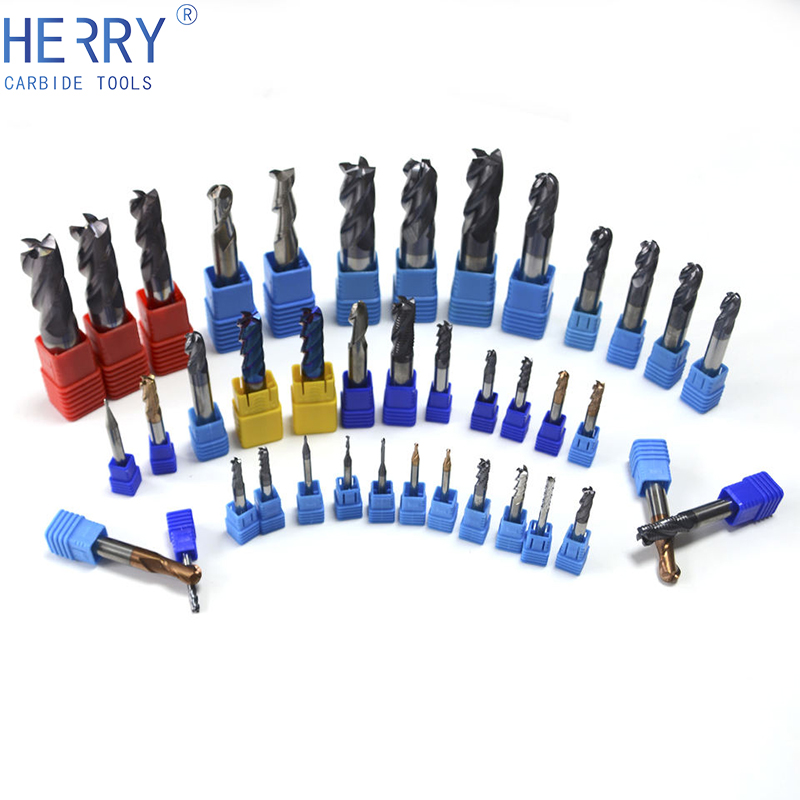
Tungsten is consumed in four forms: tungsten carbide, alloying additions, pure tungsten, tungsten-based chemicals. Tungsten carbide accounts for about 65% of tungsten consumption. It is combined with cobalt as a binder to form the so-called cemented carbides, which are used in cutting and wear applications. Metallic tungsten and tungsten alloy mill products account for about 16% of consumption. In wire form, tungsten is used extensively for lighting, electronic devices, and thermocouples. Tungsten chemicals make up approximately 3% of the total consumption and are used for organic dyes, pigment phosphors, catalysts, cathode-ray tubes, and x-ray screens.
Tungsten CarbideRing
All this information is available in Total Materia Horizon, the ultimate materials information and selection tool, providing unparalleled access to over 540,000 materials as well as, curated and updated reference data.
Share information about your brand with your customers. Describe a product, make announcements, or welcome customers to your store.
"After technical school, I did an apprenticeship in clock and watch repair and in tool and die making. I'm retired now and run a busy clock repair shop with my Smithy. I make parts for older clocks, cut clock gears, and make the cutters as well overhaul clock repair tools. I purchased a 9" x 19 bench lathe from Grizzly but returned it because of poor quality. I chose Smithy for its Sturdiness, its milling capabilities, and its compact size."
Uranium alloys, like lead, are eliminated from an increasing number of potential applications based on toxicity considerations, with uranium-base materials requiring a license except for very small quantities. While the precious metals listed possess attractive densities and offer essentially no toxicity, their cost is prohibitive for all but a few density applications. WHAs typically consist of 90 to 98 wt% W in combination with some mix of nickel, iron, copper, and/or cobalt. The bulk of WHA production falls into the 90 to 95% W range. The choice of alloy composition is driven by several considerations. The primary factor is the density required by the given application. Further considerations include corrosion resistance, magnetic character, mechanical properties, and postsinter heat treatment options. The first WHA developed was a W-Ni-Cu alloy. Alloys of this ternary system are still occasionally used today, primarily for applications in which ferromagnetic character and electrical properties must be minimized. W-Ni-Cu alloys otherwise offer inferior corrosion resistance and lower mechanical properties than the present industry standard W-Ni-Fe alloys. The majority of current uses for WHAs are best satisfied with the W-Ni-Fe system. Alloys such as 93W-4.9Ni-2.lFe and 95W-4Ni-lFe represent common compositions. The addition of cobalt to a W-Ni-Fe alloy is a common approach for slight enhancement of both strength and ductility. The presence of cobalt within the alloy provides solid-solution strengthening of the binder and slightly enhanced tungsten-matrix interfacial strength. Cobalt additions of 5 to 15% of the nominal binder weight fraction arc most common. For extremely demanding applications, even higher mechanical properties are obtainable from the W-Ni-Co system with nickel-to-cobalt ratios ranging from 2 to 9. Such alloys require resolution/quench, however, due to extensive intermetallic (Co3W and others) formation on cool down from sintering. A number of special WHAs are known as well. An example is the W-Mo-Ni-Fe quaternary alloy, which utilizes molybdenum to restrict tungsten dissolution and spheroid growth, resulting in higher strengths (but reduced ductility) in the as-sintered slate. There are also a number of alloy systems in various stages of development for kinetic energy penetrators that are intended to provide a WHA that will undergo high deformation rate failure by shear localization in a manner similar to quenched and aged U-0.75Ti for more efficient armor defeat. These alloys to date have not exhibited a property set of interest for industrial applications, however. Mechanical and Physical Properties. Tungsten has high tensile strength and good creep resistance. However, its high density, poor low-temperature ductility, and strong reactivity in air limit its usefulness. Maximum service temperatures for tungsten range from 1925 to 2500°C (3500 to 4500°F), but surface protection is required for use in air at these temperatures. Wrought tungsten (as-cold worked) has high strength, strongly directional mechanical properties, and some room-temperature toughness. However, recrystallization occurs rapidly above 1370°C (2500°F) and produces a grain structure that is crack sensitive at all temperatures.
Years ago, Smithy produced a series of videos about learning to machine on a lathe mill combo machine. We hear often that these videos have been very helpful. This series is used in quite a few schools and tech training centers, literally throughout the world. Teachers like these videos because the concepts of machining are presented in a very logical way. Hopefully these videos will be helpful to you.
Mechanical and Physical Properties. Tungsten has high tensile strength and good creep resistance. However, its high density, poor low-temperature ductility, and strong reactivity in air limit its usefulness. Maximum service temperatures for tungsten range from 1925 to 2500°C (3500 to 4500°F), but surface protection is required for use in air at these temperatures. Wrought tungsten (as-cold worked) has high strength, strongly directional mechanical properties, and some room-temperature toughness. However, recrystallization occurs rapidly above 1370°C (2500°F) and produces a grain structure that is crack sensitive at all temperatures.
Alloying of tungsten (W) has been relatively less studied than of some of the other refractory metals. Most of the tungsten used thus far in aerospace applications has been in the unalloyed form, which is much easier and less expensive to produce and fabricate. Also, it has been found that, particularly at temperatures above 2200°C (4000°F), the strengthening effects of many alloying agents decrease disproportionately. Tungsten is consumed in four forms: Tungsten carbide Alloying additions Pure tungsten Tungsten-based chemicals Tungsten carbide accounts for about 65% of tungsten consumption. It is combined with cobalt as a binder to form the so-called cemented carbides, which are used in cutting and wear applications. Characteristically, most of these carbides have high hardness, good electrical and thermal conductivity, and high stability. These properties account for the principal applications: structures resistant to chemical reaction, uses in which wear resistance is of major importance, and high-temperature radiant-energy sources. The brittleness of carbides, however, has prevented their use as single-phase materials in highly stressed structural applications and has led to the development of metal-bonded composites (cemented carbides or cermets). Metallic tungsten and tungsten alloy mill products account for about 16% of consumption. Tungsten and tungsten alloys dominate the market in applications for which a high-density material (19.3 g/cm3) is required, such as kinetic energy penetrators, counterweights, flywheels, and governors. Other applications include radiation shields and x-ray targets. In wire form, tungsten is used extensively for lighting, electronic devices, and thermocouples. Tungsten chemicals make up approximately 3% of the total consumption and are used for organic dyes, pigment phosphors, catalysts, cathode-ray tubes, and x-ray screens. The high melting point of tungsten makes it an obvious choice for structural applications exposed to very high temperatures. Tungsten is used at lower temperatures for applications that can use its high elastic modulus, density, or shielding characteristics to advantage. Tungsten and tungsten alloys can be pressed and sintered into bars and subsequently fabricated into wrought bar, sheet, or wire. Many tungsten products are intricate and require machining or molding and sintering to near-net shape and cannot be fabricated from standard mill products. Tungsten mill products can be divided into three distinct groups on the basis of recrystallization behavior. The first group consists of EB-melted, zone-refined, or arc-melted unalloyed tungsten; other very pure forms of unalloyed tungsten; or tungsten alloyed with rhenium or molybdenum. These materials exhibit equiaxed grain structures upon primary recrystallization. The recrystallization temperature and grain size both decrease with increasing deformation. The second group, consisting of commercial grade or undoped P/M tungsten, demonstrates the sensitivity of tungsten to purity. Like the first group, these materials exhibit equiaxed grain structures, but their recrystallization temperatures are higher than those of the first-group materials. Also, these materials do not necessarily exhibit decreases in recrystallization temperature and grain size with increasing deformation. In EB-melted tungsten wire, the recrystallization temperature can be 900°C (1650°F) or lower, whereas in commercially pure (undoped) tungsten it can be as high as 1205 to 1400°C (2200 to 2550°F). The third group of materials consists of AKS-doped tungsten (that is, tungsten doped with aluminum-potassium-silicon), doped tungsten alloyed with rhenium, and undoped tungsten alloyed with more than 1% ThO2. These materials are characterized by higher recrystallization temperatures (>1800°C, or 3270°F) and unique recrystallized grain structures. The structure of heavily drawn wire or rolled sheet consists of very long interlocking grains. This structure is most readily found in AKS-doped tungsten or in doped tungsten alloyed with 1 to 5% Re. The potassium dopant is spread out in the direction of rolling or drawing; when heated, it volatilizes into a linear array of submicron-size bubbles. These bubbles pin grain boundaries in the manner of a dispersion of second-phase particles. As the rows of bubbles become finer and longer with increasing deformation, the recrystailization temperature rises, and the interlocking structure becomes more pronounced. Tungsten Alloys. Three tungsten alloys are produced commercially: tungsten-ThO2, tungsten-molybdenum, and tungsten-rhenium. The W-ThO2, alloy contains a dispersed second phase of 1 to 2% thorium. The thorium dispersion enhances thermionic electron emission, which in turn improves the starting characteristics of gas tungsten arc welding electrodes. It also increases the efficiency of electron discharge tubes and imparts creep strength to wire at temperatures above one-half the absolute melting point of tungsten. Tungsten mill products, sheet, bar, and wire are all produced via powder metallurgy. These products are available in either commercially pure (undoped) tungsten or commercially doped (AKS-doped) tungsten. These additives improve the recrystallization and creep properties of tungsten, which are especially important when tungsten is used for incandescent lamp filaments. Wrought P/M stock can be zone refined by EB melting to produce single crystals that are higher in purity than the commercially pure product. Electron beam zone-melted tungsten single crystals are of commercial interest for applications requiring single crystals with very high electrical resistance ratios. Tungsten Heavy-Metal Alloys (WHAs). These are a category of tungsten-base materials that typically contain 90 to 98 wt% W. Most commercial WHAs are two-phase structures, the principal phase being nearly pure tungsten in association with a binder phase containing the transition metals plus dissolved tungsten. As a consequence, WHAs derive their fundamental properties from those of the principal tungsten phase, which provides for both high density and high elastic stiffness. It is these two properties that give rise to must applications for this family of materials. The current uses of WHAs are spanning a wide range of consumer, industrial, and government applications that include: Damping weights for computer disk drive heads Balancing weights for ailerons in commercial aircraft, helicopter rotors, and for guided missiles Kinetic energy penetrators for defeating heavy armor Fragmentation warheads Radiation shielding, radio isotope containers, and collimalion apertures for cancer therapy devices High performance lead-free shot for waterfowl hunting Gyroscope components Weight distribution adjustment in sailboats and race cars. Many applications that require high gravimetric density for balance weights, inertial masses, or kinetic energy penetrators or high radiographic density for radiation shielding and collimaiion necessitate rather large bulk shapes. Such a requirement eliminates all but a few candidates on the basis of prohibitive cost, typically reducing the choice of very dense alloys down to either tungsten- or uranium-base materials. Uranium alloys, like lead, are eliminated from an increasing number of potential applications based on toxicity considerations, with uranium-base materials requiring a license except for very small quantities. While the precious metals listed possess attractive densities and offer essentially no toxicity, their cost is prohibitive for all but a few density applications. WHAs typically consist of 90 to 98 wt% W in combination with some mix of nickel, iron, copper, and/or cobalt. The bulk of WHA production falls into the 90 to 95% W range. The choice of alloy composition is driven by several considerations. The primary factor is the density required by the given application. Further considerations include corrosion resistance, magnetic character, mechanical properties, and postsinter heat treatment options. The first WHA developed was a W-Ni-Cu alloy. Alloys of this ternary system are still occasionally used today, primarily for applications in which ferromagnetic character and electrical properties must be minimized. W-Ni-Cu alloys otherwise offer inferior corrosion resistance and lower mechanical properties than the present industry standard W-Ni-Fe alloys. The majority of current uses for WHAs are best satisfied with the W-Ni-Fe system. Alloys such as 93W-4.9Ni-2.lFe and 95W-4Ni-lFe represent common compositions. The addition of cobalt to a W-Ni-Fe alloy is a common approach for slight enhancement of both strength and ductility. The presence of cobalt within the alloy provides solid-solution strengthening of the binder and slightly enhanced tungsten-matrix interfacial strength. Cobalt additions of 5 to 15% of the nominal binder weight fraction arc most common. For extremely demanding applications, even higher mechanical properties are obtainable from the W-Ni-Co system with nickel-to-cobalt ratios ranging from 2 to 9. Such alloys require resolution/quench, however, due to extensive intermetallic (Co3W and others) formation on cool down from sintering. A number of special WHAs are known as well. An example is the W-Mo-Ni-Fe quaternary alloy, which utilizes molybdenum to restrict tungsten dissolution and spheroid growth, resulting in higher strengths (but reduced ductility) in the as-sintered slate. There are also a number of alloy systems in various stages of development for kinetic energy penetrators that are intended to provide a WHA that will undergo high deformation rate failure by shear localization in a manner similar to quenched and aged U-0.75Ti for more efficient armor defeat. These alloys to date have not exhibited a property set of interest for industrial applications, however. Mechanical and Physical Properties. Tungsten has high tensile strength and good creep resistance. However, its high density, poor low-temperature ductility, and strong reactivity in air limit its usefulness. Maximum service temperatures for tungsten range from 1925 to 2500°C (3500 to 4500°F), but surface protection is required for use in air at these temperatures. Wrought tungsten (as-cold worked) has high strength, strongly directional mechanical properties, and some room-temperature toughness. However, recrystallization occurs rapidly above 1370°C (2500°F) and produces a grain structure that is crack sensitive at all temperatures.
For extremely demanding applications, even higher mechanical properties are obtainable from the W-Ni-Co system with nickel-to-cobalt ratios ranging from 2 to 9. Such alloys require resolution/quench, however, due to extensive intermetallic (Co3W and others) formation on cool down from sintering. A number of special WHAs are known as well. An example is the W-Mo-Ni-Fe quaternary alloy, which utilizes molybdenum to restrict tungsten dissolution and spheroid growth, resulting in higher strengths (but reduced ductility) in the as-sintered slate. There are also a number of alloy systems in various stages of development for kinetic energy penetrators that are intended to provide a WHA that will undergo high deformation rate failure by shear localization in a manner similar to quenched and aged U-0.75Ti for more efficient armor defeat. These alloys to date have not exhibited a property set of interest for industrial applications, however. Mechanical and Physical Properties. Tungsten has high tensile strength and good creep resistance. However, its high density, poor low-temperature ductility, and strong reactivity in air limit its usefulness. Maximum service temperatures for tungsten range from 1925 to 2500°C (3500 to 4500°F), but surface protection is required for use in air at these temperatures. Wrought tungsten (as-cold worked) has high strength, strongly directional mechanical properties, and some room-temperature toughness. However, recrystallization occurs rapidly above 1370°C (2500°F) and produces a grain structure that is crack sensitive at all temperatures.
The FREE tool pack is intended to proved a basic tool set-up to get you started when your machine arrives. It’s a balanced set of tooling, but you will likely need more tooling once you figure out specific projects you want to do.
The majority of current uses for WHAs are best satisfied with the W-Ni-Fe system. Alloys such as 93W-4.9Ni-2.lFe and 95W-4Ni-lFe represent common compositions. The addition of cobalt to a W-Ni-Fe alloy is a common approach for slight enhancement of both strength and ductility. The presence of cobalt within the alloy provides solid-solution strengthening of the binder and slightly enhanced tungsten-matrix interfacial strength. Cobalt additions of 5 to 15% of the nominal binder weight fraction arc most common. For extremely demanding applications, even higher mechanical properties are obtainable from the W-Ni-Co system with nickel-to-cobalt ratios ranging from 2 to 9. Such alloys require resolution/quench, however, due to extensive intermetallic (Co3W and others) formation on cool down from sintering. A number of special WHAs are known as well. An example is the W-Mo-Ni-Fe quaternary alloy, which utilizes molybdenum to restrict tungsten dissolution and spheroid growth, resulting in higher strengths (but reduced ductility) in the as-sintered slate. There are also a number of alloy systems in various stages of development for kinetic energy penetrators that are intended to provide a WHA that will undergo high deformation rate failure by shear localization in a manner similar to quenched and aged U-0.75Ti for more efficient armor defeat. These alloys to date have not exhibited a property set of interest for industrial applications, however. Mechanical and Physical Properties. Tungsten has high tensile strength and good creep resistance. However, its high density, poor low-temperature ductility, and strong reactivity in air limit its usefulness. Maximum service temperatures for tungsten range from 1925 to 2500°C (3500 to 4500°F), but surface protection is required for use in air at these temperatures. Wrought tungsten (as-cold worked) has high strength, strongly directional mechanical properties, and some room-temperature toughness. However, recrystallization occurs rapidly above 1370°C (2500°F) and produces a grain structure that is crack sensitive at all temperatures.
The first group consists of EB-melted, zone-refined, or arc-melted unalloyed tungsten; other very pure forms of unalloyed tungsten; or tungsten alloyed with rhenium or molybdenum. These materials exhibit equiaxed grain structures upon primary recrystallization. The recrystallization temperature and grain size both decrease with increasing deformation. The second group, consisting of commercial grade or undoped P/M tungsten, demonstrates the sensitivity of tungsten to purity. Like the first group, these materials exhibit equiaxed grain structures, but their recrystallization temperatures are higher than those of the first-group materials. Also, these materials do not necessarily exhibit decreases in recrystallization temperature and grain size with increasing deformation. In EB-melted tungsten wire, the recrystallization temperature can be 900°C (1650°F) or lower, whereas in commercially pure (undoped) tungsten it can be as high as 1205 to 1400°C (2200 to 2550°F). The third group of materials consists of AKS-doped tungsten (that is, tungsten doped with aluminum-potassium-silicon), doped tungsten alloyed with rhenium, and undoped tungsten alloyed with more than 1% ThO2. These materials are characterized by higher recrystallization temperatures (>1800°C, or 3270°F) and unique recrystallized grain structures. The structure of heavily drawn wire or rolled sheet consists of very long interlocking grains. This structure is most readily found in AKS-doped tungsten or in doped tungsten alloyed with 1 to 5% Re. The potassium dopant is spread out in the direction of rolling or drawing; when heated, it volatilizes into a linear array of submicron-size bubbles. These bubbles pin grain boundaries in the manner of a dispersion of second-phase particles. As the rows of bubbles become finer and longer with increasing deformation, the recrystailization temperature rises, and the interlocking structure becomes more pronounced. Tungsten Alloys. Three tungsten alloys are produced commercially: tungsten-ThO2, tungsten-molybdenum, and tungsten-rhenium. The W-ThO2, alloy contains a dispersed second phase of 1 to 2% thorium. The thorium dispersion enhances thermionic electron emission, which in turn improves the starting characteristics of gas tungsten arc welding electrodes. It also increases the efficiency of electron discharge tubes and imparts creep strength to wire at temperatures above one-half the absolute melting point of tungsten. Tungsten mill products, sheet, bar, and wire are all produced via powder metallurgy. These products are available in either commercially pure (undoped) tungsten or commercially doped (AKS-doped) tungsten. These additives improve the recrystallization and creep properties of tungsten, which are especially important when tungsten is used for incandescent lamp filaments. Wrought P/M stock can be zone refined by EB melting to produce single crystals that are higher in purity than the commercially pure product. Electron beam zone-melted tungsten single crystals are of commercial interest for applications requiring single crystals with very high electrical resistance ratios. Tungsten Heavy-Metal Alloys (WHAs). These are a category of tungsten-base materials that typically contain 90 to 98 wt% W. Most commercial WHAs are two-phase structures, the principal phase being nearly pure tungsten in association with a binder phase containing the transition metals plus dissolved tungsten. As a consequence, WHAs derive their fundamental properties from those of the principal tungsten phase, which provides for both high density and high elastic stiffness. It is these two properties that give rise to must applications for this family of materials. The current uses of WHAs are spanning a wide range of consumer, industrial, and government applications that include: Damping weights for computer disk drive heads Balancing weights for ailerons in commercial aircraft, helicopter rotors, and for guided missiles Kinetic energy penetrators for defeating heavy armor Fragmentation warheads Radiation shielding, radio isotope containers, and collimalion apertures for cancer therapy devices High performance lead-free shot for waterfowl hunting Gyroscope components Weight distribution adjustment in sailboats and race cars. Many applications that require high gravimetric density for balance weights, inertial masses, or kinetic energy penetrators or high radiographic density for radiation shielding and collimaiion necessitate rather large bulk shapes. Such a requirement eliminates all but a few candidates on the basis of prohibitive cost, typically reducing the choice of very dense alloys down to either tungsten- or uranium-base materials. Uranium alloys, like lead, are eliminated from an increasing number of potential applications based on toxicity considerations, with uranium-base materials requiring a license except for very small quantities. While the precious metals listed possess attractive densities and offer essentially no toxicity, their cost is prohibitive for all but a few density applications. WHAs typically consist of 90 to 98 wt% W in combination with some mix of nickel, iron, copper, and/or cobalt. The bulk of WHA production falls into the 90 to 95% W range. The choice of alloy composition is driven by several considerations. The primary factor is the density required by the given application. Further considerations include corrosion resistance, magnetic character, mechanical properties, and postsinter heat treatment options. The first WHA developed was a W-Ni-Cu alloy. Alloys of this ternary system are still occasionally used today, primarily for applications in which ferromagnetic character and electrical properties must be minimized. W-Ni-Cu alloys otherwise offer inferior corrosion resistance and lower mechanical properties than the present industry standard W-Ni-Fe alloys. The majority of current uses for WHAs are best satisfied with the W-Ni-Fe system. Alloys such as 93W-4.9Ni-2.lFe and 95W-4Ni-lFe represent common compositions. The addition of cobalt to a W-Ni-Fe alloy is a common approach for slight enhancement of both strength and ductility. The presence of cobalt within the alloy provides solid-solution strengthening of the binder and slightly enhanced tungsten-matrix interfacial strength. Cobalt additions of 5 to 15% of the nominal binder weight fraction arc most common. For extremely demanding applications, even higher mechanical properties are obtainable from the W-Ni-Co system with nickel-to-cobalt ratios ranging from 2 to 9. Such alloys require resolution/quench, however, due to extensive intermetallic (Co3W and others) formation on cool down from sintering. A number of special WHAs are known as well. An example is the W-Mo-Ni-Fe quaternary alloy, which utilizes molybdenum to restrict tungsten dissolution and spheroid growth, resulting in higher strengths (but reduced ductility) in the as-sintered slate. There are also a number of alloy systems in various stages of development for kinetic energy penetrators that are intended to provide a WHA that will undergo high deformation rate failure by shear localization in a manner similar to quenched and aged U-0.75Ti for more efficient armor defeat. These alloys to date have not exhibited a property set of interest for industrial applications, however. Mechanical and Physical Properties. Tungsten has high tensile strength and good creep resistance. However, its high density, poor low-temperature ductility, and strong reactivity in air limit its usefulness. Maximum service temperatures for tungsten range from 1925 to 2500°C (3500 to 4500°F), but surface protection is required for use in air at these temperatures. Wrought tungsten (as-cold worked) has high strength, strongly directional mechanical properties, and some room-temperature toughness. However, recrystallization occurs rapidly above 1370°C (2500°F) and produces a grain structure that is crack sensitive at all temperatures.
Proper maintenance of every machine tool is the key factor in that machine's ability to machine accurately and efficiently. Lubrication and maintenance are a big factor in assuring long life for every bench top lathe or mill/drill machine.
Add content here to explain a bit about the range of products on offer and which ones may be most suitable for your customers.
Each lathe is inspected by trained company employees at the factory - PLUS, a second complete inspection is performed at our warehouse in Ann Arbor, MI before it is sent to the customer.
NO, many buyers of these machines don’t have the experience. What they have is the need to make a certain part or product. What you need is a commitment and curiosity. We have a set of machining training videos on our website. You can usually find classes at a local community college or vo-tech school. Get a machine and get going! You won’t be disappointed.
Tungsten Alloys. Three tungsten alloys are produced commercially: tungsten-ThO2, tungsten-molybdenum, and tungsten-rhenium. The W-ThO2, alloy contains a dispersed second phase of 1 to 2% thorium. The thorium dispersion enhances thermionic electron emission, which in turn improves the starting characteristics of gas tungsten arc welding electrodes. It also increases the efficiency of electron discharge tubes and imparts creep strength to wire at temperatures above one-half the absolute melting point of tungsten. Tungsten mill products, sheet, bar, and wire are all produced via powder metallurgy. These products are available in either commercially pure (undoped) tungsten or commercially doped (AKS-doped) tungsten. These additives improve the recrystallization and creep properties of tungsten, which are especially important when tungsten is used for incandescent lamp filaments. Wrought P/M stock can be zone refined by EB melting to produce single crystals that are higher in purity than the commercially pure product. Electron beam zone-melted tungsten single crystals are of commercial interest for applications requiring single crystals with very high electrical resistance ratios. Tungsten Heavy-Metal Alloys (WHAs). These are a category of tungsten-base materials that typically contain 90 to 98 wt% W. Most commercial WHAs are two-phase structures, the principal phase being nearly pure tungsten in association with a binder phase containing the transition metals plus dissolved tungsten. As a consequence, WHAs derive their fundamental properties from those of the principal tungsten phase, which provides for both high density and high elastic stiffness. It is these two properties that give rise to must applications for this family of materials. The current uses of WHAs are spanning a wide range of consumer, industrial, and government applications that include: Damping weights for computer disk drive heads Balancing weights for ailerons in commercial aircraft, helicopter rotors, and for guided missiles Kinetic energy penetrators for defeating heavy armor Fragmentation warheads Radiation shielding, radio isotope containers, and collimalion apertures for cancer therapy devices High performance lead-free shot for waterfowl hunting Gyroscope components Weight distribution adjustment in sailboats and race cars. Many applications that require high gravimetric density for balance weights, inertial masses, or kinetic energy penetrators or high radiographic density for radiation shielding and collimaiion necessitate rather large bulk shapes. Such a requirement eliminates all but a few candidates on the basis of prohibitive cost, typically reducing the choice of very dense alloys down to either tungsten- or uranium-base materials. Uranium alloys, like lead, are eliminated from an increasing number of potential applications based on toxicity considerations, with uranium-base materials requiring a license except for very small quantities. While the precious metals listed possess attractive densities and offer essentially no toxicity, their cost is prohibitive for all but a few density applications. WHAs typically consist of 90 to 98 wt% W in combination with some mix of nickel, iron, copper, and/or cobalt. The bulk of WHA production falls into the 90 to 95% W range. The choice of alloy composition is driven by several considerations. The primary factor is the density required by the given application. Further considerations include corrosion resistance, magnetic character, mechanical properties, and postsinter heat treatment options. The first WHA developed was a W-Ni-Cu alloy. Alloys of this ternary system are still occasionally used today, primarily for applications in which ferromagnetic character and electrical properties must be minimized. W-Ni-Cu alloys otherwise offer inferior corrosion resistance and lower mechanical properties than the present industry standard W-Ni-Fe alloys. The majority of current uses for WHAs are best satisfied with the W-Ni-Fe system. Alloys such as 93W-4.9Ni-2.lFe and 95W-4Ni-lFe represent common compositions. The addition of cobalt to a W-Ni-Fe alloy is a common approach for slight enhancement of both strength and ductility. The presence of cobalt within the alloy provides solid-solution strengthening of the binder and slightly enhanced tungsten-matrix interfacial strength. Cobalt additions of 5 to 15% of the nominal binder weight fraction arc most common. For extremely demanding applications, even higher mechanical properties are obtainable from the W-Ni-Co system with nickel-to-cobalt ratios ranging from 2 to 9. Such alloys require resolution/quench, however, due to extensive intermetallic (Co3W and others) formation on cool down from sintering. A number of special WHAs are known as well. An example is the W-Mo-Ni-Fe quaternary alloy, which utilizes molybdenum to restrict tungsten dissolution and spheroid growth, resulting in higher strengths (but reduced ductility) in the as-sintered slate. There are also a number of alloy systems in various stages of development for kinetic energy penetrators that are intended to provide a WHA that will undergo high deformation rate failure by shear localization in a manner similar to quenched and aged U-0.75Ti for more efficient armor defeat. These alloys to date have not exhibited a property set of interest for industrial applications, however. Mechanical and Physical Properties. Tungsten has high tensile strength and good creep resistance. However, its high density, poor low-temperature ductility, and strong reactivity in air limit its usefulness. Maximum service temperatures for tungsten range from 1925 to 2500°C (3500 to 4500°F), but surface protection is required for use in air at these temperatures. Wrought tungsten (as-cold worked) has high strength, strongly directional mechanical properties, and some room-temperature toughness. However, recrystallization occurs rapidly above 1370°C (2500°F) and produces a grain structure that is crack sensitive at all temperatures.

A number of special WHAs are known as well. An example is the W-Mo-Ni-Fe quaternary alloy, which utilizes molybdenum to restrict tungsten dissolution and spheroid growth, resulting in higher strengths (but reduced ductility) in the as-sintered slate. There are also a number of alloy systems in various stages of development for kinetic energy penetrators that are intended to provide a WHA that will undergo high deformation rate failure by shear localization in a manner similar to quenched and aged U-0.75Ti for more efficient armor defeat. These alloys to date have not exhibited a property set of interest for industrial applications, however. Mechanical and Physical Properties. Tungsten has high tensile strength and good creep resistance. However, its high density, poor low-temperature ductility, and strong reactivity in air limit its usefulness. Maximum service temperatures for tungsten range from 1925 to 2500°C (3500 to 4500°F), but surface protection is required for use in air at these temperatures. Wrought tungsten (as-cold worked) has high strength, strongly directional mechanical properties, and some room-temperature toughness. However, recrystallization occurs rapidly above 1370°C (2500°F) and produces a grain structure that is crack sensitive at all temperatures.
This video explains the selection and use of single point cutting tools on the lathe. Choosing the right cutting tool for a given operation is an important step when setting up a lathe. Selecting tool types and cutting speeds is also reviewed.
2) Gear Drive Y Axis Power Feed: Adjust the handle located on the right side of the machine base to engage, disengage and change direction on the Y axis gear drive.
Melting temperature of tungsten carbidecelsius
The high melting point of tungsten makes it an obvious choice for structural applications exposed to very high temperatures. Tungsten is used at lower temperatures for applications that can use its high elastic modulus, density, or shielding characteristics to advantage. Tungsten and tungsten alloys can be pressed and sintered into bars and subsequently fabricated into wrought bar, sheet, or wire. Many tungsten products are intricate and require machining or molding and sintering to near-net shape and cannot be fabricated from standard mill products. Tungsten mill products can be divided into three distinct groups on the basis of recrystallization behavior. The first group consists of EB-melted, zone-refined, or arc-melted unalloyed tungsten; other very pure forms of unalloyed tungsten; or tungsten alloyed with rhenium or molybdenum. These materials exhibit equiaxed grain structures upon primary recrystallization. The recrystallization temperature and grain size both decrease with increasing deformation. The second group, consisting of commercial grade or undoped P/M tungsten, demonstrates the sensitivity of tungsten to purity. Like the first group, these materials exhibit equiaxed grain structures, but their recrystallization temperatures are higher than those of the first-group materials. Also, these materials do not necessarily exhibit decreases in recrystallization temperature and grain size with increasing deformation. In EB-melted tungsten wire, the recrystallization temperature can be 900°C (1650°F) or lower, whereas in commercially pure (undoped) tungsten it can be as high as 1205 to 1400°C (2200 to 2550°F). The third group of materials consists of AKS-doped tungsten (that is, tungsten doped with aluminum-potassium-silicon), doped tungsten alloyed with rhenium, and undoped tungsten alloyed with more than 1% ThO2. These materials are characterized by higher recrystallization temperatures (>1800°C, or 3270°F) and unique recrystallized grain structures. The structure of heavily drawn wire or rolled sheet consists of very long interlocking grains. This structure is most readily found in AKS-doped tungsten or in doped tungsten alloyed with 1 to 5% Re. The potassium dopant is spread out in the direction of rolling or drawing; when heated, it volatilizes into a linear array of submicron-size bubbles. These bubbles pin grain boundaries in the manner of a dispersion of second-phase particles. As the rows of bubbles become finer and longer with increasing deformation, the recrystailization temperature rises, and the interlocking structure becomes more pronounced. Tungsten Alloys. Three tungsten alloys are produced commercially: tungsten-ThO2, tungsten-molybdenum, and tungsten-rhenium. The W-ThO2, alloy contains a dispersed second phase of 1 to 2% thorium. The thorium dispersion enhances thermionic electron emission, which in turn improves the starting characteristics of gas tungsten arc welding electrodes. It also increases the efficiency of electron discharge tubes and imparts creep strength to wire at temperatures above one-half the absolute melting point of tungsten. Tungsten mill products, sheet, bar, and wire are all produced via powder metallurgy. These products are available in either commercially pure (undoped) tungsten or commercially doped (AKS-doped) tungsten. These additives improve the recrystallization and creep properties of tungsten, which are especially important when tungsten is used for incandescent lamp filaments. Wrought P/M stock can be zone refined by EB melting to produce single crystals that are higher in purity than the commercially pure product. Electron beam zone-melted tungsten single crystals are of commercial interest for applications requiring single crystals with very high electrical resistance ratios. Tungsten Heavy-Metal Alloys (WHAs). These are a category of tungsten-base materials that typically contain 90 to 98 wt% W. Most commercial WHAs are two-phase structures, the principal phase being nearly pure tungsten in association with a binder phase containing the transition metals plus dissolved tungsten. As a consequence, WHAs derive their fundamental properties from those of the principal tungsten phase, which provides for both high density and high elastic stiffness. It is these two properties that give rise to must applications for this family of materials. The current uses of WHAs are spanning a wide range of consumer, industrial, and government applications that include: Damping weights for computer disk drive heads Balancing weights for ailerons in commercial aircraft, helicopter rotors, and for guided missiles Kinetic energy penetrators for defeating heavy armor Fragmentation warheads Radiation shielding, radio isotope containers, and collimalion apertures for cancer therapy devices High performance lead-free shot for waterfowl hunting Gyroscope components Weight distribution adjustment in sailboats and race cars. Many applications that require high gravimetric density for balance weights, inertial masses, or kinetic energy penetrators or high radiographic density for radiation shielding and collimaiion necessitate rather large bulk shapes. Such a requirement eliminates all but a few candidates on the basis of prohibitive cost, typically reducing the choice of very dense alloys down to either tungsten- or uranium-base materials. Uranium alloys, like lead, are eliminated from an increasing number of potential applications based on toxicity considerations, with uranium-base materials requiring a license except for very small quantities. While the precious metals listed possess attractive densities and offer essentially no toxicity, their cost is prohibitive for all but a few density applications. WHAs typically consist of 90 to 98 wt% W in combination with some mix of nickel, iron, copper, and/or cobalt. The bulk of WHA production falls into the 90 to 95% W range. The choice of alloy composition is driven by several considerations. The primary factor is the density required by the given application. Further considerations include corrosion resistance, magnetic character, mechanical properties, and postsinter heat treatment options. The first WHA developed was a W-Ni-Cu alloy. Alloys of this ternary system are still occasionally used today, primarily for applications in which ferromagnetic character and electrical properties must be minimized. W-Ni-Cu alloys otherwise offer inferior corrosion resistance and lower mechanical properties than the present industry standard W-Ni-Fe alloys. The majority of current uses for WHAs are best satisfied with the W-Ni-Fe system. Alloys such as 93W-4.9Ni-2.lFe and 95W-4Ni-lFe represent common compositions. The addition of cobalt to a W-Ni-Fe alloy is a common approach for slight enhancement of both strength and ductility. The presence of cobalt within the alloy provides solid-solution strengthening of the binder and slightly enhanced tungsten-matrix interfacial strength. Cobalt additions of 5 to 15% of the nominal binder weight fraction arc most common. For extremely demanding applications, even higher mechanical properties are obtainable from the W-Ni-Co system with nickel-to-cobalt ratios ranging from 2 to 9. Such alloys require resolution/quench, however, due to extensive intermetallic (Co3W and others) formation on cool down from sintering. A number of special WHAs are known as well. An example is the W-Mo-Ni-Fe quaternary alloy, which utilizes molybdenum to restrict tungsten dissolution and spheroid growth, resulting in higher strengths (but reduced ductility) in the as-sintered slate. There are also a number of alloy systems in various stages of development for kinetic energy penetrators that are intended to provide a WHA that will undergo high deformation rate failure by shear localization in a manner similar to quenched and aged U-0.75Ti for more efficient armor defeat. These alloys to date have not exhibited a property set of interest for industrial applications, however. Mechanical and Physical Properties. Tungsten has high tensile strength and good creep resistance. However, its high density, poor low-temperature ductility, and strong reactivity in air limit its usefulness. Maximum service temperatures for tungsten range from 1925 to 2500°C (3500 to 4500°F), but surface protection is required for use in air at these temperatures. Wrought tungsten (as-cold worked) has high strength, strongly directional mechanical properties, and some room-temperature toughness. However, recrystallization occurs rapidly above 1370°C (2500°F) and produces a grain structure that is crack sensitive at all temperatures.
"Wendell and his business partner own a small textile factory. Last year, a German sewing machine clutch broke and production stopped. They weren't sure how long it would take to get a replacement part or if they could even find one. Putting their Smithy to work instead, they had the sewing machine back in production the same day."
Reviews the concepts of milling and drilling on a metal cutting mill/drill machine. Common practices in milling and drilling operations are presented. Tutorial on selecting best milling and drilling operations for a given task are provided.
This video starts by showing you machine controls used for milling and drilling operations on a small mill/drill machine. In this case, the Smithy Granite. The video also covers basic concepts and practices for effective metal milling and drilling on a bench top mill/drill machine.
"I have a granite 1324. I run a job shop outfit that does machining work for plastics manufacturing companies. My customers sometimes have orders with 2 or 3 day turn-around. I work in aluminum, plastic, and brass. What I enjoy most about Granite is the lathe work. It is really easy."
The second group, consisting of commercial grade or undoped P/M tungsten, demonstrates the sensitivity of tungsten to purity. Like the first group, these materials exhibit equiaxed grain structures, but their recrystallization temperatures are higher than those of the first-group materials. Also, these materials do not necessarily exhibit decreases in recrystallization temperature and grain size with increasing deformation. In EB-melted tungsten wire, the recrystallization temperature can be 900°C (1650°F) or lower, whereas in commercially pure (undoped) tungsten it can be as high as 1205 to 1400°C (2200 to 2550°F). The third group of materials consists of AKS-doped tungsten (that is, tungsten doped with aluminum-potassium-silicon), doped tungsten alloyed with rhenium, and undoped tungsten alloyed with more than 1% ThO2. These materials are characterized by higher recrystallization temperatures (>1800°C, or 3270°F) and unique recrystallized grain structures. The structure of heavily drawn wire or rolled sheet consists of very long interlocking grains. This structure is most readily found in AKS-doped tungsten or in doped tungsten alloyed with 1 to 5% Re. The potassium dopant is spread out in the direction of rolling or drawing; when heated, it volatilizes into a linear array of submicron-size bubbles. These bubbles pin grain boundaries in the manner of a dispersion of second-phase particles. As the rows of bubbles become finer and longer with increasing deformation, the recrystailization temperature rises, and the interlocking structure becomes more pronounced. Tungsten Alloys. Three tungsten alloys are produced commercially: tungsten-ThO2, tungsten-molybdenum, and tungsten-rhenium. The W-ThO2, alloy contains a dispersed second phase of 1 to 2% thorium. The thorium dispersion enhances thermionic electron emission, which in turn improves the starting characteristics of gas tungsten arc welding electrodes. It also increases the efficiency of electron discharge tubes and imparts creep strength to wire at temperatures above one-half the absolute melting point of tungsten. Tungsten mill products, sheet, bar, and wire are all produced via powder metallurgy. These products are available in either commercially pure (undoped) tungsten or commercially doped (AKS-doped) tungsten. These additives improve the recrystallization and creep properties of tungsten, which are especially important when tungsten is used for incandescent lamp filaments. Wrought P/M stock can be zone refined by EB melting to produce single crystals that are higher in purity than the commercially pure product. Electron beam zone-melted tungsten single crystals are of commercial interest for applications requiring single crystals with very high electrical resistance ratios. Tungsten Heavy-Metal Alloys (WHAs). These are a category of tungsten-base materials that typically contain 90 to 98 wt% W. Most commercial WHAs are two-phase structures, the principal phase being nearly pure tungsten in association with a binder phase containing the transition metals plus dissolved tungsten. As a consequence, WHAs derive their fundamental properties from those of the principal tungsten phase, which provides for both high density and high elastic stiffness. It is these two properties that give rise to must applications for this family of materials. The current uses of WHAs are spanning a wide range of consumer, industrial, and government applications that include: Damping weights for computer disk drive heads Balancing weights for ailerons in commercial aircraft, helicopter rotors, and for guided missiles Kinetic energy penetrators for defeating heavy armor Fragmentation warheads Radiation shielding, radio isotope containers, and collimalion apertures for cancer therapy devices High performance lead-free shot for waterfowl hunting Gyroscope components Weight distribution adjustment in sailboats and race cars. Many applications that require high gravimetric density for balance weights, inertial masses, or kinetic energy penetrators or high radiographic density for radiation shielding and collimaiion necessitate rather large bulk shapes. Such a requirement eliminates all but a few candidates on the basis of prohibitive cost, typically reducing the choice of very dense alloys down to either tungsten- or uranium-base materials. Uranium alloys, like lead, are eliminated from an increasing number of potential applications based on toxicity considerations, with uranium-base materials requiring a license except for very small quantities. While the precious metals listed possess attractive densities and offer essentially no toxicity, their cost is prohibitive for all but a few density applications. WHAs typically consist of 90 to 98 wt% W in combination with some mix of nickel, iron, copper, and/or cobalt. The bulk of WHA production falls into the 90 to 95% W range. The choice of alloy composition is driven by several considerations. The primary factor is the density required by the given application. Further considerations include corrosion resistance, magnetic character, mechanical properties, and postsinter heat treatment options. The first WHA developed was a W-Ni-Cu alloy. Alloys of this ternary system are still occasionally used today, primarily for applications in which ferromagnetic character and electrical properties must be minimized. W-Ni-Cu alloys otherwise offer inferior corrosion resistance and lower mechanical properties than the present industry standard W-Ni-Fe alloys. The majority of current uses for WHAs are best satisfied with the W-Ni-Fe system. Alloys such as 93W-4.9Ni-2.lFe and 95W-4Ni-lFe represent common compositions. The addition of cobalt to a W-Ni-Fe alloy is a common approach for slight enhancement of both strength and ductility. The presence of cobalt within the alloy provides solid-solution strengthening of the binder and slightly enhanced tungsten-matrix interfacial strength. Cobalt additions of 5 to 15% of the nominal binder weight fraction arc most common. For extremely demanding applications, even higher mechanical properties are obtainable from the W-Ni-Co system with nickel-to-cobalt ratios ranging from 2 to 9. Such alloys require resolution/quench, however, due to extensive intermetallic (Co3W and others) formation on cool down from sintering. A number of special WHAs are known as well. An example is the W-Mo-Ni-Fe quaternary alloy, which utilizes molybdenum to restrict tungsten dissolution and spheroid growth, resulting in higher strengths (but reduced ductility) in the as-sintered slate. There are also a number of alloy systems in various stages of development for kinetic energy penetrators that are intended to provide a WHA that will undergo high deformation rate failure by shear localization in a manner similar to quenched and aged U-0.75Ti for more efficient armor defeat. These alloys to date have not exhibited a property set of interest for industrial applications, however. Mechanical and Physical Properties. Tungsten has high tensile strength and good creep resistance. However, its high density, poor low-temperature ductility, and strong reactivity in air limit its usefulness. Maximum service temperatures for tungsten range from 1925 to 2500°C (3500 to 4500°F), but surface protection is required for use in air at these temperatures. Wrought tungsten (as-cold worked) has high strength, strongly directional mechanical properties, and some room-temperature toughness. However, recrystallization occurs rapidly above 1370°C (2500°F) and produces a grain structure that is crack sensitive at all temperatures.
WHAs typically consist of 90 to 98 wt% W in combination with some mix of nickel, iron, copper, and/or cobalt. The bulk of WHA production falls into the 90 to 95% W range. The choice of alloy composition is driven by several considerations. The primary factor is the density required by the given application. Further considerations include corrosion resistance, magnetic character, mechanical properties, and postsinter heat treatment options. The first WHA developed was a W-Ni-Cu alloy. Alloys of this ternary system are still occasionally used today, primarily for applications in which ferromagnetic character and electrical properties must be minimized. W-Ni-Cu alloys otherwise offer inferior corrosion resistance and lower mechanical properties than the present industry standard W-Ni-Fe alloys. The majority of current uses for WHAs are best satisfied with the W-Ni-Fe system. Alloys such as 93W-4.9Ni-2.lFe and 95W-4Ni-lFe represent common compositions. The addition of cobalt to a W-Ni-Fe alloy is a common approach for slight enhancement of both strength and ductility. The presence of cobalt within the alloy provides solid-solution strengthening of the binder and slightly enhanced tungsten-matrix interfacial strength. Cobalt additions of 5 to 15% of the nominal binder weight fraction arc most common. For extremely demanding applications, even higher mechanical properties are obtainable from the W-Ni-Co system with nickel-to-cobalt ratios ranging from 2 to 9. Such alloys require resolution/quench, however, due to extensive intermetallic (Co3W and others) formation on cool down from sintering. A number of special WHAs are known as well. An example is the W-Mo-Ni-Fe quaternary alloy, which utilizes molybdenum to restrict tungsten dissolution and spheroid growth, resulting in higher strengths (but reduced ductility) in the as-sintered slate. There are also a number of alloy systems in various stages of development for kinetic energy penetrators that are intended to provide a WHA that will undergo high deformation rate failure by shear localization in a manner similar to quenched and aged U-0.75Ti for more efficient armor defeat. These alloys to date have not exhibited a property set of interest for industrial applications, however. Mechanical and Physical Properties. Tungsten has high tensile strength and good creep resistance. However, its high density, poor low-temperature ductility, and strong reactivity in air limit its usefulness. Maximum service temperatures for tungsten range from 1925 to 2500°C (3500 to 4500°F), but surface protection is required for use in air at these temperatures. Wrought tungsten (as-cold worked) has high strength, strongly directional mechanical properties, and some room-temperature toughness. However, recrystallization occurs rapidly above 1370°C (2500°F) and produces a grain structure that is crack sensitive at all temperatures.
Carbideformula
There are also a number of alloy systems in various stages of development for kinetic energy penetrators that are intended to provide a WHA that will undergo high deformation rate failure by shear localization in a manner similar to quenched and aged U-0.75Ti for more efficient armor defeat. These alloys to date have not exhibited a property set of interest for industrial applications, however. Mechanical and Physical Properties. Tungsten has high tensile strength and good creep resistance. However, its high density, poor low-temperature ductility, and strong reactivity in air limit its usefulness. Maximum service temperatures for tungsten range from 1925 to 2500°C (3500 to 4500°F), but surface protection is required for use in air at these temperatures. Wrought tungsten (as-cold worked) has high strength, strongly directional mechanical properties, and some room-temperature toughness. However, recrystallization occurs rapidly above 1370°C (2500°F) and produces a grain structure that is crack sensitive at all temperatures.
This video explains the selection and use of end mills and drill bits is covered. Choosing the right cutting tool for a given operation is an important step when setting up for a milling or drilling project. The foundation concept of selecting the best rotating cutting tool and cutting speed for a given project is also reviewed.
"I use my Smithy to make or modify parts for motorcycles and antique guns. I'm in this as a hobby. The Smithy probably has paid for itself but I haven't kept track. What is more important to me is the convenience of making my own parts, exactly as I need them when I need them."
Tungsten is consumed in four forms: Tungsten carbide Alloying additions Pure tungsten Tungsten-based chemicals Tungsten carbide accounts for about 65% of tungsten consumption. It is combined with cobalt as a binder to form the so-called cemented carbides, which are used in cutting and wear applications. Characteristically, most of these carbides have high hardness, good electrical and thermal conductivity, and high stability. These properties account for the principal applications: structures resistant to chemical reaction, uses in which wear resistance is of major importance, and high-temperature radiant-energy sources. The brittleness of carbides, however, has prevented their use as single-phase materials in highly stressed structural applications and has led to the development of metal-bonded composites (cemented carbides or cermets). Metallic tungsten and tungsten alloy mill products account for about 16% of consumption. Tungsten and tungsten alloys dominate the market in applications for which a high-density material (19.3 g/cm3) is required, such as kinetic energy penetrators, counterweights, flywheels, and governors. Other applications include radiation shields and x-ray targets. In wire form, tungsten is used extensively for lighting, electronic devices, and thermocouples. Tungsten chemicals make up approximately 3% of the total consumption and are used for organic dyes, pigment phosphors, catalysts, cathode-ray tubes, and x-ray screens. The high melting point of tungsten makes it an obvious choice for structural applications exposed to very high temperatures. Tungsten is used at lower temperatures for applications that can use its high elastic modulus, density, or shielding characteristics to advantage. Tungsten and tungsten alloys can be pressed and sintered into bars and subsequently fabricated into wrought bar, sheet, or wire. Many tungsten products are intricate and require machining or molding and sintering to near-net shape and cannot be fabricated from standard mill products. Tungsten mill products can be divided into three distinct groups on the basis of recrystallization behavior. The first group consists of EB-melted, zone-refined, or arc-melted unalloyed tungsten; other very pure forms of unalloyed tungsten; or tungsten alloyed with rhenium or molybdenum. These materials exhibit equiaxed grain structures upon primary recrystallization. The recrystallization temperature and grain size both decrease with increasing deformation. The second group, consisting of commercial grade or undoped P/M tungsten, demonstrates the sensitivity of tungsten to purity. Like the first group, these materials exhibit equiaxed grain structures, but their recrystallization temperatures are higher than those of the first-group materials. Also, these materials do not necessarily exhibit decreases in recrystallization temperature and grain size with increasing deformation. In EB-melted tungsten wire, the recrystallization temperature can be 900°C (1650°F) or lower, whereas in commercially pure (undoped) tungsten it can be as high as 1205 to 1400°C (2200 to 2550°F). The third group of materials consists of AKS-doped tungsten (that is, tungsten doped with aluminum-potassium-silicon), doped tungsten alloyed with rhenium, and undoped tungsten alloyed with more than 1% ThO2. These materials are characterized by higher recrystallization temperatures (>1800°C, or 3270°F) and unique recrystallized grain structures. The structure of heavily drawn wire or rolled sheet consists of very long interlocking grains. This structure is most readily found in AKS-doped tungsten or in doped tungsten alloyed with 1 to 5% Re. The potassium dopant is spread out in the direction of rolling or drawing; when heated, it volatilizes into a linear array of submicron-size bubbles. These bubbles pin grain boundaries in the manner of a dispersion of second-phase particles. As the rows of bubbles become finer and longer with increasing deformation, the recrystailization temperature rises, and the interlocking structure becomes more pronounced. Tungsten Alloys. Three tungsten alloys are produced commercially: tungsten-ThO2, tungsten-molybdenum, and tungsten-rhenium. The W-ThO2, alloy contains a dispersed second phase of 1 to 2% thorium. The thorium dispersion enhances thermionic electron emission, which in turn improves the starting characteristics of gas tungsten arc welding electrodes. It also increases the efficiency of electron discharge tubes and imparts creep strength to wire at temperatures above one-half the absolute melting point of tungsten. Tungsten mill products, sheet, bar, and wire are all produced via powder metallurgy. These products are available in either commercially pure (undoped) tungsten or commercially doped (AKS-doped) tungsten. These additives improve the recrystallization and creep properties of tungsten, which are especially important when tungsten is used for incandescent lamp filaments. Wrought P/M stock can be zone refined by EB melting to produce single crystals that are higher in purity than the commercially pure product. Electron beam zone-melted tungsten single crystals are of commercial interest for applications requiring single crystals with very high electrical resistance ratios. Tungsten Heavy-Metal Alloys (WHAs). These are a category of tungsten-base materials that typically contain 90 to 98 wt% W. Most commercial WHAs are two-phase structures, the principal phase being nearly pure tungsten in association with a binder phase containing the transition metals plus dissolved tungsten. As a consequence, WHAs derive their fundamental properties from those of the principal tungsten phase, which provides for both high density and high elastic stiffness. It is these two properties that give rise to must applications for this family of materials. The current uses of WHAs are spanning a wide range of consumer, industrial, and government applications that include: Damping weights for computer disk drive heads Balancing weights for ailerons in commercial aircraft, helicopter rotors, and for guided missiles Kinetic energy penetrators for defeating heavy armor Fragmentation warheads Radiation shielding, radio isotope containers, and collimalion apertures for cancer therapy devices High performance lead-free shot for waterfowl hunting Gyroscope components Weight distribution adjustment in sailboats and race cars. Many applications that require high gravimetric density for balance weights, inertial masses, or kinetic energy penetrators or high radiographic density for radiation shielding and collimaiion necessitate rather large bulk shapes. Such a requirement eliminates all but a few candidates on the basis of prohibitive cost, typically reducing the choice of very dense alloys down to either tungsten- or uranium-base materials. Uranium alloys, like lead, are eliminated from an increasing number of potential applications based on toxicity considerations, with uranium-base materials requiring a license except for very small quantities. While the precious metals listed possess attractive densities and offer essentially no toxicity, their cost is prohibitive for all but a few density applications. WHAs typically consist of 90 to 98 wt% W in combination with some mix of nickel, iron, copper, and/or cobalt. The bulk of WHA production falls into the 90 to 95% W range. The choice of alloy composition is driven by several considerations. The primary factor is the density required by the given application. Further considerations include corrosion resistance, magnetic character, mechanical properties, and postsinter heat treatment options. The first WHA developed was a W-Ni-Cu alloy. Alloys of this ternary system are still occasionally used today, primarily for applications in which ferromagnetic character and electrical properties must be minimized. W-Ni-Cu alloys otherwise offer inferior corrosion resistance and lower mechanical properties than the present industry standard W-Ni-Fe alloys. The majority of current uses for WHAs are best satisfied with the W-Ni-Fe system. Alloys such as 93W-4.9Ni-2.lFe and 95W-4Ni-lFe represent common compositions. The addition of cobalt to a W-Ni-Fe alloy is a common approach for slight enhancement of both strength and ductility. The presence of cobalt within the alloy provides solid-solution strengthening of the binder and slightly enhanced tungsten-matrix interfacial strength. Cobalt additions of 5 to 15% of the nominal binder weight fraction arc most common. For extremely demanding applications, even higher mechanical properties are obtainable from the W-Ni-Co system with nickel-to-cobalt ratios ranging from 2 to 9. Such alloys require resolution/quench, however, due to extensive intermetallic (Co3W and others) formation on cool down from sintering. A number of special WHAs are known as well. An example is the W-Mo-Ni-Fe quaternary alloy, which utilizes molybdenum to restrict tungsten dissolution and spheroid growth, resulting in higher strengths (but reduced ductility) in the as-sintered slate. There are also a number of alloy systems in various stages of development for kinetic energy penetrators that are intended to provide a WHA that will undergo high deformation rate failure by shear localization in a manner similar to quenched and aged U-0.75Ti for more efficient armor defeat. These alloys to date have not exhibited a property set of interest for industrial applications, however. Mechanical and Physical Properties. Tungsten has high tensile strength and good creep resistance. However, its high density, poor low-temperature ductility, and strong reactivity in air limit its usefulness. Maximum service temperatures for tungsten range from 1925 to 2500°C (3500 to 4500°F), but surface protection is required for use in air at these temperatures. Wrought tungsten (as-cold worked) has high strength, strongly directional mechanical properties, and some room-temperature toughness. However, recrystallization occurs rapidly above 1370°C (2500°F) and produces a grain structure that is crack sensitive at all temperatures.
Tungsten carbideprice
Introduction to standard metal late operations. An introduction to basic metal turning concepts is provided, along with basic instructions on lathe operation.
When the refractory metals are considered to be those metals melting at temperatures above 1850°C, twelve metals are in this group: W (melting point 3410°C), Re, Os, Ta, Mo, Ir, Nb, Ru, Hf, Rh, V, Cr. Metalloids are elements of small atomic size, which form interstitial solid solutions or interstitial compounds with metals. They include hydrogen, oxygen, nitrogen, and carbon. In certain cases, small metallic atoms, like boron and beryllium, may enter into restricted interstitial solid solutions. However, the atomic sizes of these metals are such as to preclude extensive interstitial solution, and they will not be considered. Alloying of tungsten (W) has been relatively less studied than of some of the other refractory metals. Most of the tungsten used thus far in aerospace applications has been in the unalloyed form, which is much easier and less expensive to produce and fabricate. Also, it has been found that, particularly at temperatures above 2200°C (4000°F), the strengthening effects of many alloying agents decrease disproportionately. Tungsten is consumed in four forms: Tungsten carbide Alloying additions Pure tungsten Tungsten-based chemicals Tungsten carbide accounts for about 65% of tungsten consumption. It is combined with cobalt as a binder to form the so-called cemented carbides, which are used in cutting and wear applications. Characteristically, most of these carbides have high hardness, good electrical and thermal conductivity, and high stability. These properties account for the principal applications: structures resistant to chemical reaction, uses in which wear resistance is of major importance, and high-temperature radiant-energy sources. The brittleness of carbides, however, has prevented their use as single-phase materials in highly stressed structural applications and has led to the development of metal-bonded composites (cemented carbides or cermets). Metallic tungsten and tungsten alloy mill products account for about 16% of consumption. Tungsten and tungsten alloys dominate the market in applications for which a high-density material (19.3 g/cm3) is required, such as kinetic energy penetrators, counterweights, flywheels, and governors. Other applications include radiation shields and x-ray targets. In wire form, tungsten is used extensively for lighting, electronic devices, and thermocouples. Tungsten chemicals make up approximately 3% of the total consumption and are used for organic dyes, pigment phosphors, catalysts, cathode-ray tubes, and x-ray screens. The high melting point of tungsten makes it an obvious choice for structural applications exposed to very high temperatures. Tungsten is used at lower temperatures for applications that can use its high elastic modulus, density, or shielding characteristics to advantage. Tungsten and tungsten alloys can be pressed and sintered into bars and subsequently fabricated into wrought bar, sheet, or wire. Many tungsten products are intricate and require machining or molding and sintering to near-net shape and cannot be fabricated from standard mill products. Tungsten mill products can be divided into three distinct groups on the basis of recrystallization behavior. The first group consists of EB-melted, zone-refined, or arc-melted unalloyed tungsten; other very pure forms of unalloyed tungsten; or tungsten alloyed with rhenium or molybdenum. These materials exhibit equiaxed grain structures upon primary recrystallization. The recrystallization temperature and grain size both decrease with increasing deformation. The second group, consisting of commercial grade or undoped P/M tungsten, demonstrates the sensitivity of tungsten to purity. Like the first group, these materials exhibit equiaxed grain structures, but their recrystallization temperatures are higher than those of the first-group materials. Also, these materials do not necessarily exhibit decreases in recrystallization temperature and grain size with increasing deformation. In EB-melted tungsten wire, the recrystallization temperature can be 900°C (1650°F) or lower, whereas in commercially pure (undoped) tungsten it can be as high as 1205 to 1400°C (2200 to 2550°F). The third group of materials consists of AKS-doped tungsten (that is, tungsten doped with aluminum-potassium-silicon), doped tungsten alloyed with rhenium, and undoped tungsten alloyed with more than 1% ThO2. These materials are characterized by higher recrystallization temperatures (>1800°C, or 3270°F) and unique recrystallized grain structures. The structure of heavily drawn wire or rolled sheet consists of very long interlocking grains. This structure is most readily found in AKS-doped tungsten or in doped tungsten alloyed with 1 to 5% Re. The potassium dopant is spread out in the direction of rolling or drawing; when heated, it volatilizes into a linear array of submicron-size bubbles. These bubbles pin grain boundaries in the manner of a dispersion of second-phase particles. As the rows of bubbles become finer and longer with increasing deformation, the recrystailization temperature rises, and the interlocking structure becomes more pronounced. Tungsten Alloys. Three tungsten alloys are produced commercially: tungsten-ThO2, tungsten-molybdenum, and tungsten-rhenium. The W-ThO2, alloy contains a dispersed second phase of 1 to 2% thorium. The thorium dispersion enhances thermionic electron emission, which in turn improves the starting characteristics of gas tungsten arc welding electrodes. It also increases the efficiency of electron discharge tubes and imparts creep strength to wire at temperatures above one-half the absolute melting point of tungsten. Tungsten mill products, sheet, bar, and wire are all produced via powder metallurgy. These products are available in either commercially pure (undoped) tungsten or commercially doped (AKS-doped) tungsten. These additives improve the recrystallization and creep properties of tungsten, which are especially important when tungsten is used for incandescent lamp filaments. Wrought P/M stock can be zone refined by EB melting to produce single crystals that are higher in purity than the commercially pure product. Electron beam zone-melted tungsten single crystals are of commercial interest for applications requiring single crystals with very high electrical resistance ratios. Tungsten Heavy-Metal Alloys (WHAs). These are a category of tungsten-base materials that typically contain 90 to 98 wt% W. Most commercial WHAs are two-phase structures, the principal phase being nearly pure tungsten in association with a binder phase containing the transition metals plus dissolved tungsten. As a consequence, WHAs derive their fundamental properties from those of the principal tungsten phase, which provides for both high density and high elastic stiffness. It is these two properties that give rise to must applications for this family of materials. The current uses of WHAs are spanning a wide range of consumer, industrial, and government applications that include: Damping weights for computer disk drive heads Balancing weights for ailerons in commercial aircraft, helicopter rotors, and for guided missiles Kinetic energy penetrators for defeating heavy armor Fragmentation warheads Radiation shielding, radio isotope containers, and collimalion apertures for cancer therapy devices High performance lead-free shot for waterfowl hunting Gyroscope components Weight distribution adjustment in sailboats and race cars. Many applications that require high gravimetric density for balance weights, inertial masses, or kinetic energy penetrators or high radiographic density for radiation shielding and collimaiion necessitate rather large bulk shapes. Such a requirement eliminates all but a few candidates on the basis of prohibitive cost, typically reducing the choice of very dense alloys down to either tungsten- or uranium-base materials. Uranium alloys, like lead, are eliminated from an increasing number of potential applications based on toxicity considerations, with uranium-base materials requiring a license except for very small quantities. While the precious metals listed possess attractive densities and offer essentially no toxicity, their cost is prohibitive for all but a few density applications. WHAs typically consist of 90 to 98 wt% W in combination with some mix of nickel, iron, copper, and/or cobalt. The bulk of WHA production falls into the 90 to 95% W range. The choice of alloy composition is driven by several considerations. The primary factor is the density required by the given application. Further considerations include corrosion resistance, magnetic character, mechanical properties, and postsinter heat treatment options. The first WHA developed was a W-Ni-Cu alloy. Alloys of this ternary system are still occasionally used today, primarily for applications in which ferromagnetic character and electrical properties must be minimized. W-Ni-Cu alloys otherwise offer inferior corrosion resistance and lower mechanical properties than the present industry standard W-Ni-Fe alloys. The majority of current uses for WHAs are best satisfied with the W-Ni-Fe system. Alloys such as 93W-4.9Ni-2.lFe and 95W-4Ni-lFe represent common compositions. The addition of cobalt to a W-Ni-Fe alloy is a common approach for slight enhancement of both strength and ductility. The presence of cobalt within the alloy provides solid-solution strengthening of the binder and slightly enhanced tungsten-matrix interfacial strength. Cobalt additions of 5 to 15% of the nominal binder weight fraction arc most common. For extremely demanding applications, even higher mechanical properties are obtainable from the W-Ni-Co system with nickel-to-cobalt ratios ranging from 2 to 9. Such alloys require resolution/quench, however, due to extensive intermetallic (Co3W and others) formation on cool down from sintering. A number of special WHAs are known as well. An example is the W-Mo-Ni-Fe quaternary alloy, which utilizes molybdenum to restrict tungsten dissolution and spheroid growth, resulting in higher strengths (but reduced ductility) in the as-sintered slate. There are also a number of alloy systems in various stages of development for kinetic energy penetrators that are intended to provide a WHA that will undergo high deformation rate failure by shear localization in a manner similar to quenched and aged U-0.75Ti for more efficient armor defeat. These alloys to date have not exhibited a property set of interest for industrial applications, however. Mechanical and Physical Properties. Tungsten has high tensile strength and good creep resistance. However, its high density, poor low-temperature ductility, and strong reactivity in air limit its usefulness. Maximum service temperatures for tungsten range from 1925 to 2500°C (3500 to 4500°F), but surface protection is required for use in air at these temperatures. Wrought tungsten (as-cold worked) has high strength, strongly directional mechanical properties, and some room-temperature toughness. However, recrystallization occurs rapidly above 1370°C (2500°F) and produces a grain structure that is crack sensitive at all temperatures.
Tungsten mill products can be divided into three distinct groups on the basis of recrystallization behavior. The first group consists of EB-melted, zone-refined, or arc-melted unalloyed tungsten; other very pure forms of unalloyed tungsten; or tungsten alloyed with rhenium or molybdenum. These materials exhibit equiaxed grain structures upon primary recrystallization. The recrystallization temperature and grain size both decrease with increasing deformation. The second group, consisting of commercial grade or undoped P/M tungsten, demonstrates the sensitivity of tungsten to purity. Like the first group, these materials exhibit equiaxed grain structures, but their recrystallization temperatures are higher than those of the first-group materials. Also, these materials do not necessarily exhibit decreases in recrystallization temperature and grain size with increasing deformation. In EB-melted tungsten wire, the recrystallization temperature can be 900°C (1650°F) or lower, whereas in commercially pure (undoped) tungsten it can be as high as 1205 to 1400°C (2200 to 2550°F). The third group of materials consists of AKS-doped tungsten (that is, tungsten doped with aluminum-potassium-silicon), doped tungsten alloyed with rhenium, and undoped tungsten alloyed with more than 1% ThO2. These materials are characterized by higher recrystallization temperatures (>1800°C, or 3270°F) and unique recrystallized grain structures. The structure of heavily drawn wire or rolled sheet consists of very long interlocking grains. This structure is most readily found in AKS-doped tungsten or in doped tungsten alloyed with 1 to 5% Re. The potassium dopant is spread out in the direction of rolling or drawing; when heated, it volatilizes into a linear array of submicron-size bubbles. These bubbles pin grain boundaries in the manner of a dispersion of second-phase particles. As the rows of bubbles become finer and longer with increasing deformation, the recrystailization temperature rises, and the interlocking structure becomes more pronounced. Tungsten Alloys. Three tungsten alloys are produced commercially: tungsten-ThO2, tungsten-molybdenum, and tungsten-rhenium. The W-ThO2, alloy contains a dispersed second phase of 1 to 2% thorium. The thorium dispersion enhances thermionic electron emission, which in turn improves the starting characteristics of gas tungsten arc welding electrodes. It also increases the efficiency of electron discharge tubes and imparts creep strength to wire at temperatures above one-half the absolute melting point of tungsten. Tungsten mill products, sheet, bar, and wire are all produced via powder metallurgy. These products are available in either commercially pure (undoped) tungsten or commercially doped (AKS-doped) tungsten. These additives improve the recrystallization and creep properties of tungsten, which are especially important when tungsten is used for incandescent lamp filaments. Wrought P/M stock can be zone refined by EB melting to produce single crystals that are higher in purity than the commercially pure product. Electron beam zone-melted tungsten single crystals are of commercial interest for applications requiring single crystals with very high electrical resistance ratios. Tungsten Heavy-Metal Alloys (WHAs). These are a category of tungsten-base materials that typically contain 90 to 98 wt% W. Most commercial WHAs are two-phase structures, the principal phase being nearly pure tungsten in association with a binder phase containing the transition metals plus dissolved tungsten. As a consequence, WHAs derive their fundamental properties from those of the principal tungsten phase, which provides for both high density and high elastic stiffness. It is these two properties that give rise to must applications for this family of materials. The current uses of WHAs are spanning a wide range of consumer, industrial, and government applications that include: Damping weights for computer disk drive heads Balancing weights for ailerons in commercial aircraft, helicopter rotors, and for guided missiles Kinetic energy penetrators for defeating heavy armor Fragmentation warheads Radiation shielding, radio isotope containers, and collimalion apertures for cancer therapy devices High performance lead-free shot for waterfowl hunting Gyroscope components Weight distribution adjustment in sailboats and race cars. Many applications that require high gravimetric density for balance weights, inertial masses, or kinetic energy penetrators or high radiographic density for radiation shielding and collimaiion necessitate rather large bulk shapes. Such a requirement eliminates all but a few candidates on the basis of prohibitive cost, typically reducing the choice of very dense alloys down to either tungsten- or uranium-base materials. Uranium alloys, like lead, are eliminated from an increasing number of potential applications based on toxicity considerations, with uranium-base materials requiring a license except for very small quantities. While the precious metals listed possess attractive densities and offer essentially no toxicity, their cost is prohibitive for all but a few density applications. WHAs typically consist of 90 to 98 wt% W in combination with some mix of nickel, iron, copper, and/or cobalt. The bulk of WHA production falls into the 90 to 95% W range. The choice of alloy composition is driven by several considerations. The primary factor is the density required by the given application. Further considerations include corrosion resistance, magnetic character, mechanical properties, and postsinter heat treatment options. The first WHA developed was a W-Ni-Cu alloy. Alloys of this ternary system are still occasionally used today, primarily for applications in which ferromagnetic character and electrical properties must be minimized. W-Ni-Cu alloys otherwise offer inferior corrosion resistance and lower mechanical properties than the present industry standard W-Ni-Fe alloys. The majority of current uses for WHAs are best satisfied with the W-Ni-Fe system. Alloys such as 93W-4.9Ni-2.lFe and 95W-4Ni-lFe represent common compositions. The addition of cobalt to a W-Ni-Fe alloy is a common approach for slight enhancement of both strength and ductility. The presence of cobalt within the alloy provides solid-solution strengthening of the binder and slightly enhanced tungsten-matrix interfacial strength. Cobalt additions of 5 to 15% of the nominal binder weight fraction arc most common. For extremely demanding applications, even higher mechanical properties are obtainable from the W-Ni-Co system with nickel-to-cobalt ratios ranging from 2 to 9. Such alloys require resolution/quench, however, due to extensive intermetallic (Co3W and others) formation on cool down from sintering. A number of special WHAs are known as well. An example is the W-Mo-Ni-Fe quaternary alloy, which utilizes molybdenum to restrict tungsten dissolution and spheroid growth, resulting in higher strengths (but reduced ductility) in the as-sintered slate. There are also a number of alloy systems in various stages of development for kinetic energy penetrators that are intended to provide a WHA that will undergo high deformation rate failure by shear localization in a manner similar to quenched and aged U-0.75Ti for more efficient armor defeat. These alloys to date have not exhibited a property set of interest for industrial applications, however. Mechanical and Physical Properties. Tungsten has high tensile strength and good creep resistance. However, its high density, poor low-temperature ductility, and strong reactivity in air limit its usefulness. Maximum service temperatures for tungsten range from 1925 to 2500°C (3500 to 4500°F), but surface protection is required for use in air at these temperatures. Wrought tungsten (as-cold worked) has high strength, strongly directional mechanical properties, and some room-temperature toughness. However, recrystallization occurs rapidly above 1370°C (2500°F) and produces a grain structure that is crack sensitive at all temperatures.
Metallic tungsten and tungsten alloy mill products account for about 16% of consumption. Tungsten and tungsten alloys dominate the market in applications for which a high-density material (19.3 g/cm3) is required, such as kinetic energy penetrators, counterweights, flywheels, and governors. Other applications include radiation shields and x-ray targets. In wire form, tungsten is used extensively for lighting, electronic devices, and thermocouples. Tungsten chemicals make up approximately 3% of the total consumption and are used for organic dyes, pigment phosphors, catalysts, cathode-ray tubes, and x-ray screens. The high melting point of tungsten makes it an obvious choice for structural applications exposed to very high temperatures. Tungsten is used at lower temperatures for applications that can use its high elastic modulus, density, or shielding characteristics to advantage. Tungsten and tungsten alloys can be pressed and sintered into bars and subsequently fabricated into wrought bar, sheet, or wire. Many tungsten products are intricate and require machining or molding and sintering to near-net shape and cannot be fabricated from standard mill products. Tungsten mill products can be divided into three distinct groups on the basis of recrystallization behavior. The first group consists of EB-melted, zone-refined, or arc-melted unalloyed tungsten; other very pure forms of unalloyed tungsten; or tungsten alloyed with rhenium or molybdenum. These materials exhibit equiaxed grain structures upon primary recrystallization. The recrystallization temperature and grain size both decrease with increasing deformation. The second group, consisting of commercial grade or undoped P/M tungsten, demonstrates the sensitivity of tungsten to purity. Like the first group, these materials exhibit equiaxed grain structures, but their recrystallization temperatures are higher than those of the first-group materials. Also, these materials do not necessarily exhibit decreases in recrystallization temperature and grain size with increasing deformation. In EB-melted tungsten wire, the recrystallization temperature can be 900°C (1650°F) or lower, whereas in commercially pure (undoped) tungsten it can be as high as 1205 to 1400°C (2200 to 2550°F). The third group of materials consists of AKS-doped tungsten (that is, tungsten doped with aluminum-potassium-silicon), doped tungsten alloyed with rhenium, and undoped tungsten alloyed with more than 1% ThO2. These materials are characterized by higher recrystallization temperatures (>1800°C, or 3270°F) and unique recrystallized grain structures. The structure of heavily drawn wire or rolled sheet consists of very long interlocking grains. This structure is most readily found in AKS-doped tungsten or in doped tungsten alloyed with 1 to 5% Re. The potassium dopant is spread out in the direction of rolling or drawing; when heated, it volatilizes into a linear array of submicron-size bubbles. These bubbles pin grain boundaries in the manner of a dispersion of second-phase particles. As the rows of bubbles become finer and longer with increasing deformation, the recrystailization temperature rises, and the interlocking structure becomes more pronounced. Tungsten Alloys. Three tungsten alloys are produced commercially: tungsten-ThO2, tungsten-molybdenum, and tungsten-rhenium. The W-ThO2, alloy contains a dispersed second phase of 1 to 2% thorium. The thorium dispersion enhances thermionic electron emission, which in turn improves the starting characteristics of gas tungsten arc welding electrodes. It also increases the efficiency of electron discharge tubes and imparts creep strength to wire at temperatures above one-half the absolute melting point of tungsten. Tungsten mill products, sheet, bar, and wire are all produced via powder metallurgy. These products are available in either commercially pure (undoped) tungsten or commercially doped (AKS-doped) tungsten. These additives improve the recrystallization and creep properties of tungsten, which are especially important when tungsten is used for incandescent lamp filaments. Wrought P/M stock can be zone refined by EB melting to produce single crystals that are higher in purity than the commercially pure product. Electron beam zone-melted tungsten single crystals are of commercial interest for applications requiring single crystals with very high electrical resistance ratios. Tungsten Heavy-Metal Alloys (WHAs). These are a category of tungsten-base materials that typically contain 90 to 98 wt% W. Most commercial WHAs are two-phase structures, the principal phase being nearly pure tungsten in association with a binder phase containing the transition metals plus dissolved tungsten. As a consequence, WHAs derive their fundamental properties from those of the principal tungsten phase, which provides for both high density and high elastic stiffness. It is these two properties that give rise to must applications for this family of materials. The current uses of WHAs are spanning a wide range of consumer, industrial, and government applications that include: Damping weights for computer disk drive heads Balancing weights for ailerons in commercial aircraft, helicopter rotors, and for guided missiles Kinetic energy penetrators for defeating heavy armor Fragmentation warheads Radiation shielding, radio isotope containers, and collimalion apertures for cancer therapy devices High performance lead-free shot for waterfowl hunting Gyroscope components Weight distribution adjustment in sailboats and race cars. Many applications that require high gravimetric density for balance weights, inertial masses, or kinetic energy penetrators or high radiographic density for radiation shielding and collimaiion necessitate rather large bulk shapes. Such a requirement eliminates all but a few candidates on the basis of prohibitive cost, typically reducing the choice of very dense alloys down to either tungsten- or uranium-base materials. Uranium alloys, like lead, are eliminated from an increasing number of potential applications based on toxicity considerations, with uranium-base materials requiring a license except for very small quantities. While the precious metals listed possess attractive densities and offer essentially no toxicity, their cost is prohibitive for all but a few density applications. WHAs typically consist of 90 to 98 wt% W in combination with some mix of nickel, iron, copper, and/or cobalt. The bulk of WHA production falls into the 90 to 95% W range. The choice of alloy composition is driven by several considerations. The primary factor is the density required by the given application. Further considerations include corrosion resistance, magnetic character, mechanical properties, and postsinter heat treatment options. The first WHA developed was a W-Ni-Cu alloy. Alloys of this ternary system are still occasionally used today, primarily for applications in which ferromagnetic character and electrical properties must be minimized. W-Ni-Cu alloys otherwise offer inferior corrosion resistance and lower mechanical properties than the present industry standard W-Ni-Fe alloys. The majority of current uses for WHAs are best satisfied with the W-Ni-Fe system. Alloys such as 93W-4.9Ni-2.lFe and 95W-4Ni-lFe represent common compositions. The addition of cobalt to a W-Ni-Fe alloy is a common approach for slight enhancement of both strength and ductility. The presence of cobalt within the alloy provides solid-solution strengthening of the binder and slightly enhanced tungsten-matrix interfacial strength. Cobalt additions of 5 to 15% of the nominal binder weight fraction arc most common. For extremely demanding applications, even higher mechanical properties are obtainable from the W-Ni-Co system with nickel-to-cobalt ratios ranging from 2 to 9. Such alloys require resolution/quench, however, due to extensive intermetallic (Co3W and others) formation on cool down from sintering. A number of special WHAs are known as well. An example is the W-Mo-Ni-Fe quaternary alloy, which utilizes molybdenum to restrict tungsten dissolution and spheroid growth, resulting in higher strengths (but reduced ductility) in the as-sintered slate. There are also a number of alloy systems in various stages of development for kinetic energy penetrators that are intended to provide a WHA that will undergo high deformation rate failure by shear localization in a manner similar to quenched and aged U-0.75Ti for more efficient armor defeat. These alloys to date have not exhibited a property set of interest for industrial applications, however. Mechanical and Physical Properties. Tungsten has high tensile strength and good creep resistance. However, its high density, poor low-temperature ductility, and strong reactivity in air limit its usefulness. Maximum service temperatures for tungsten range from 1925 to 2500°C (3500 to 4500°F), but surface protection is required for use in air at these temperatures. Wrought tungsten (as-cold worked) has high strength, strongly directional mechanical properties, and some room-temperature toughness. However, recrystallization occurs rapidly above 1370°C (2500°F) and produces a grain structure that is crack sensitive at all temperatures.
Tungsten chemicals make up approximately 3% of the total consumption and are used for organic dyes, pigment phosphors, catalysts, cathode-ray tubes, and x-ray screens. The high melting point of tungsten makes it an obvious choice for structural applications exposed to very high temperatures. Tungsten is used at lower temperatures for applications that can use its high elastic modulus, density, or shielding characteristics to advantage. Tungsten and tungsten alloys can be pressed and sintered into bars and subsequently fabricated into wrought bar, sheet, or wire. Many tungsten products are intricate and require machining or molding and sintering to near-net shape and cannot be fabricated from standard mill products. Tungsten mill products can be divided into three distinct groups on the basis of recrystallization behavior. The first group consists of EB-melted, zone-refined, or arc-melted unalloyed tungsten; other very pure forms of unalloyed tungsten; or tungsten alloyed with rhenium or molybdenum. These materials exhibit equiaxed grain structures upon primary recrystallization. The recrystallization temperature and grain size both decrease with increasing deformation. The second group, consisting of commercial grade or undoped P/M tungsten, demonstrates the sensitivity of tungsten to purity. Like the first group, these materials exhibit equiaxed grain structures, but their recrystallization temperatures are higher than those of the first-group materials. Also, these materials do not necessarily exhibit decreases in recrystallization temperature and grain size with increasing deformation. In EB-melted tungsten wire, the recrystallization temperature can be 900°C (1650°F) or lower, whereas in commercially pure (undoped) tungsten it can be as high as 1205 to 1400°C (2200 to 2550°F). The third group of materials consists of AKS-doped tungsten (that is, tungsten doped with aluminum-potassium-silicon), doped tungsten alloyed with rhenium, and undoped tungsten alloyed with more than 1% ThO2. These materials are characterized by higher recrystallization temperatures (>1800°C, or 3270°F) and unique recrystallized grain structures. The structure of heavily drawn wire or rolled sheet consists of very long interlocking grains. This structure is most readily found in AKS-doped tungsten or in doped tungsten alloyed with 1 to 5% Re. The potassium dopant is spread out in the direction of rolling or drawing; when heated, it volatilizes into a linear array of submicron-size bubbles. These bubbles pin grain boundaries in the manner of a dispersion of second-phase particles. As the rows of bubbles become finer and longer with increasing deformation, the recrystailization temperature rises, and the interlocking structure becomes more pronounced. Tungsten Alloys. Three tungsten alloys are produced commercially: tungsten-ThO2, tungsten-molybdenum, and tungsten-rhenium. The W-ThO2, alloy contains a dispersed second phase of 1 to 2% thorium. The thorium dispersion enhances thermionic electron emission, which in turn improves the starting characteristics of gas tungsten arc welding electrodes. It also increases the efficiency of electron discharge tubes and imparts creep strength to wire at temperatures above one-half the absolute melting point of tungsten. Tungsten mill products, sheet, bar, and wire are all produced via powder metallurgy. These products are available in either commercially pure (undoped) tungsten or commercially doped (AKS-doped) tungsten. These additives improve the recrystallization and creep properties of tungsten, which are especially important when tungsten is used for incandescent lamp filaments. Wrought P/M stock can be zone refined by EB melting to produce single crystals that are higher in purity than the commercially pure product. Electron beam zone-melted tungsten single crystals are of commercial interest for applications requiring single crystals with very high electrical resistance ratios. Tungsten Heavy-Metal Alloys (WHAs). These are a category of tungsten-base materials that typically contain 90 to 98 wt% W. Most commercial WHAs are two-phase structures, the principal phase being nearly pure tungsten in association with a binder phase containing the transition metals plus dissolved tungsten. As a consequence, WHAs derive their fundamental properties from those of the principal tungsten phase, which provides for both high density and high elastic stiffness. It is these two properties that give rise to must applications for this family of materials. The current uses of WHAs are spanning a wide range of consumer, industrial, and government applications that include: Damping weights for computer disk drive heads Balancing weights for ailerons in commercial aircraft, helicopter rotors, and for guided missiles Kinetic energy penetrators for defeating heavy armor Fragmentation warheads Radiation shielding, radio isotope containers, and collimalion apertures for cancer therapy devices High performance lead-free shot for waterfowl hunting Gyroscope components Weight distribution adjustment in sailboats and race cars. Many applications that require high gravimetric density for balance weights, inertial masses, or kinetic energy penetrators or high radiographic density for radiation shielding and collimaiion necessitate rather large bulk shapes. Such a requirement eliminates all but a few candidates on the basis of prohibitive cost, typically reducing the choice of very dense alloys down to either tungsten- or uranium-base materials. Uranium alloys, like lead, are eliminated from an increasing number of potential applications based on toxicity considerations, with uranium-base materials requiring a license except for very small quantities. While the precious metals listed possess attractive densities and offer essentially no toxicity, their cost is prohibitive for all but a few density applications. WHAs typically consist of 90 to 98 wt% W in combination with some mix of nickel, iron, copper, and/or cobalt. The bulk of WHA production falls into the 90 to 95% W range. The choice of alloy composition is driven by several considerations. The primary factor is the density required by the given application. Further considerations include corrosion resistance, magnetic character, mechanical properties, and postsinter heat treatment options. The first WHA developed was a W-Ni-Cu alloy. Alloys of this ternary system are still occasionally used today, primarily for applications in which ferromagnetic character and electrical properties must be minimized. W-Ni-Cu alloys otherwise offer inferior corrosion resistance and lower mechanical properties than the present industry standard W-Ni-Fe alloys. The majority of current uses for WHAs are best satisfied with the W-Ni-Fe system. Alloys such as 93W-4.9Ni-2.lFe and 95W-4Ni-lFe represent common compositions. The addition of cobalt to a W-Ni-Fe alloy is a common approach for slight enhancement of both strength and ductility. The presence of cobalt within the alloy provides solid-solution strengthening of the binder and slightly enhanced tungsten-matrix interfacial strength. Cobalt additions of 5 to 15% of the nominal binder weight fraction arc most common. For extremely demanding applications, even higher mechanical properties are obtainable from the W-Ni-Co system with nickel-to-cobalt ratios ranging from 2 to 9. Such alloys require resolution/quench, however, due to extensive intermetallic (Co3W and others) formation on cool down from sintering. A number of special WHAs are known as well. An example is the W-Mo-Ni-Fe quaternary alloy, which utilizes molybdenum to restrict tungsten dissolution and spheroid growth, resulting in higher strengths (but reduced ductility) in the as-sintered slate. There are also a number of alloy systems in various stages of development for kinetic energy penetrators that are intended to provide a WHA that will undergo high deformation rate failure by shear localization in a manner similar to quenched and aged U-0.75Ti for more efficient armor defeat. These alloys to date have not exhibited a property set of interest for industrial applications, however. Mechanical and Physical Properties. Tungsten has high tensile strength and good creep resistance. However, its high density, poor low-temperature ductility, and strong reactivity in air limit its usefulness. Maximum service temperatures for tungsten range from 1925 to 2500°C (3500 to 4500°F), but surface protection is required for use in air at these temperatures. Wrought tungsten (as-cold worked) has high strength, strongly directional mechanical properties, and some room-temperature toughness. However, recrystallization occurs rapidly above 1370°C (2500°F) and produces a grain structure that is crack sensitive at all temperatures.
Total Materia is the leading materials information platform, providing the most extensive information on metallic and non-metallic material properties and other material records.
Your payment information is processed securely. We do not store credit card details nor have access to your credit card information.

1) Gear Drive X Axis Power Feed: Adjust the hand located on the left side of the machine base to engage, disengage and change direction on the X axis power feed gear drive.



 18581906093