
Weiss American Issue Standard Field Watch - wiess watches
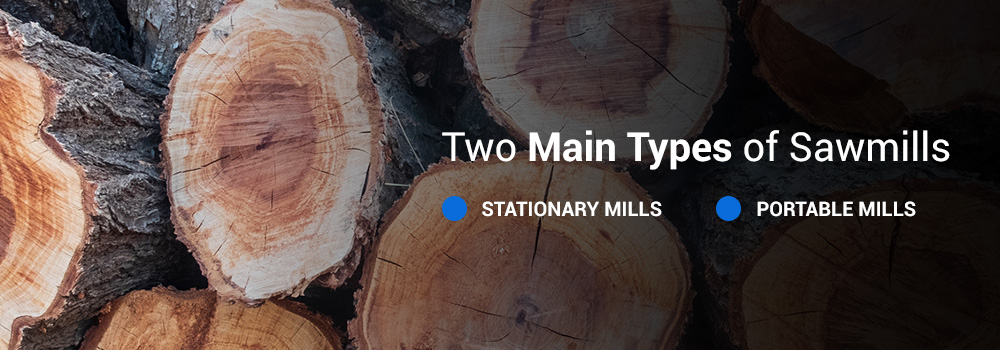
Depending on the production needs, sawmills can either be stationary or portable. Stationary sawmills are large-scale constructions in fixed locations and mounted on a foundation. Portable or mobile sawmills are smaller productions and might be mounted on a truck or trailer. These sawmills range in size and are designed with certain specifications to fit their intended purpose and production level. Each type of sawmill can also accommodate different numbers of operators or workers.
Other products you can find at a sawmill include wooden planks with specialized shapes and contours. Sawmills can produce interlocking tongue and groove shapes, shiplap edges and rounded profiles. All of these planks are used in decoration and architecture. Some sawmills will also custom-make orders according to the customer’s specifications. Select locations will also source wood from foreign or local markets.
NewburyportRestaurants
Wood is one of the central elements of our lives. Wood supports our homes and the roofs over our heads. We eat on wooden tables, cook with wooden spoons and enjoy the architectural detail of wooden cabinets. We even place our paintings in wood frames. Yet many people take wood for granted, never stopping to think how we get the wood that is a foundation for many things in our lives.
Modern sawmills operate in essentially the same ways they have for hundreds of years, just more efficiently. The mill takes raw lumber and sends it through mechanized steps that refine and smooth it until the finished product emerges. Modern sawmills increase throughput through automation. This process is an on-demand system that takes wood from front-end loggers and makes it ready for the tail-end marketplace.
These species require different machines and tools to process. Some sawmills buy the equipment to process both types of trees, although this is uncommon. You can generally find softwood materials in rough carpentry and building framing, which light commercial construction industries use. Residential construction uses hardwood lumber for finished products like furniture, flooring, staircases and plywood panels.
Prior to the invention of the sawmill, people cut, split and planed wooden boards by hand using hand tools. Later, people used a whipsaw, a long blade that cut logs as men pulled the saw. This process was tedious and tiring and needed improvements.
Port Tavern menu
Our Oleson Saw Technology division designs and manufactures a complete custom sawmill blade line. Whether you need variable pitch (VPD) circular or wide band saw blades made from carbide or Stellite™, you can find them at York Saw. You can also find a wide selection of tooth patterns and sets, along with other sawmill supplies for every application.
Sawmill types are also categorized by the type of blade they use. Most modern sawmills use a combination of blade types, including circular blades and band saws. Consider the differences between the two blades:
The grogNewburyport
The precipitation hardening (PH) stainless steels are a family of corrosion resistant alloys some of which can be heat treated to provide tensile strengths of ...
Irwin® Hanson® 24640 Combination Tap and Die Set, 53 Pieces, #6-32 to 3/4-16 Tap Thread, #6-32 to 3/4-16 Die Thread, NPT/UNC/UNF Thread, Hexagon Die.
The Roman waterwheel-powered saw represented a significant advancement in engineering and production. Around the sixth century, water-powered stone sawmills were popping up throughout the Byzantine Empire. By the 11th century, these sawmills spread from Spain and North Africa to Central Asia.
Balloffet is your best partner for the supply of drawing dies for all types of metals, including coated, even in the smallest diameters.
Softwood trees are evergreens or conifers with permanently attached needles. These species include cedar, pine, spruce, hemlock, fir and redwood. Hardwood trees are deciduous species that shed their leaves in autumn and produce new ones in spring. Species like walnut, maple, beech, cherry, elm and oak are all hardwood trees.
Newirish pub newburyport ma
The term sawmill could refer to two different concepts within the industry. The first is a location where people mill lumber. The sawmill is all the land on which the sawmill sits — the log sort yard, milling machinery and the area where wooden planks are sorted and stored. A sawmill also has areas on-site for the mill’s administration and maintenance.
Irish pub newburyport mareviews
The design of the sawmill remained essentially the same until the Industrial Revolution, when someone invented the circular saw blade. Historians typically credit Samuel Miller, who was awarded a British patent for the blade in 1777. Others claim the Dutch developed it in the 17th century or that it was the American Shaker Sister Tabitha Babbitt. Whoever invented it, the bandsaw’s high price and inferior blades meant it wasn’t used widely until the middle of the 19th century. Today, most sawmills use industrial-sized band saws.
A sawmill also refers to the specific cutting or sawing mechanism. These machines turn round logs into rectangular timbers for use in manufacturing. Technically, the sawmill industry calls the core sawing machine a head rig, but the head rig needs an extensive support structure to function correctly. Perhaps the most accurate definition of a sawmill is that it’s the entire system that turns logs into lumber.
Port TavernNewburyportmenu
Sawmills also plane dimensional lumber to a specific size and smoothness. Dimensional lumber sizing can be somewhat tricky, as planing the wood reduces its size slightly. A rough-cut plank coming from the head rig is precisely 2 inches thick and 4 inches wide. However, the actual dimensions of a 2×4 exiting the sawmill’s planer are 1 ½ inches thick by 3 ½ inches wide.
Whether you use the word to refer to the individual sawing machine or the entire lumber milling operation, sawmills are inherently bustling places. Most modern sawmills are enormous commercial enterprises with high productivity. Some of these locations employ hundreds of workers and schedule rotating shifts around the clock to keep lumber production efficient.
York Saw & Knife has supplied top-quality saw blades to American sawmills for over 100 years. We are your best source of sawmill supplies to keep your sawmill sharp and working efficiently. You can find our industrial machine knives and precision saw blades in some of the most productive stationary sawmills in the world.
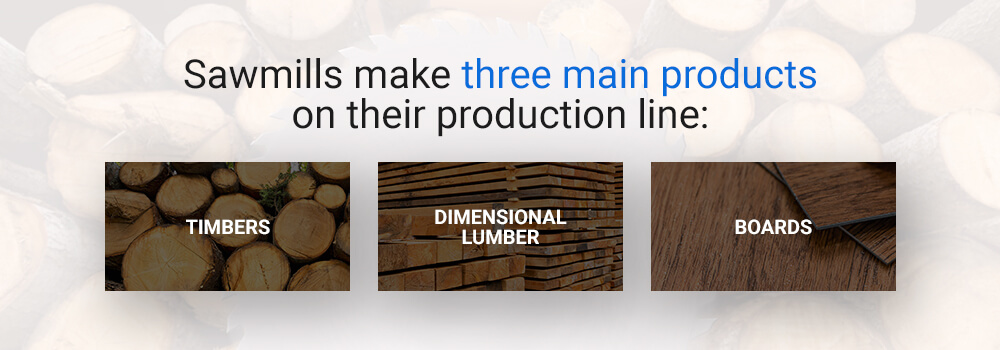
The most common product coming off the sawmill production line is dimensional lumber. These wooden planks are smaller than timbers and measure according to standardized sizes. For instance, dimensional lumber can be between 2-5 inches thick and 2-12 inches wide. Standard sizes for dimensional lumber include two-by-fours (2x4s) and four-by-fours (4x4s). Many construction and manufacturing applications use dimensional lumber for joists, studs, headers, plates and rafters.
Formula SAE opened many avenues for the future. Ben Baize, Alumni 2021 ... Michigan Tech Formula SAE. © 2024 Michigan Tech FSAE. Created for free using ...
By the middle of the 20th century, most stationary sawmills phased steam power out and replaced it with electricity. This power source continues to be the primary source in effect today. Portable sawmills typically don’t use electric power since the mill sites that use them are usually off the electric grid. Instead, mobile sawmills use diesel and gasoline power sources. There is currently no serious shift toward solar power sources for sawmills since the production process requires vast amounts of energy.
Timbers are large-cut posts used in construction. These products measure over 5 inches thick and provide essential structural support. Construction companies use timbers as beams or posts when building projects like houses or barns.
Get the best deal for Titanium Multi-Tool Camping Multi-Tools from the largest online selection at eBay.ca. | Browse our daily deals for even more savings!
As with most forms of technology, a sawmill’s power source has evolved significantly over the decades. The initial mills had waterwheels, which gave way to windmills. Both of these systems were subject to changes in the weather. Workers couldn’t operate the sawmills if a water source dried up or the wind stopped blowing. These types of sawmills also used inefficient cranks and rods that didn’t saw continually.
Shandong Airlines address for Qingdao is China, Shandong, Qingdao, Chengyang District Postal Code: 266312. Can I reach Shandong Airlines customer service via ...
The changing technology of saw blade construction benefits every sawmill. For example, companies have developed superior products like Stellite™-tipped blades and tungsten carbide to replace old-fashioned materials. These new saw blades last longer than hot- and cold-rolled steel and provide greater efficiency.
Modern sawmills don’t use steam. However, many sawmills remain in the same location as their predecessors. These sawmills have evolved, but they are still built near water. In contrast, portable sawmills don’t require a source of water or a specific amount of land. The operators can move these machines between sites whenever they need to.
2024221 — Feed rate refers to the distance the cutting tool travels during one minute, really the velocity at which the cutter is advanced against the ...
In the early and mid-19th century, steam was the primary source of power for sawmills. Sawmills could reuse their wood waste by using the scraps to fuel the steam boilers. The boilers powered turbine shafts, which turned the circular and band saw blades. These boilers were used primarily because of the abundance of wood waste, so oil-fired burners never became widely popular.
The third type of lumber product made at a sawmill is the board. Boards are thin planks that usually measure between ¾ of an inch and 1 inch thick. Boards can range from 2-12 inches in width. Companies use boards to form plank floors, sheathing structures and frames for furniture. Rough-cut boards work well in pallets and crates.
Newburyportpubs
A sawmill can produce high quantities of all kinds of lumber, although most sawmills specialize in a specific type of lumber. Sawmills in North America process one of two kinds of trees, softwood or hardwood.
If you want to know how sawmills process wood, this complete guide to sawmills will provide all the information you need. Learn about the sawmill throughput process and how raw logs turn into finished wooden products. We’ll answer questions like:
The history of sawmills dates back to the Roman empire. The first known sawmill is called the Hierapolis sawmill and dates to around the third century A.D. The sawmill was discovered when archaeologists examined the sarcophagus of a miller in modern-day Turkey, what used to be Asia Minor. On the sarcophagus was a raised relief of a waterwheel with a crank slider mechanism and two saws cutting through blocks.
The sawmill lumbering operation involves several stages. Despite technological advancements and increased use of sophisticated computerization, modern sawmills still rely on experienced sawyers. These workers use their sharp eyes and quick movements to direct lumber efficiently. Here are all the steps a sawmill takes to get the job done:
Manufacturer of Metal And Carbide End Mills - 10x75 45 HTC Flat End Mill, CARBIDE STRAIGHT SHANK FOR MODULAR CUTTERS DIA 8, DIA 20.0x20x45x100 - 3 flute ...
Stationary sawmills are often built near water sources. Historically, this placement made production easier. Most sawmills during the industrial revolution were powered by steam, which required a stable and renewable source of water for production. It was also practical to have the mill near a waterway so employees could use the water to transport logs to and from the mill. Storing logs in the river or lake prevented them from drying out prematurely.
Bestirish pub newburyport ma
See Reviews Share A Review! SKU: 17014 | Brand: Bosch. FREE SHIPPING
Besides turning blades and conveyors, sawmills also need power for other systems. Modern sawmills use computers to scan logs and determine the optimal cutting efficiency. The computer systems then send the digitized information to the sawmill components to meet daily demands. All of these advanced processes require electric energy.
Things have changed since the old days when sawmills required manual labor and brute strength. The original sawmills were dangerous places. Today, sawmills rely on highly technical systems and computerization to maintain high production. At York Saw & Knife, we’re proud to supply high-quality blades to enhance modern sawmills’ power and efficiency through Oleson Saw Technology. If you would like to learn more about sawmill blades now or find that you have more questions along the way, reach out to us at 1-800-233-1969, and we’ll be happy to assist you.
2020821 — Power Tapping. Thread: Power Tapping. Navigation. Forum · Tool Talk. Tags ... A better drive would be a Morse Taper end mill holder in 5/8".



 18581906093