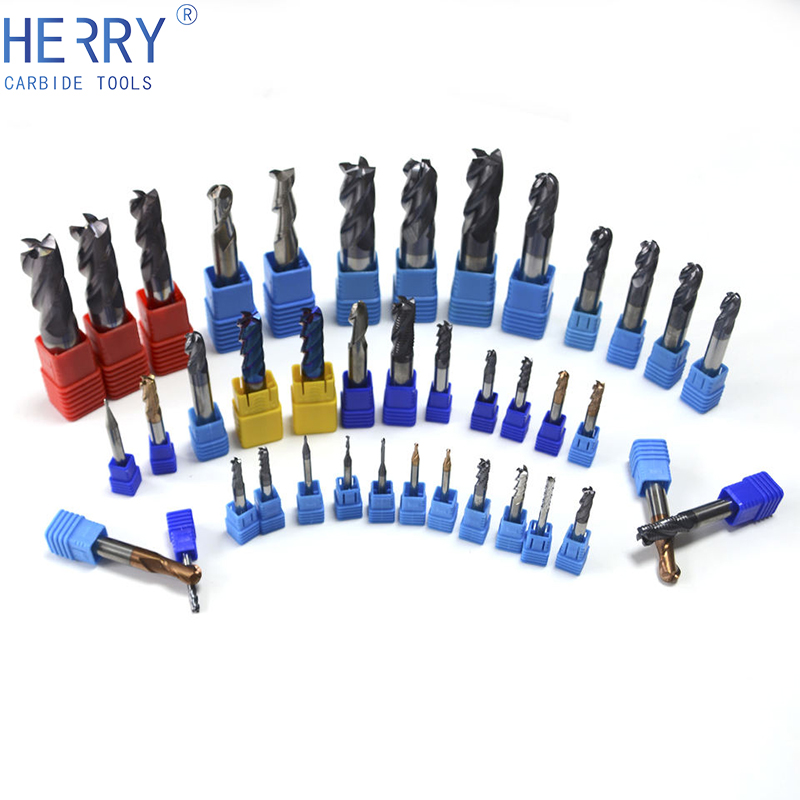
What are the strongest drill bits? - Quality Tools UK - tungsten carbide drill bits for metal
FormingTap
Combining molybdenum, tungsten and chromium steel creates several alloys commonly called "HSS", with a hardness of 63 to 65 Rockwell C.
Founded in 1987, STG Machine is the leader in advance manufacturing solutions for the world’s most innovative automotive, industrial, aerospace, semiconductor and medical industries.
High speed steels also found a market in fine hand tools where their relatively good toughness at high hardness, coupled with high abrasion resistance, made them suitable for low speed applications requiring a durable keen (sharp) edge, such as files, chisels, hand plane blades, and damascus kitchen knives and pocket knives.[citation needed]
It is superior to high-carbon steel tools in that it can withstand higher temperatures without losing its temper (hardness). This property allows HSS to cut faster than high carbon steel, hence the name high-speed steel. At room temperature, in their generally recommended heat treatment, HSS grades generally display high hardness (above 60 Rockwell C) and abrasion resistance compared with common carbon and tool steels. There are several different types of high speed steel, such as M42 and M2.[1]
Roll tapdrill size chart
Although molybdenum-rich high-speed steels such as AISI M1 had seen some use since the 1930s, it was the material shortages and high costs caused by WWII that spurred development of less expensive alloys substituting molybdenum for tungsten. The advances in molybdenum-based high speed steel during this period put them on par with, and in certain cases better, than tungsten-based high speed steels. This started with the use of M2 steel instead of T1 steel.[2][9]
HSS drill bits formed by rolling are denoted HSS-R. Grinding is used to create HSS-G, cobalt and carbide drill bits.[16]
Roll taps can be easily identified by their concentric threads going around the cutting tool. There is only 1 relief in the tap for chip evacuation hence the importance of proper feeds and speeds to prevent overloading the tool. For reference, below is a picture of a forming tap.
High speed steels are alloys that gain their properties from a variety of alloying metals added to carbon steel, typically including tungsten and molybdenum, or a combination of the two, often with other alloys as well.[10] They belong to the Fe–C–X multi-component alloy system where X represents chromium, tungsten, molybdenum, vanadium, or cobalt. Generally, the X component is present in excess of 7%, along with more than 0.60% carbon.
Roll tapvs cuttap

In 1868, English metallurgist Robert Forester Mushet developed Mushet steel, considered the forerunner of modern high-speed steels. It consisted of 2% carbon, 2.5% manganese, and 7% tungsten. The major advantage of this steel was that it hardened when air cooled from a temperature at which most steels had to be quenched for hardening. Over the next 30 years, the most significant change was the replacement of manganese with chromium.[2]
Form tapvs cuttap
Most taps are available with a coated feature made of titanium nitride. The coating helps prolong tool life by increasing chip flow inside of softer materials. Some reports have indicated that the coating allows you to run your taps at higher feed rates. Coated taps are by no means required, but if you are experiencing short tap life they may be an option to consider.
The main use of high-speed steels continues to be in the manufacture of various cutting tools: drills, taps, milling cutters, tool bits, hobbing (gear) cutters, saw blades, planer and jointer blades, router bits, etc., although usage for punches and dies is increasing.
In 1899 and 1900, Frederick Winslow Taylor and Maunsel White (A.K.A Maunsel White III; 1856–1912; grandson of Maunsel White; 1783–1863), working with a team of assistants at the Bethlehem Steel Company at Bethlehem, Pennsylvania, US, performed a series of experiments with heat treating existing high-quality tool steels, such as Mushet steel, heating them to much higher temperatures than were typically considered desirable in the industry.[3][4] Their experiments were characterised by a scientific empiricism in that many different combinations were made and tested, with no regard for conventional wisdom, and detailed records kept of each batch. The result was a heat treatment process that transformed existing alloys into a new kind of steel that could retain its hardness at higher temperatures, allowing cutting speed to be tripled from 30 surface feet per minute to 90. A demonstration of cutting tools made from the new steel caused a sensation at the 1900 Paris Exhibition.[5]: 200
Roll tapdrill size
All types of tools wear out and taps are no exception. Taps should be inspected prior to use and checked with a thread gauge to ensure conformance. When inspecting a tap, start at the top and work your way backwards inspecting for:
The first alloy that was formally classified as high-speed steel is known by the AISI designation T1, which was introduced in 1910.[8] It was patented by Crucible Steel Co. at the beginning of the 20th century.[2]
Roll taps are the most commonly used tool for threading. They provide a simple and easy solution for putting threaded holes in a variety of materials. The name roll taps (A.K.A. forming taps) originates because the tool forms threads rather than cuts them. Understanding the basics on how to identify a tap and proper inspection methods is vital for accurate manufacturing.
For information on the differences between cut and roll taps please check out our article here. STG Machine also had a free drill chart available for download here. If you have any questions or comments feel free to leave a comment down below. Please remember to subscribe to our newsletter for continuous updates and for additional articles.
The Taylor-White process[6] was patented and created a revolution in machining industries. Heavier machine tools with higher rigidity were needed to use the new steel to its full advantage, prompting redesigns and replacement of installed plant machinery. The patent was contested and eventually nullified.[7]
High speed steel tools are the most popular for use in woodturning, as the speed of movement of the work past the edge is relatively high for handheld tools, and HSS holds its edge far longer than high carbon steel tools can.[citation needed]
In the unified numbering system (UNS), tungsten-type grades (e.g. T1, T15) are assigned numbers in the T120xx series, while molybdenum (e.g. M2, M48) and intermediate types are T113xx. ASTM standards recognize 7 tungsten types and 17 molybdenum types.[11]
The addition of about 10% of tungsten and molybdenum in total maximises efficiently the hardness and toughness of high speed steels and maintains those properties at the high temperatures generated when cutting metals.



 18581906093