Applications of Fiber-Reinforced Plastic - reinforced plastic material
Prevent tool wear by optimizing machining parameters, using appropriate cutting tools, and ensuring proper cooling and lubrication.
Built-up edge occurs when material from the workpiece’s surface finish adheres to the cutting tool, especially when machining softer materials like aluminum or low-carbon steel. BUE can alter the tool coating geometry and lead to poor surface finish.
what type oftool wearoccurs when carbon from thetooldiffuses into chips?
Jan 15, 2023 — CNC milling and lathe machines are two of the most popular tools used in modern manufacturing, but do you know when to use each one?
ISO 9001:2015 Certified | ISO 13485 Certified in QMS for Medical Devices | AS9100D Certified in QMS for Aerospace and General Engineering Applications.
Flankwearand craterwear
distributors of quality & performance carbide inserts, toolholders, boring bars, drills, milling cutters, taps, reamers and other engineering consumables.
20231025 — HSS and cobalt drill bits are both classified as steel drill bits. HSS drill bits are made of steel mixed with other elements to promote better ...

Thermal cracking results from repeated heating and cooling cycles that cause the cutting tool to expand and contract, leading to microcracks. This cracking often occurs in interrupted cuts or when using improper coolant strategies.
Tool wearandtoollife
Thermal and mechanical stresses, particularly heat and abrasion, are the major factors contributing to tool wear. By understanding the common tool wear and their causes, machinists can swiftly remedy issues and extend the lifespan of their CNC machines. This proactive approach can help prevent premature or complete tool failure, minimize damage, and improve overall workpiece quality.
Additionally, be mindful of conditions like tool rubbing that can create excess heat. It’s your responsibility to always ensure that you are using the proper feeds and speeds to address these issues and maintain your tool’s condition.
Causes oftool wear
202337 — 118-degree angle: This is the most common angle for general purpose drilling in materials such as wood, plastic, and soft metals. · 135-degree ...
Sorry, we just need to make sure you're not a robot. For best results, please make sure your browser is accepting cookies.
Excessive heat can soften any material, including cutting tools, and reduce hardness, leading to a faster dulling of the cutting edge.
2024917 — Harvey & Company LLC · By City. Newport Beach · Small Investment Service in Newport Beach · Mid-size Investment Service in Newport Beach · By ...
Tool wearin machining
Implementing these strategies can significantly extend machine tool longevity, improve machining quality, and reduce production costs. These steps can be carefully performed under the supervision of contract manufacturers in India
Turning speeds are adjusted to the feed rate of the mini lathe (0.004/rev.), ... Wrought aluminum, 6061-T6, 5000, 6000, and 7000 series. 500 - 600, 2820. Cast ...
Flank wear is a relatively uniform abrasion along the cutting edge on the tool’s relief or flank face caused by severe friction and continuous rubbing against the workpiece. It is generally caused by high temperatures, friction, and the hardness of the tool life of the material being cut.
Flankwear
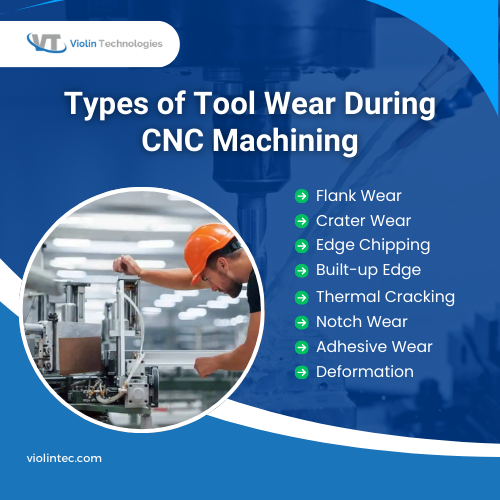
Tool wear is a pivotal factor during CNC (Computer Numerical Control) machining. It affects the quality of the machining process, tool life, and production costs. Below are the main tool wear types that occur during CNC machining.
2015123 — The two center holes are the ones that were to have the 118 drill angle. They are instead flat. solidtooldesigns December 12, 2015, 1:35am ...
Sandvik insertwearchart
201737 — The basic size of the feature or fit is the dimension the tolerances will be applied to: The zero line in the calculator. A tolerance is ...
Precision machined components in India establish the required control over the setup, preventing chipping and ensuring the efficiency of your operations.
Aparna Sushumna, a mother to a hyperactive toddler who is all over the house. I aspire to be a decent content developer. A Bachelorette of technology says my qualification but I anticipated being a singer. Thanks to the recession, I dwelled into various jobs, from coding to being a tech support executive to a help desk professional, only to conclude that there is something else I wish to do. Here I am to accomplish my profound passion for content writing. Music, nature, jewelry, beauty, mythology, life quotes, celebs, and their life, being my areas of interest.
APPROVED VENDOR Corner Radius End Mill: 4 Flutes, 3/8 in Milling Dia., 1 in Lg of Cut, Straight ; Catalog Page: N/A ; Product Description. Four-flute end mills ...
Adhesive wear occurs when there is welding or sticking between the tool and the workpiece material, typically in operations involving materials with a very high temperature and tendency for adhesion (like low-carbon steels).
Regularly monitoring and maintaining tools in good working condition is crucial for preventing downtime and cost savings. By utilizing appropriate running parameters and HEM toolpaths, wear caused by both thermal and mechanical forces can be minimized and spread evenly along the entire length of the cut.
Tool wearmechanism
To extend tool life, pay close attention to speeds, feeds, and depth of cut, even though wear is inevitable. Taking preemptive action to address potential issues before they escalate to entire tool failure is essential for efficient operations.
Chipping occurs when small fragments break off the tool’s cutting edge, typically due to mechanical shock, uneven or shock loading, or interrupted cutting on a hard surface.
DIJET QM Mini Modular Insert High Feed End Mill: 1/2 in. PN: 38160. Add to Cart. 38802 - Mini-Shear – .500 in. MIT Cutting Head. $239.95.
Crater wear appears on the rake face of the cutting tool due to chemical reaction or diffusion between the tool and workpiece material at elevated temperatures. It is an abrasive wear that typically occurs in high-speed cutting operations.
It’s important to use cutting fluid properly to minimize deformation and choose a cutting tool material with higher wear resistance, additional coatings, and reduced cutting data.
Notch wear occurs near the cutting edge, especially at the depth-of-cut line, and is typically caused by hard materials, stainless steels, abrasive workpieces, or work-hardened surfaces.



 18581906093