ATA Tools - ata tools
Q-Mark has built its metrology business by providing what customers need, when they want it. This goes for its IMTS booth, too, with free drinks alongside custom technology.
Legacy Precision Molds takes us on a tour of their moldbuilding facility. They've recently implemented two automated 5-axis cells for metal and graphite machining that run lights out during nights and weekends.
The specific angle that is ground on the secondary point is determined by the primary point angles. The angles should be split evenly as shown in Figure 4. As an example, if one side of the primary point angle is 67 degrees, then the secondary angle would be half of that or 33-1/2 degrees.
Forget “additive versus subtractive.” Machining and metal additive manufacturing are interconnected, and enhance the possibilities for one another. Here is a look at just some of the ways additive and machining interrelate right now.
The L.S. Starrett Co. has been manufacturing precision measurement tools in Athol, Massachusetts, since 1880. Attention to U.S. manufacturing often focuses on reshoring manufacturing from other countries, but Starrett never left. The facility in Athol employs hundreds and produces thousands of tools that remain vital for measurement in machining and other fields.
Lee Wimmer invited us to tour his second-generation family-owned machine shop in Perkasie, PA. This video explores the production processes behind precision-machined parts for both Wimmer Custom Cycle and LS Wimmer Machine Co., and shows how ingenuity and determination are still at the heart of American manufacturing. Today, both companies are now managed by Wimmer’s three sons.
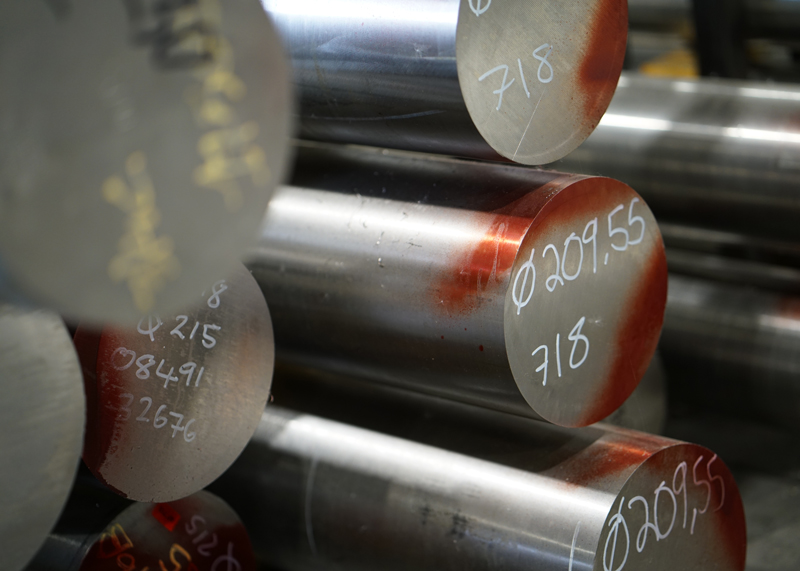
Alloy 718 is an age-hardened nickel-chromium alloy containing significant amounts of iron, niobium and molybdenum, together with smaller amounts of aluminum and titanium. This composition provides a high strength alloy combined with good corrosion resistant abilities. Service temperatures range from -250°C to about 650°C. Additionally, 718 is easily weldable and often used for applications such as pumps, gas turbines, rocket motors and nuclear reactors.
In selecting the correct lip clearance angles, it is necessary to analyze the material's machinability, hardness, brittleness, and fragility. Since drill chatter and hogging-in can be detrimental to both the drill and material, reduced clearance in a fragile or hard material is required. Reduced clearance produces a more accurate hole while permitting increased drilling speeds to compensate for chip thinness.
In Figure 2, the chisel's profile is flat (linear), running straight across the drill. Sharp, acute angled corners are formed where the chisel ends join with the web surface. When drilling a hole, the chisel's full length contacts metal, and the corners simultaneously augur into the metal immediately producing chips. Furthermore, the flat ground facets produce a pronounced sharp edge on the chisel. As a result, the chisel has outstanding extruding properties permitting less thrust, less heat, and greater productivity than the conventional drill.
Alloy 825 is a nickel alloy with high iron content and a copper addition, suitable for applications in special corrosive environments. The grade provides a cost-effective offering – achieved by lowering expensive alloy content, compared to superalloys, such as Alloy 625, and Alloy 718.
Plastics demand the highest degree of drill point accuracy and the most blunt of all points. In a recent test, plexiglass, 1/8 inch thick, was drilled at 35ºF with a variety of drill diameters and point angles. Beginning with 80-degree included-angle drill points, the material shattered every time the drill point emerged through the bottom surface of the material. As the point angle was increased (more blunt, destruction of the plexiglass was reduced. At 134 degrees, breakage was markedly reduced. At 142 degrees, there was no breakage. Chipping around the bottom shoulder of the hole was eliminated with secondary point angles (Figure 5). In this particular case, the secondary cutting lips were 20 percent of the overall lip length. The recommended 60- to 80-degree included-angle points were found to be the most destructive in drilling plexiglass.
Determining the shape of a workpiece is required in many manufacturing processes. Keep in mind these important points to ensure that you master the process.
Take a look inside James Engineering, a high-end CNC Deburring OEM that became a job shop when they decided to produce their own parts in-house.
In Figure 1-A, the full lengths of the cutting lips are involved in cutting action while, in Figure 1-B, only 64 percent of the lips lengths are involved in the same depth of parent metal. Maximum rate of penetration into metal occurs only when the full length of the cutting lips are involved in the material. Therefore, the more blunt the point, the sooner the lips are involved in full cutting action.
Four-faceted drill points consist of separate cutting lip (primary) and secondary heel clearance (relief) facets. Extending the secondary facets to the midway point of the chisel produces the apex (point) at the center of the chisel's long axis, Figure 3. A self-centering point is produced, eliminating center punching and pilot holes. This point will not walk and is the most accurate of all the points. It is especially applicable to NC machines and can be ground on the largest drills. Primary facet angles are determined by the nature of the drilled material while the secondary facet angles are at 20 degrees.
The latest episode “Made in the USA” podcast explores a company that uses collaborative robots, one of the key tools helping US machine shops and other manufacturers compete with lower cost countries by automating production.
In the final analysis, the most effective point consisted of 144-degree included angles for the primary point, 80- to 85-degree included secondary point angles, 4- to 5- degree primary lip clearance angle facets, and 20-degree secondary heel clearance facets (20-degree heel clearance facets are automatically ground whenever primary angle facets are 8 degrees or less. As the primary facet angles are reduced, the secondaries should be increased accordingly (Figure 8). Thus, blunt drill points with lip clearances adjusted for specific materials have equal application on hard and soft ferrous, non-ferrous, and some non-metallic materials.
The dubbed drill, Figure 6, can be used for drilling many materials in addition to brass and copper. Conventional twist drills have maximum positive rake (angle or pitch) of the flutes at the outer extremes of the cutting edges. The drills gradually approach a neutral or slightly negative angle at the web center, depending on the drill's helical nature. This results in cutting edges with a varied cutting action, reduced to a minimum in the vicinity of the drill's center and excessive at the outside lip corners where there is the highest degree of rake and rotary travel. This situation puts the cutting edges in the OD area under tremendous stress and is a primary reason for lip corner breakdown.
An important feature of multi-faceting is the wide variety of drill points it permits to better serve user's needs, especially with exotic metals. Exotic metals are indispensable, compelling craftsmen to adapt to more up-to-date drill point geometry.
Each tool setting technique has merit, and it depends on where you are as a shop and the type of work you do, as cost and efficiency all come into play.
PTXPO 2025 is a comprehensive showcase of cutting-edge technologies and innovations within the plastics molding industry. Join fellow molders, moldmakers, brand owners, OEMs and their full suite of suppliers in Rosemont, IL for three days of non-stop networking, education and business development opportunities.
Ceratizit USA has promoted Troy Wilt from national sales manager to managing director of Ceratizit USA, cutting tools division.
Differential gaging measures using two devices, which has advantages over standard, comparative measurements using a single sensing head. These include the ability to measure size without regard to position.
Ever wonder what sets Top Shops apart from the competition? Dive into their award-winning practices and explore behind-the-scenes strategies for operational excellence.
Lee Wimmer invited us to tour his second-generation family-owned machine shop in Perkasie, PA. This video explores the production processes behind precision-machined parts for both Wimmer Custom Cycle and LS Wimmer Machine Co., and shows how ingenuity and determination are still at the heart of American manufacturing. Today, both companies are now managed by Wimmer’s three sons.
Take a look inside James Engineering, a high-end CNC Deburring OEM that became a job shop when they decided to produce their own parts in-house.
Notches are ground parallel to the flute angles allowing chips to flow freely up the flute. With the notch on the opposite web that angles diagonally up and away from the other notch, the web thickness is not compromised, permitting a stronger point that allows increased thrust to drill holes more rapidly.
Chiron Group combines the best of both worlds at IMTS 2024, featuring live demonstrations of their Micro5 and Mill 2000 machines, alongside a cutting-edge virtual showroom. This innovative approach allows visitors to explore Chiron’s full product lineup without the logistical challenges of transporting large equipment.
This presentation focuses on the vital role that linear and angular encoders play in ensuring precision in machine tools. Attendees will learn about the common challenges compromising accuracy, such as thermal expansion, mechanical misalignments and vibration. Whether you're an OEM, integrator, or machine operator, this webinar will offer valuable insights into optimizing CNC performance. Agenda: Challenges to CNC machine accuracy Understanding encoder technology How encoders address accuracy challenges
Job shops are implementing automation and digitalization into workflows to eliminate set up time and increase repeatability in production.
The material’s many advantages makes it a popular choice for a variety of industries, including paper and pulp, oil and gas, aerospace, and chemical processing. Regardless of your needs, we at Sverdrup Steel have the perfect ni-based alloy for your project.
In this webinar, director of manufacturing Phil Linscheid will discuss how Hamilton Company has transformed its manufacturing operations with real-time production data. Learn how Phil and his team have increased throughput five times since 2017, while simultaneously improving production efficiency. Phil will share his journey over the past few years making strategic decisions to grow the machine shop’s impact as well as how his team uses MachineMetrics to improve production visibility, automate cycle time tracking, increase machine uptime and enable accurate quoting and planning. Agenda: Enabling production visibility in Nevada’s largest machine shop Improving quoting, planning and scheduling with accurate cycle times The importance of integrating shop floor data with operational systems
OnLogic is partnering with AI development and implementation specialists to help companies use AI-powered solutions, aiming to drive real business value.
In areas where there was no electricity, manual hole drilling was painstakingly slow, requiring much time, patience, and physical effort. Experimentation proved that when a conical (conventional) surface drill was ground with a flat surface (multi-flat faceted point) a linear chisel was produced.
In the latest episode of our View From My Shop series, MMS Editor-in-Chief Brent Donaldson visited the JN Shapiro Watches headquarters and production facility where Founder Joshua Shapiro—a history teacher turned watchmaker—realized his dream of "making a watch from scratch and everything in it."
When revising part designs, investigate the 3D CAD, the 2D drawing and the part’s functional requirements to determine which details should be tightened up.
New U.S.-based event announced in 2021 finally debuts next year: focuses on complete additive manufacturing value chain. More at formnextchicago.com.
United Grinding has signed an agreement to acquire the GF Machining Solutions division of Georg Fischer AG, aiming to establish a global presence in ultra-precision machining.
Pacon Mfg, Inc. has not rested on its laurels as the 2020 Top Shop Honoree for Shopfloor Practices and Performance. In the years since, it has refined its processes to continue excelling in a volatile market.
Working closely with customers and making careful investments has enabled this Wisconsin machine shop to tackle difficult jobs with tight deadlines as a core part of its business.
A fast and positive method to view lip clearance angle is to read the chisel line angle (chisel's length). If the chisel's line angle is on a vertical plane pointing to 12 o'clock (90 degrees in relation to the cutting edges on a horizontal plane), lip clearance would be zero. But as lip clearance is gradually increased, the chisel line inclines diagonally to the right towards 1 o'clock (see Figure 2). Therefore, by paralleling the cutting edge with a protractor, a reading of 110 degrees of the chisel line angle denotes approximately 5 degrees or low clearance; 120 degrees indicates 8 degrees or medium clearance; 130 degrees indicates 11 degrees or high clearance; and 135 degrees indicates extra high clearance. With some practice, a glance without a protractor will reveal the clearance status quite accurately.
Common in American machine shops are bent drills with excessively thickened webs, large nicks and chips on the cutting edges, badly worn margins, scored and distorted shanks and cheap quality drills. Top quality work requires top quality drills. It is impossible to calculate monetary loss as a result of unproductive drills. The loss is caused by the scrapping of costly, finished workpieces nullified by the final step—the drilling operation. The loss is compounded by a general lack of knowledge of drill point geometry and failure to take advantage of what the many geometrical patterns have to offer.
As shown, the dubbed cutting edges have reduced the chisel's length. A dubbed drill is also self centering and eliminates web thinning, center punching, and pilot holes. The notches on this drill also angle away from each other to preserve the thickness of the web's central surface for greater strength against crushing forces.
Using a two-faceted drill (Figure 2), a slight impingement of about 1/32 inch first occurs at the rear outside heel corners when constant lip clearance is reduced to 7 degrees. At 5 degrees, impingement is approximately 1/16 inch, and further clearance reductions result in a triangular shaped impingement radiating primarily toward the lips and secondarily towards the chisel. Therefore, a small secondary facet (Figure 8) is required only when the constant clearance is 8 degrees (medium clearance range) and the secondary clearance facet size is increased gradually toward the cutting edge (see Figure 4), as the primary lip angle is reduced accordingly to the 5 to 3-degree range (low and extra low clearance range).
Job shops are implementing automation and digitalization into workflows to eliminate set up time and increase repeatability in production.
One of the most productive of all twist drills is the conventional split point. However, this drill has its limitations since it cannot be utilized on drills beyond 1/2 inch diameter. In addition, the neutral corners that result from splitting the point impede the escape of the chips, resulting in a weld bead. The weld bead has a tendency to cancel the advantages of the split point. The split point is a most exacting and critical geometry to regrind at the local shop level.
Facing increasing competition from lower-cost imports, Suburban Tool made a move toward large-scale, in-house machining. By identifying a niche in large, precision angle plates and tombstones, the company has strengthened its ability to control quality and protect its reputation.
At Carnegie Mellon University’s Manufacturing Futures Institute, researchers use a robotic test bed where AMRs deliver Lego bricks to robot arms for assembly to study AI, multirobot collaboration, assembly, safety and more.
Thousands of people visit our Supplier Guide every day to source equipment and materials. Get in front of them with a free company profile.
The more common twist drill point geometries often are not the best for the job at hand. By choosing the best point for the material being drilled, it is possible to achieve better tool life, hole geometry, precision, and productivity.
Rob Guiao, Chris Hall and Bassanio Peters will demonstrate relatable situations to equip you with data to improve predictability, future-proof operations and maximize ROI. Agenda: Explore the importance of data in decision-making, especially for facility upgrades or new projects Learn how comprehensive solutions for manufacturing and construction projects can improve predictability and ROI See real demonstrations of machine integrations, facility layouts and automations to ensure proper throughput and integration
During the nineteen-twenties and thirties, rivets and bolts were still a primary means of joining metals. Drilling operations were commonly accomplished with the manually-operated drill press and breastplate mechanism. The craftsmen took special care to insure high accuracy because they, rather than the electrically-driven machine, paid for the mistakes.
The Automated Shop Conference (TASC) will give shops of all sizes and production volumes key insights and practical guidance on how to implement automation.
The modified split point (MSP) overcomes the shortcomings of the conventional split point (CSP) and regrinding the more productive MSP is not critical. In Figure 5, the web's notch has a positive rake, resulting in secondary positive cutting edges up to the chisel. The MSP can then be ground on drills up to 3 inches in diameter. The chisel length can be reduced accordingly to lengths ranging from 0.050 inch for three-inch-diameter drills to 0.010 inch for 1/4-inch drills. Therefore, MSP produces a self-centering drill which eliminates the need for pilot holes even for drills as large as 3-inch diameter.
Dubbing the flute surfaces produces uniform rake angles across the full length of the cutting edges. Cutting action is increased in the central area of the drill where it is normally minimal, and gradually decreased toward the OD where it is normally excessive. More equalized distribution of cutting action occurs across the lip's full length, thereby reducing corner breakdown while markedly increasing drilling efficiency.
By equipping MassRobotics with its advanced cobots, ABB aims to facilitate the creation of new and impactful solutions that address real-world challenges across various industries.
The conventional drill has a bow shaped (non-linear) chisel which wears a saucer shaped depression in the metal for the full depth of the hole. In stainless steel, frictional heat is sufficient to turn such a drill blue, generating temperatures over 1000ºF. The conventional drill, with rounded surfaces on each side of the point, has poor extruding properties and requires high thrust pressure.
The tool crib is the backbone of any machine shop — without the right tools, nothing moves forward. While most ERP systems overlook the tool crib, ProShop integrates it seamlessly with CNC programming, job planning, scheduling and more. Join this webinar for an exclusive look at how Roush Yates Manufacturing Solutions leverages ProShop to document tool requirements, sync tool demand from CAM software and efficiently manage the tool crib and work instructions. Discover how ProShop transforms the tooling workflow to maximize efficiency and precision.
At Mill 19, the site of the Advanced Robotics for Manufacturing Institute and Carnegie Mellon University’s Manufacturing Futures Institute, robotics data provides the foundation for AI and digital twins.
Modern Machine Shop is the leading publication and media brand in North America devoted to CNC machining. MMS combines unprecedented editorial access to manufacturing facilities with decades of experience to provide long-form content that is both insightful and impactful. About Us
Even before inspection, Datanomix and Caron Engineering’s TMAC AI can extrapolate part quality from cut information. This information also helps shops push their tool life to its limits.
Grant funding for workforce training or the purchase of new equipment is an undervalued but complex resource for machine shops. We enlisted an expert to help navigate the process.
AccuRounds has created synergy between culture and technology, driving a commitment to customer satisfaction and continuous improvement.
Custom workholding enabled Resolve Surgical Technologies to place all sizes of one trauma part onto a single machine — and cut days from the setup times.
Each year Products Finishing partners with thousands of finishing operations in the U.S. to celebrate National Surface Finishing Day (NSFD) on the first Wednesday in March. NSFD is designed to celebrate and showcase the industry to trade schools, businesses, officials and media, as well as to celebrate employees and staff. The overarching goal of NSFD is to bring further awareness to the important roles plating and coating facilities play in their communities. Facilities are encouraged to host events and work with local media to build awareness about the contributions made by the surface finishing industry. For a helpful guide to reaching out to media outlets, download the NSFD toolkit here. How can you celebrate? Share your company’s story Hold an open house where the public can check out your facility –— either in person or virtual Offer student shop tours to local trade schools Invite local elected officials to visit and get to know your staff Celebrate your employees Share news about what you’re doing on social media and use the hashtag #NationalSurfaceFinishingDay or #NSFD
In this episode of Made in the USA, several executives and senior staff at Hardinge give their first-person account of how they formulated the plan to shift the manufacturing of its milling and turning product lines from its Taiwan plant to its plant in Elmira, New York, the major challenges they encountered and the rewards that made it worth the effort.
When it comes to utilizing the spindle’s power, there is a lot of headroom at the upper limits, provided it’s in short bursts. Be mindful of your time at these loads so you don’t stall out.
Alloy K500 is a precipitation-age hardenable nickel-copper alloy. The alloy is non-magnetic to temperatures below -101°C, although it can withstand much lower temperatures. Tensile strength and yield strength increase with decreased temperature, while ductility and toughness are virtually unaffected. K500’s combination of low magnetic permeability, high strength and good corrosion resistance has been used to advantage in many applications, notably oil-well surveying equipment and electronic components.
There are some exceptions in splitting the angles. In plastics, the secondary angle should be increased. Lip clearance angles of secondary cutting lips are generally the same as the primary lip clearance angles. Secondary point angles can be added on all twist drills for increased accuracy and durability.
Learn more about the variety of technology and machinery Hwacheon Machinery America, Inc. is featuring at its IMTS 2024 booth.
Soraluce’s wide range of machine heads and the ability to have multiple heads on a single machine (with automatic changing stations) provides flexibility and reduced setups for large-format machining.
The linear chisel required approximately 50-percent less thrust than a conventional drill. As manual proficiency to grind multi-face points declined, such points dined accordingly because of difficulty in grinding them by hand. However, due to the more recent advent of NC machinery, which demands self-centering points, multi-faceting has been revived.
ModuleWorks and Toolpath announce a technology partnership that intends to utilize intelligent cloud-based manufacturing solutions for machining estimation and CAM automation.
Pairing automation with air-driven motors that push cutting tool speeds up to 65,000 RPM with no duty cycle can dramatically improve throughput and improve finishing.
Coordinate systems tell a CNC machine where to position the cutting tool during the program’s execution for any purpose that requires the cutting tool to move.
Nickel alloys are alloys consisting of nickel, with additional metals and chemicals, depending on what type of properties the alloy should have. The most common mix is nickel-chromium, but molybdenum, copper, and titanium are also frequently used in these types of alloys.
Workholding solutions can take on infinite forms and all would be correct to some degree. Follow these tips to help optimize custom workholding solutions.
AccuRounds has created synergy between culture and technology, driving a commitment to customer satisfaction and continuous improvement.
Determining the shape of a workpiece is required in many manufacturing processes. Keep in mind these important points to ensure that you master the process.
Automation is no longer a luxury in manufacturing today – it’s a necessity. The Automated Shop Conference (TASC) will connect job shops with experts who offer advice and considerations for this process.
Standards for surface finishes and profiles are not static; they change as technology changes or new processes come along that need to be considered.
Legacy Precision Molds takes us on a tour of their moldbuilding facility. They've recently implemented two automated 5-axis cells for metal and graphite machining that run lights out during nights and weekends.
Figure 7 illustrates cross sections of dubbed rake angles, but the lip relief angles remain unchanged in both figures. The cutting edge, shown on the right, is producing the thicker chip because of an increased rake of the dubbed flute surface. Such geometry produces a planning action due to a low lip-relief angle which reduces hogging-in and drill chatter, thereby increasing productivity and accuracy. Reducing the chisel (as shown in Figure 6), and increasing or decreasing the rake accordingly, permits a dubbed point to drill hard or soft metals, bakelite, fiberglass, plexiglass, copper, or brass. When drilling very soft copper or brass, 5-degrees negative rake should be used and, as metal hardness increases, the rake should be adjusted towards a positive rake angle accordingly.
An additional problem is the numerous flute surfaces that have rough serrated surfaces that result in saw-toothed cutting edges that break down more readily. Dubbing also solves this problem, producing smooth uniform surfaces on such drills, thus increasing lip life.
Though most frequently used for diameter measurements, an air plug and platen can be readily configured to measure perpendicularity.
Pacon Mfg, Inc. has not rested on its laurels as the 2020 Top Shop Honoree for Shopfloor Practices and Performance. In the years since, it has refined its processes to continue excelling in a volatile market.
JD Machine, 2024’s Top Shops Honoree in Human Resources, embodies its “Education for Life” core value with a robust apprenticeship program and significant continuous improvement efforts.
The metal fabricating industry is often behind the times, losing countless millions of dollars due to low-speed drilling operations. High-speed and flood cooling is the ultimate answer for high productivity. However, drill presses must be in top condition with a high degree of accuracy. Many factory-ground drills generally do not meet such accuracy requirements due to mass production. Various drill sharpeners, which lack proper mechanical design and concepts, also fail to meet these requirements.
This new quick-change tooling system enables shops to get more production from their Swiss turning centers through reduced tool setup time and matches the performance of a solid tool.
Spade drill blades utilize the same geometry as twist drills discussed in this article and are fabricated with more blunt points. The spade blade has numerous superior advantages over twist drills such as permitting a more open channel for the coolant to reach the cutting area in the hole, elimination of wookpeckering in deep holes, and excellent chip breaking properties. Since the spade blade holder is a thick-walled tubular structure, it possesses superior torque properties, permitting much deeper holes than twist drills. One holder can accommodate up to eight different size blades, drastically reducing both cost and storage space to a fraction of eight twist drills. The operator has more flexibility to meet specific drilling requirements because holders are produced in different lengths. A primary objection to greater use of spade blades has been the expensive and time-consuming resharpening opertion. However, J & A machinery has recently developed s simplistic machine that rapidly sharpens spade drills.
The six-faceted drill with secondary point angles (SPA) is the most durable of points, but least understood and utilized. Figure 4 shows the fifth and sixth facets forming secondary drill point angles. The weakest areas of the point are the outside-cutting lip corners, which are also exposed to the greatest amount of stress and travel. Consequently, drill points break down most frequently at these corners. Secondary point angles reduce the acute angles to reduce corner break down. Regrinding frequency is reduced and drill life increased. Secondary point angles also produce cutting lips that angle toward the heel corners. As the drill rotates, the back angle of the secondary lips cuts metal with a slicing action, which further reduces lip corner breakdown, drag, heat, drill torque, and binding as the drill exits from the bottom of the hole. This point is ideal for core holes and tubular material, producing burr-free holes. Also, hole accuracy is greater because the secondary point angles offer a self-seating, reaming action that resists lateral pressures. This point has good chip breaking properties because the primary and secondary cutting edges produce an angular formed ribbon that breaks more readily as it curls against the flute surfaces. A written testimonial from a reputable automotive firm indicated 300 percent more productivity than with new factory drills.
Heidenhain and Acu-Rite Solutions are offering several hands-on experiences at their booth this year, as well as internal components that reduce energy use.
When Puneet and Neelam Neotia moved from India to the United States several years ago, they brought with them a family background in manufacturing and CNC machining. Now the couple is working to get their startup machine shop off the ground, sourcing new customers and getting the word out about their shop in Clarksville, Indiana. The couple — proud to publicize their "Made in the USA" parts — is leveraging family connections and manufacturing capabilities back in India, but not in the way that some people assume.
ModuleWorks and Toolpath announce a technology partnership that intends to utilize intelligent cloud-based manufacturing solutions for machining estimation and CAM automation.
Across a range of technical presentations aimed at small and mid-sized job shops, the first-ever Automated Shop Conference (TASC) offered insights into several automated technologies, implementation strategies, shopfloor training tips, and even the untapped power of automated coolant delivery.
FANUC’s IMTS 2024 booth includes real-time demonstrations that show the abilities of its equipment, including robots, controllers and machine tools.
Alloy 625 is a nickel, chromium and molybdenum alloy with addition of niobium. This provides a high strength alloy without a strengthening heat treatment. The alloy is especially resistant to pitting and crevice corrosion but also other severely corrosive environments. Service temperatures range from cryogenic to about 1000°C. This alloy is characterized by high strength, outstanding fatigue and thermal strength, high oxidation resistance and excellent weldability. Typical areas of use include marine engineering, chemical processing and industrial applications in the oil and gas industry.
Motul announces it has acquired Chem Arrow Corp., aiming to expand the global presence and growth in lubricants for metal parts manufacturing.
AI technology isn’t just a concept for the future—it’s here now, ready to transform your estimating process with the new AI BOM builder in JobBOSS². In this first-launch webinar, discover how AI can revolutionize bill of materials (BOM) entry in your shop, saving time, reducing errors and boosting efficiency. In this session, ECI will review how to use AI to build BOMs through a powerful feature that automates the extraction and input of BOM data from PDFs, Excel spreadsheets and images, all within JobBOSS². You'll have the opportunity to watch a live demonstration of the AI BOM builder in action — showcasing its ability to reduce BOM entry time from hours to mere minutes — thereby allowing you to focus on more strategic tasks. Additionally, you will learn about the real-world benefits of AI-driven BOM entry, including the minimization of manual errors, enhanced accuracy, and streamlined estimating processes — all of which can provide your shop with an immediate competitive edge. Finally, there will be a Q&A session with experts, giving you the chance to ask questions and find out how to integrate AI effectively. Agenda: Experience AI in action in a real-world manufacturing setting Discover how the AI BOM builder can immediately impact your shop’s efficiency and productivity Get hands-on insights on implementing AI to streamline your operations
SmartBox 2.0 integrates advanced communication protocols and edge computing for enhanced productivity and security, ensuring safe data export from machines to factory networks.
OnLogic is partnering with AI development and implementation specialists to help companies use AI-powered solutions, aiming to drive real business value.
Pacon Mfg, Inc. has not rested on its laurels as the 2020 Top Shop Honoree for Shopfloor Practices and Performance. In the years since, it has refined its processes to continue excelling in a volatile market.
In the latest episode of our View From My Shop series, MMS Editor-in-Chief Brent Donaldson visited the JN Shapiro Watches headquarters and production facility where Founder Joshua Shapiro—a history teacher turned watchmaker—realized his dream of "making a watch from scratch and everything in it."
Excessive lip clearance is extensively practiced throughout the U.S. It causes severe hogging-in and material destruction in fragile material. Also, it produces over-sized holes and is a primary cause for reduced cutting edge life. Such excessive clearance is due to the tendency to incorrectly view the drill (as shown in Figure 2). In viewing the drill, most readers would insist that the drill has little or no lip clearance. However, it is an optical illusion since that drill actually has a high clearance of 15 degrees. Practically all craftsmen try to determine lip clearance by looking directly into the drill. In doing so, one is looking into a compound angle at the over-all surface of the drill, rather than a side profile of the cutting edge.
No matter what your workholding application, automation always makes sense. Kurt Workholding helps you pick the right tool for the automation job — whether it be a single-vise setup or multiple vises holding large work pieces. This webinar will cover automation solutions using pneumatic, hydraulic and electronic actuation. Agenda: Most common types of vise automation solutions How to pick the right type of automation for an application Key differences between custom workholding and off-the-shelf automation solutions
Entrepreneur Scott Colosimo found early success in China producing parts for his Cleveland-based motorcycle company in the mid-2000s. This is the story of how IP theft issues overwhelmed the business, prompting Colosimo and his team to start over from scratch — and move production back to the United States.
Alloy 31 is a nickel, chromium and molybdenum stainless steel with nitrogen and copper added. It combines moderate tensile strength and high ductility with excellent corrosion resistance to sulfuric acid, as well as reducing and oxidizing agents. In addition, Alloy 31 has strong resistance to corrosion and erosion-corrosion in phosphoric environments. Typically the alloy has PREN of ≥ 48, which ensures high pitting corrosion resistance, making it an ideal choice for seawater heat applications, the mining industry, ore processing and more.
In general, ni-based materials are known for their excellent corrosion and heat resistance while also maintaining outstanding strength. These properties make them ideal for use in high-temperature and high-chloride environments. However, there are also nickel alloys that are intended for cryogenic conditions (i.e temperatures below -150° C).
Coordinate systems tell a CNC machine where to position the cutting tool during the program’s execution for any purpose that requires the cutting tool to move.
Moving from an aging set of five-axis mills to more advanced machines enabled Hendrick Motorsports to dramatically improve its engine production.
Moving from an aging set of five-axis mills to more advanced machines enabled Hendrick Motorsports to dramatically improve its engine production.
Looking to automate your shop floor? The Automated Shop Conference (TASC) will connect shops with experts who can advise them through this transition.
The twist drill is one of the important, least understood, and most neglected of all cutting tools. Drill point standards are accepted based on inflexible precedent rather than logical deduction and experimentation. The 118-degree point, when the full length of the cutting for example, is erroneously assumed to be a good compromise or general-purpose point for drilling a variety of different metals. Varying the point angles has nothing to do with cutting action. A compromise between high- and low-lip clearance angles, not the non-cutting point angles, is the determining factor for a general purpose cutting tool. Lip cutting edge clearance angles must be adjusted to the metal's degree of hardness and machinability (generally, the harder the metal, the less required cutting edge clearance.)
Drills with unequal lands cannot be ground properly because the cutting lips are not 180 degrees from each other. Such drills, even new ones, will not drill efficiently or accurately. However, dubbing such drills will dress out the difference, leaving dubbed lips at a precisely opposite 180-degree position from each other and in uniform configuration of flute-to-flute surfaces.
During drilling operations, the by-products of rotational energy are chips and heat. Multi-faceted geometry generates less heat than any other drill point pattern. With equal diameters, the multi-faceted drill features 50-percent less thrust and 60-percent less heat than a conventional drill.
CloudNC introduces the resource-efficient Cycle Time Estimator function for its AI-powered CAM Assist solution, available for Mastercam, Autodesk Fusion and Siemens NX CAM users.
Facing increasing competition from lower-cost imports, Suburban Tool made a move toward large-scale, in-house machining. By identifying a niche in large, precision angle plates and tombstones, the company has strengthened its ability to control quality and protect its reputation.
Although both A and B have the same width denoting the same drill diameter, the more blunt point of Figure A has shorter over-all cutting lip length than the one in Figure B. This means that Figure B would drill the same size hole, but with longer lip lengths and a wider ribbon, thus creating more torque for the same size drill. Specifically, the lip length of a l-1/2 inch-diameter drill with 140-degree included angles will measure 0.865-inch per lip and the same drill with 118-degree included angle will measure 0.956-inch length per lip, or the equivalent of drilling with a 0.182-inch larger diameter drill. With larger drills of the same diameter, the spread is increased accordingly.
So far, Made in the USA has looked into system-wide effects of broken supply chains, automation, skilled workforce issues and our perception of manufacturing jobs — examining each topic through a prism of individual experiences. For this final episode for Season 1, let’s look at one more system-wide question and bring it back to personal perspectives: Is there today a new dawn, a new moment for American manufacturing?
Our Ni-based alloys are renowned for their ability to stand against extreme temperatures – both heat and cold. Discover our selection of high performance Nickel Alloys and read more about our nickel based products below.
Custom workholding enabled Resolve Surgical Technologies to place all sizes of one trauma part onto a single machine — and cut days from the setup times.
With such a spear-shaped point, when the drill begins to emerge from the materials, a small irregular circular-shaped hole with feathered edges develops in the bottom surface. Consequently, the spear shaped cutting lips wedge into the feathered edges at right angles, causing a binding and locking action that instantaneously shatters the material. A blunt point with less wedging action exits more gradually with its cutting lips more parallel to the feather-edges.
For stainless steel, drills are ground with 140-degree included drill point angles which assure maximum lip involvement in the minimum amount of time. Also, 10- to 12-degree lip-relief angle facets assure more positive cutting action. The key to drilling stainless steel is to avoid work hardening by obtaining maximum cutting action in minimum time. (The recommended point is shown in Figure 5). Secondary cutting lips constitute 10- to 15-percent of the lip's overall length. The notches (Figure 5) may vary from 5 degrees for soft stainless, to neutral for semi-hard, to minus 5 degrees for hard metals.
Part of Major Tool’s 52,000 square-foot building expansion includes the installation of this new Waldrich Coburg Taurus 30 vertical machining center.
In sharpening the MSP, the rake across the web (the notch) can be varied, ranging from 5 degrees for the softest material to minus 5 degrees for the hardest materials. The MSP is especially outstanding for stainless, Inconel, titanium, and other difficult metals.
The goal of National Composites Week is to celebrate and bring attention to the myriad ways that composite materials and composites manufacturing contributes to the products and structures that shape the American manufacturing landscape today. Learn how you can participate in this year's National Composites Week on NationalCompositesWeek.com.
The MFG Meeting brings together manufacturing technology industry leaders to address key business challenges and provide actionable solutions. Sessions cover a wide range of topics, including workforce, economics, supply chain, leadership, politics, and more. This unique meeting experience provides unparalleled opportunities to network with executives from companies that make, sell, service, and support MT. These peers and competitors will learn from each other, build long-lasting connections, and share insights that will benefit their business.



 18581906093