
Autodesk Fusion 360 Configuration Add In - fusion 360 add in
As leading on-demand manufacturer and rapid prototyping provider, 3ERP offers a variety of Steel CNC machining services for a number of industries. We offer fast lead times and tolerances as tight as ±0.01 mm
Engineers and designers first create a 3D model of the part to be manufactured. This model is not just a visual representation; it is the language through which they communicate with the CNC machines. Once the design is finalized, it is converted into a computer program using specialized software.
Alloy steels, enhanced with various elements, offer superior mechanical properties and are used in demanding applications:
Laser cutting employs a high-powered laser beam to cut or engrave materials, offering precision cuts and the ability to create complex contours or patterns on steel surfaces.
Bead blasting is a process where small glass beads are blasted at high pressure onto the surface of the part, resulting in a uniform, matte finish.
Experimental tests were performed to study the effects of built-up edge in drilling four different work materials with a twist drill, at different cutting speeds and feeds. The tests were made dry to facilitate observation. Chip-flow angles, normal rake angles, and web angles with built-up edge were measured and correlated with inclination angles and effective rake angles. Comparison of the angles with and without built-up edge showed that the built-up edge significantly affects the basic mechanics of drilling.
Drilling involves creating round holes in the steel workpiece, utilizing drill bits precisely controlled for depth and diameter.
Electroplating coats the steel part with a thin layer of another metal, such as chrome, zinc, or nickel, via an electrochemical process, enhancing its corrosion resistance and aesthetic appeal.
Broaching is distinguished by its ability to remove material with a series of teeth in a single pass. It’s highly efficient for cutting keyways, splines, or complex shapes inside or on the surface of steel components.
Stamping forms steel by pressing a die into the material, creating high-volume parts with consistent shapes and sizes. It’s highly efficient for producing complex shapes quickly.
Despite its many advantages, CNC steel machining is not without its challenges, which can impact production timelines, costs, and quality if not adequately managed:
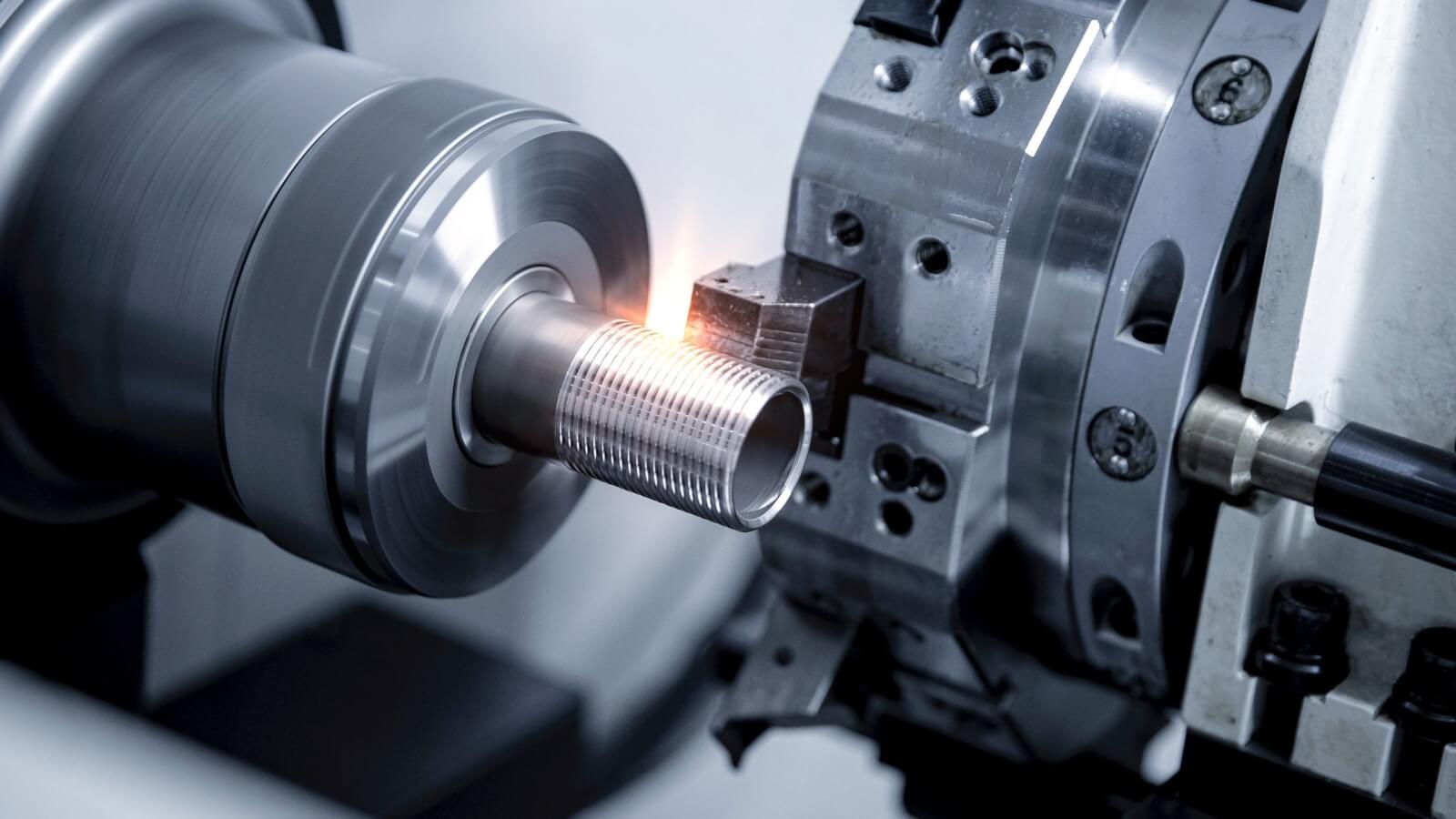
Turning, a fundamental CNC machining process, employs lathes to rotate the steel workpiece against a cutting tool. This operation is essential for creating cylindrical parts with precision.
Surface finishes in CNC steel machining are diverse, each offering different aesthetic qualities and practical benefits. From the raw, untouched look of as-machined surfaces to the sleek sheen of polished finishes, the choice of surface finish can drastically alter the functionality and appearance of a part.
Powder coating involves applying a free-flowing, dry powder to the steel surface, followed by heat treatment to form a skin. It offers a thick, uniform coating that is more durable than conventional paint.
Forging compresses steel into desired shapes using high pressure and temperature. This process not only shapes the metal but also enhances its mechanical properties, making it more durable and resistant to impact.
Rolling is a process where steel is passed through one or more pairs of rolls to reduce thickness, increase length, or produce a desired cross-section profile. This method is crucial for creating uniform sheet metal for various applications.
Among the various steel grades, 1018 carbon steel is often cited as the easiest to machine. Its low carbon content provides excellent ductility and formability, allowing for efficient and precise machining without undue wear on tools.
Stainless steel stands out for its corrosion resistance and strength, making it a preferred choice for applications in harsh environments. Within this category, several grades are particularly favored in CNC machining:
This is done with remarkable precision, thanks to the computer-controlled operation that meticulously follows the dimensions specified in the digital model.
The as-machined finish is the most basic surface condition of a part directly after machining. Without any post-processing, it often features tool marks and minor imperfections.
Waterjet cutting uses a high-pressure stream of water, often mixed with abrasive particles, to cut steel and other materials. It stands out for its ability to cut without introducing heat, preserving the material’s inherent properties.
At its core, Steel CNC Machining begins with a digital blueprint. This is where the journey of a steel part from concept to reality starts.
CNC steel machining brings forth a host of benefits that cater to the demanding needs of various industries, from aerospace to medical equipment.
Carbon steel is categorized based on carbon content, from low to high, affecting its strength, ductility, and machinability:
Milling uses rotating cutting tools to remove material from the steel workpiece, enabling the creation of complex shapes and surfaces.
Tool steels, particularly grades like D2, pose significant challenges in CNC machining due to their high wear resistance and hardness. Specialized machining strategies and tools are necessary to effectively work with these materials.
This journey through the complexities of steel CNC machining has underscored the importance of selecting a service that aligns with both technical needs and ethical standards, emphasizing safety, sustainability, and quality.
Bending reshapes steel sheets, tubes, or plates using CNC press brakes or other bending machines, introducing precise angles and curves without altering the material’s thickness.
Selecting the right steel grade for your CNC machining project is crucial for achieving the desired outcomes. Consider the following criteria to guide your material selection:
Navigating through the realm of CNC machining requires an in-depth understanding of the types of steel and their corresponding grades. Each type of steel offers unique properties, making them suitable for various applications. Here, we explore the common steel types used in CNC machining, delving into the characteristics that distinguish each grade.
As industries evolve, the integration of advanced technologies and responsible practices will continue to shape the future of manufacturing, ensuring that precision and accountability walk hand in hand towards progress.
Dolodarenko, A. G., and Ham, I. (February 1, 1976). "Effects of Built-Up Edge in Drilling." ASME. J. Eng. Ind. February 1976; 98(1): 287–292. https://doi.org/10.1115/1.3438834
Extrusion pushes steel through a die of the desired cross-section, producing long parts with uniform cross-sections. This process is versatile, capable of creating a wide range of shapes and sizes.
In CNC machining, the choice of tools is paramount to achieving desired outcomes, especially when working with steel. This section outlines the vital tools, each serving a unique purpose, from cutting to shaping and finishing steel parts with unmatched precision.
Steel CNC Machining involves the use of computer numerical control (CNC) machines to manipulate steel, one of the most robust materials in the manufacturing industry, into desired shapes and sizes. By interpreting computer-generated designs, CNC machines execute operations like cutting, milling, and drilling with astonishing accuracy and speed.
Steel CNC Machining stands out for its ability to produce complex geometries with tight tolerances, making it indispensable in industries where precision is non-negotiable. From automotive to aerospace and medical devices, the applications are as varied as they are critical.
Designing for CNC steel machining requires a thoughtful approach to ensure cost-effectiveness, manufacturability, and functionality. Below are some essential tips to guide you:
Deep drawing involves pulling a sheet of steel into a die to form a deep, hollow shape without altering the material thickness. This process is ideal for creating seamless components.
EDM, a non-traditional machining process, uses electrical discharges to machine hard materials that would be difficult to cut with traditional methods. This process is ideal for intricate or hard-to-reach areas.
Steel’s versatility and the precision of CNC machining come together to serve numerous industries, each benefiting from the unique properties of steel, such as its shear modulus, hardness, tensile strength, and corrosion resistance. Let’s explore some of the critical applications:
Boring expands holes to precise diameters or creates tapered or contoured internal surfaces in steel parts. This process, crucial for fitting parts with high precision, utilizes boring bars on CNC mills or lathes.
The expense of CNC steel machining isn’t a one-size-fits-all figure. Several pivotal factors come into play, shaping the overall cost:
Selecting the appropriate steel CNC machining service is critical to the success of your project. Here are criteria to consider when making your choice:
Steel CNC machining offers a wide array of applications across industries, embodying the synergy between advanced technology and the timeless strength of steel.
The most frequently encountered steel in CNC machining is undoubtedly 304 stainless steel due to its versatility and balance between machinability, corrosion resistance, and cost. Its widespread use across industries underscores its reliability and efficiency in manufacturing processes.
Specialize in CNC machining, 3D printing, urethane casting, rapid tooling, injection molding, metal casting, sheet metal and extrusion
CNC Steel Machining involves a different operations, each tailored to achieve specific outcomes. Let’s delve into these key operations, understanding their technicalities and applications in the steel CNC machining context.
This program is essentially a set of instructions that guides the CNC machine on how to move its tools to turn a steel block into the final part.
CNC machines, equipped with various tools and capable of moving along multiple axes, meticulously follow the programmed paths. As the steel workpiece is fed into the machine, the cutting tools slice through it, removing material to gradually reveal the part hidden within.
Grinding employs an abrasive wheel to achieve high surface quality and dimensional accuracy, perfect for finishing operations.
Anodizing is an electrochemical process that converts the metal surface into a durable, corrosion-resistant, anodic oxide finish. Type II provides a thin coat, whereas Type III, also known as hardcoat, offers a thicker, more durable layer.



 18581906093