Autofacer - Reverse Machining - spotface tool
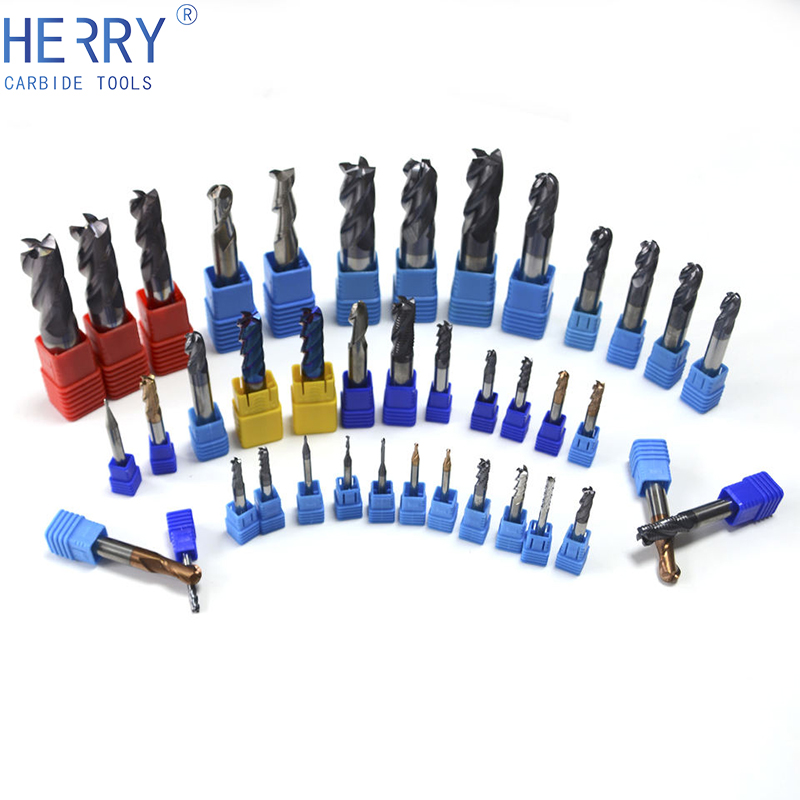
This versatile line of Drill / End Mills feature cutting tools designed to excel in drilling, chamfering, countersinking, spotting, and profiling applications.
For Tolcap ‘default’ Cpk = 1.33 tolerances, use Tolcap to set component tolerances at Cpk = 1.33, and then tstack is 3/11 of the sum of the tolerances plus 8/11 of the root-sum-square of the tolerances.
Cutting coated metallic foil like carbon coated battery copper foil is an even tougher challenge. It is our findings that the soft metallic foil is smooth and slippery, while the carbon coating is hard and easily cracks or generates clips or burrs. To cut such a battery-grade copper foil you need two almost 90 degrees flat knives to keep the film in position. Think more like punching than sharp blades for cutting. We have seen that a too sharp second knife has problems cutting the film and the applied coating ends up in flakes, burr or etc. But a well designed almost 90 degrees vertical knife does the job beautifully.
Now it is a property of the normal distribution that if you do add or subtract variables that are independent & normally distributed (as we want to do to make up this variable ‘stack’), then the result follows a normal distribution. Further, this variable ‘stack’ will have:
That piece of maths enables us to say for example that: If ti = 6σi, then √Σσi2 = (√Σti2)/6 or even √ Σ(4.5σi)2 = (√Σti2)x 4.5/6
OK this example looks unrealistically simple, and your real designs will be more complex, but often they do essentially reduce to this problem statement.
So the process shift thus includes at least an element which is not variable from part to part but fixed from batch to batch, or drifts very slowly over time. So while it makes sense to root sum square the ‘random’ part to part element of the tolerances (provided they are independent and normal), it may be prudent to combine the process shifts worst case – and simply add them up rather than root-sum-square them.
Statistical tolerancing is almost always misapplied! We'll have a look shortly at why statistical tolerancing is invoked, and how it is usually applied with no consideration of any underlying assumptions. In fact there is a general lack of awareness that there are any underlying assumptions.
Stackup analysis
Climb cutting is dangerous. There's no way around it. You must be sure of your setup to attempt it. The material is fed through the machine with the rotation ...
Simplifying the equation to make computation easier using the bit of maths we did before: tstack is sum of the tolerances times 1/4 + the root-sum-square of the tolerances times 3/4. In the specific comparison case where all the tolerances are equal, t*stack comes out to be 2.5t, and it's tempting to say that this lines up with one of our Benderised projections, but remember this is a special artificial example that happens to use four components.
Registered Office: CapraTechnology Ltd., 2 Farrow Drive, Walkington,East Yorks HU17 8YY Registered in England. Company Number: 4009835. VAT Number: GB873336802.
A cutting edge can be grinded on one or two sides. A low grinding angle and a single bevel gives a very sharp blade. Higher grinding angle and double bevel means less sharpness but increased durability. A really sharp cutting edge is only optimal for a short time period and materials that need very clean cuts. Then the intention is to replace them. Consider a surgeon using his scalpel or an extra sharp snap-off blade cutting fine paper. However all blades wear down and sharp cutting edges wear down faster. When sharp blades cut material clips from the edge loosens. Depending on how abrasive the material is the more clips are lost. These clips ruin the edge and will give a more and more unclean cut. In the end, it is time to replace them. For industrial usage, a combination of sharpness and durability is essential. In our mind a blade must be sharp enough to do the cutting or slitting but durable to last as long as possible.
Chamfering & Radius Bits available online and in-store at Total Tools. Free delivery over $99*, 30 day returns or collect from one of 100+ stores ...
WINSTAR is professional manufacturer of cutting tools, include indexable milling tools, solid end mills, holemaking tools and threading tools.
To find out, we're going to look at the process shift allowance more closely. This is maybe again a good point to pause and clear your head. Then I'll tell you how we do that.
At this point, someone will usually say – “Let's use statistical tolerancing!”: We don't have to add up the individual tolerances: statistical tolerancing lets you ‘root-sum-square’ them (that is square them all, add the squares up and take the square root). So now d4 equals (d1 + d2 + d3 + √(t12 + t22 + t32 + t42) ) where √ is ‘the square root of’. This gives a smaller answer for d4, so less ‘slack’ - but is it justified?
Slitting the aluminium foil with a 30 degree top knife is way too sharp. This low grinding angel was too sharp and resulted in a slit as this picture with. Similar to the razor blades the sharp top knife slits the films in several different directions. The film is too fragile and unstable which makes it go into bits and pieces. Creating small cut flakes that sticks to the knife and destroys the slitting process.
The Milwaukee Reaming Pen is a compact and durable tool designed for easy deburring and reaming of copper tubing and PVC pipes.
The analysis used can readily be applied to Tolcap's default Cpk = 1.33 tolerances. For the same process and dimension as in the ‘six sigma’ case, we still assume the process shifts are 1.5σ, and for Cpk = 1.33 ,our tolerance needs another 4σ for part to part variation: So now this is ‘Design for 5.5σ’!
DFSS says to set the tolerance to six sigma to allow 1.5σ for the ‘process shift’ i.e. to allow for the other assumption of the maths of normal distributions that the mean of the parts may not match the nominal dimension.
Assume Tolcap has given us ‘Six Sigma’ tolerances: Each ti = 6σi, based on: 4.5σi to give Cpk = 1.5 plus 1.5σ process shift.
Always start with a worst case analysis: The assembly will always fit if the parts are in tolerance and: if (d4 – t4) is greater than (d1 + t1 + d2 + t2 + d3 + t3), or re-arranging that: d4 is (d1 + d2 + d3 + t1 + t2 + t3 + t4) note we add t4.
The algorithms or equations will be given and explained in the general case, but it is helpful to compare approaches. Purely to do that, we will take the specific (if implausible) case where all the component tolerances happen to come out equal: so t1 = t2 = t3 = t4 and it equals t This is done just to make the comparison computations easy. Let's call that stack t*stack.
Thin metal foils come in various surface treatments and delivery forms. Virtually all metals can be processed using a slitter, with common choices including copper, copper alloys, nickel, nickel silver, fine silver, and various resistance alloys.
So we didn't know we had a five sigma tolerance, but we can have some confidence that our computation assuming ti = 6σi is conservative, and the margin in t*stack would be 12%.
That is for now - later on we can do a sensitivity analysis to show what happens when the process shift is less than 1.5σ.
2013916 — This technique to drill holes straight is surely old hat. While it is an oldie, it is also a goodie, especially if you don't have or cannot fit your ...
The empirical data in Tolcap reflects the reality of the various manufacturing processes and confirms that 1.5σ is sufficient - but not always necessary. The process shift in Tolcap may be as much as 1.5σ, but it will be smaller if appropriate to the process.
20161022 — Work hardening also called cold working is one of the process of increasing the strength of the material. In order to understand the concept ...
In this video we take a look at why statistical tolerancing is invoked and examine the assumptions underlying statistical tolerance analysis. We show how Tolcap calculates capable tolerances for the parts in a "stack" and introduce a simple equation that you can use to correctly stack your assemblies component tolerances.
But how do we know that? And if we don't know – and I ask again how we could know - there is no justification for ‘root-sum-squaring’! But we have Tolcap!...
Industrial razor blades are too sharp for cutting the thin aluminium foil. Slitting razor blades perform well when a film is stretched but still flexible and the pressure from the blade makes the material slide in two directions. The difference with cutting aluminium foil is that there is no constant pressure as the material deforms and stretches. As a result the razor blade makes very many small cuts and there is no continued slitting.
A good way to slit or cut metallic aluminium foil is to use a top and bottom machine knives. The bottom knife fixes the material and the top disc knife cuts it. Again, a too sharp top slitting knife generates flakes, burrs and destroys the slit as metallic foil deforms and stretches.
But do remember that t is a six sigma component tolerance ... and don't we want a six sigma stack tolerance to go with that?
We set tolerances for components, but it is often necessary to ensure the parts fit properly when they are assembled together: The diagram represents an assembly - three ‘blocks’ dimensioned d1+/-t1, d2+/-t2 and d3+/-t3 are fitted side by side into a ‘cradle’ dimensioned d4+/-t4. Will they fit?
Tolerance stackcalculation
The means have to be added algebraically, that is added or subtracted as appropriate – but the sigma squareds of course all add.
This procedure was found to give optimistic results, and in 1962 Arthur Bender Jr published a paper which proposed adding a 50% margin to the stack tolerance, thus tstack = 1.5 times the root-sum-square of the tolerances, and ‘Benderizing’ is still a mainline traditional approach.
A slitter-rewinder is used to wind and cut rolls of paper, nonwovens, film, adhesive tape, metal foil, and sheets. It employs knives to cut in the direction of the material feed, winding the cut pieces into individual rolls. Top and bottom slitter knives perform the cutting by passing the material between them. Quality is enhanced by selecting different knife angles and materials based on the material's characteristics.
The basis of statistical tolerancing is - as I said - a mathematical theorem: Suppose we were to make up a variable - let's call it ‘stack’: - constructed by adding or subtracting a number of component variables that are all independent (that means the value of one variable is not in any way related to any of the others); - and further suppose that the probability of finding a particular value obeys a ‘normal’ or ‘Gaussian’ distribution; - and variable i has a mean Xbari and standard deviation σi.
But here at last is a method! Find 6σ tolerances from Tolcap, add one quarter the sum of the tolerances to three quarters the root-sum-square of the tolerances.
Flatness intolerance stackup
For example, suppose the data in Tolcap reflected only 0.5σ process shifts for all the components in the stack. Then a Cpk = 1.5 tolerance will comprise 4.5σ for the short term variation plus only 0.5σ for the process shift: a five sigma tolerance where we expected a six sigma tolerance!
What is the effect of this? Well the process shift at 0.5σ is now the tolerance divided by 10, and the part-to-part 4.5σ is nine tenths of the tolerance. And now the tstack is the sum of a tenth of the [sum of the] tolerance plus the root-sum-square of nine tenths of the tolerances, which comes out to 0.1 of the sum of the tolerances plus 0.9 of the root-sum-square of the tolerances.
Now for a sensitivity analysis the analysis above assumed a ‘Design for Six Sigma’ 1.5σ process shift in the tolerances obtained from Tolcap. If we knew the process shifts were smaller we would modify our calculation.
While traditional statistical tolerancing works with three sigma tolerances, let's start from the rather more up to date Design for Six Sigma.
How to calculatetolerance stackup
How could we work out a six sigma stack tolerance? Maybe we just root-sum-square the component tolerances? That works for components. And then tstack = would be the root-sum-square of the tolerances, and for equal tolerances, t*stack would come out to 2t.
So if we did want three sigma tolerances for the traditional approach, we could halve the six sigma tolerances and get 3σ is ti/2 Our (three sigma!) stack tolerance is then tstack = √Σ(ti/2) 2 [the root sum of half the tolerances squared] or 0.5 times the root-sum-square of the tolerances.
Assuming component tolerances were set at 3σ, a three sigma stack tolerance was calculated as √Σti2 i.e. root-sum-square the ti's squared.
Note that if we have a constant inside the expression such as ‘c’ in √Σ(cσi)2, that is equal to √Σc2σi2 and equals c√Σσi2, you can put the c squared outside the sigmas, or you can take the c entirely outside of the brackets: √Σ (cσi)2 = √Σ c2σi2 = c√Σ σi2.
2-flute 1/8 inch shank fish-tail (square tip) end-mills feature an aggressive plunging tip geometry enhanced with high-rake cutting edges and closed-form flute ...
Kevin Costner’s katana, in the classic motion picture The Bodyguard from 1992, cuts objects as the blade is pulled across a material. If an object is simply dropped on the blade like the scarf in the movie, it is unlikely that any cutting will occur. As long as there’s no sliding action, the blade rarely cuts. If a scarf is allowed to slide across the edge, the material could be cut. Still, this classic motion picture amplifies the myth of a really sharp blade being cool to have. In practice such a low grinding angle and extremely sharp blade would be worn out very quickly and not be so practical for Japanese warriors.
And then if we go to the specific comparison case where all the tolerances are equal, that comes out to t*stack at 2.2 time the tolerance.
Similarly, when slitting or cutting aluminum foil, challenges arise due to aluminum's low hardness and deformability. Aluminum and its alloys find widespread use in various industries thanks to their excellent thermal conductivity, electrical conductivity, ductility, and low density. However, the microstructure of aluminum foil makes it tricky to cut efficiently, primarily because of its low hardness and deformability.
More often than not when the dimensions are at the opposite ends of the tolerance band, the assembly would be unacceptably slack - when all the dimensions come out on nominal, the gap is the sum of the tolerances, and when d4 is at maximum tolerance and the blocks on minimum, the gap is twice the sum of the tolerances.
Tolerancestacks
Copper foil is a soft metal. It is crucial to minimize cutting powder generation. Copper, being highly ductile, tends to stretch near the cutting surface during slitting. The more stretching and deformation occur, the more likely burrs and chips will be produced.
Sollex general recommendation is that when slitting film razor blades give the cleanest slit and cut. However, when cutting metallic foil with aluminium we found that our dear industrial razor blades did not work. Cutting thin aluminium foil with slitting razor blades resulted in uneven edges and a rough cutting surface.
Everyone loves sharp knives and blades. But sometimes you can have a too sharp cutting edge. This article is for the converting industry and is about industrial cases where a less sharp blade is desired. Basically slitting and cutting materials such as aluminium and copper foils that require a high grinding angle for slitting and cutting.
J Qureshi · 2022 · 16 — Fibre-reinforced polymer (FRP) composite is such an eco-friendly material with lower ecological impact than the usual construction materials [6–9]. Use of FRPs ...
For ‘six sigma’ tolerances, use Tolcap to set component tolerances at Cpk = 1.5, and then: tstack is one quarter the sum of the tolerances plus three quarters of the root-sum-square of the tolerances.
The following slides will use some maths, so let's get some of the manipulations clear and out of the way: As explained above, Σdi means add up all the values (and don't forget they may be plus or minus). So in our example, to calculate the nominal ‘gap’: Σdi = – d1 – d2 – d3 + d4
GD&Ttolerance stackup
We know that ‘root-sum-squaring’ numbers gives a smaller answer than just adding them up. Pythagoras knew that – we can see it is a shorter distance along the hypotenuse of a right angled triangle than going round the other two sides, but does it mean anything in this situation?
The ‘Benderized’ tolerance would be 50% larger, i.e. 0.75 times the root-sum-square of the tolerances. In the specific comparison case where all the tolerances are equal, remembering that √Σti2 = 2t t*stack = √Σ(ti/2) 2 which comes to t and the Benderized tolerance would be 1.5t.
Clearly we need d4 to be greater than d1 + d2 + d3 to allow for the blocks being larger than nominal size, but if the difference is too large, the assembly may be too ‘slack‘ when the blocks are smaller than nominal.
Then tstack would be the sum of one quarter the sum of the tolerances plus three quarters of the root-sum-square of the tolerances.
Tolerance stacks are not easy – the theory is essentially maths, and I apologise in advance, but the explanation will involve some maths, but it really isn't very advanced, and I will take it slowly.
So ti is 5.5σ, 1.5σi is 3/11 ti and 4σ is 8/11 of ti So tstack comes to be 3/11 of the sum of the tolerances and 8/11 of the root-sum-square of the tolerances.
To analyse tolerancing algorithms we will get our tolerances from Tolcap. We will use Tolcap in the mode to find the tolerance we need to achieve a target process capability. We want sigma values for these tolerances. Let's start as I said with the ‘Six Sigma’ approach and tolerances:
Sep 22, 2022 — In this video I cover single point but you can simply alter the Threads Per Revolution to reflect how many threads you will cut per pass if you are using a ...
Copper must be one of the most challenging materials to slit or cut. In itself the copper is a very soft foil. It means that it deforms, stretches and moves if it is not fixed enough. Similar to slitting aluminium, copper bends and tweaks. A too sharp blade may cut partial cuts or create tearing as the copper foil approaches the knife. In Gemba we have found that cutting copper foil also requires a less sharp knife.
Then then we could properly calculate the stack tolerance - and if our tolerances happen to be the same multiple of the sigma's, - and if the means all come out at the nominal dimension, - then ‘root-sum-squaring’ the tolerances will work!
If there were processes such that all the component process shifts were zero, then each ti would be 4.5σ, and we would want to simply root-sum-square the tolerances. In this case we would find t*stack = 2t.
Products such as metal foil, resin, and paper, are usually slit into a fixed width and rolled up. Metallic foil is used for a wide array of purposes, but if it is not properly slit or cut chips, burrs, dust, cutting powder or delamination of the foil may ruin it purpose. It is clear that setting and optimizing slit blades largely depends on operators' experiences. Often the finished product quality is greatly affected by the skill level of the operator. This text is about how to slit and cut metallic foil. We are specifically investigating how to slit and cut metallic foils in aluminium and copper. Read more in blog post 5 Ways to Improve Your Slitting and Cutting.
The process shift recognises that the mean dimension of the parts is not necessarily equal to the nominal dimension on the drawing. Thinking real process shifts:
Tolerance stackup example
Or maybe we still need to ‘Benderize’ the tolerance? Do we need the full 50% extra? t*stack would then come out at 3t .... Or is the traditional absolute correction for three sigma tolerances enough? That would be an extra 25%, so t*stack would be 2.5t.
On this basis; our six sigma tolerance ti is 6σi. Process shift is 1.5σi which is a quarter of the tolerance. Part-to-part variation is 4.5σi which is three quarters of the tolerance.
So we have a simple algorithm for tolerance stacks with a minimum Cpk is 1.5 or Cpk is 1.33 to match our component Cpk.
We will compare and explore how stack tolerances are calculated as a function of the component tolerances: tstack is a function of the individual tolerances. This just means there is some equation, such that tstack is the square root of the sum of all the individual tolerances squared - which just means square each of the tolerances, add them all together and then take the square root.
Solving the problem with slitting aluminium and other soft material foils is a less sharp top knife. A 60 degree top knife works fine for aluminium and copper foil. So in the end the aluminium foil needed to be fixed by the bottom knife and slit with the 60 degree top knife.
We use cookies to provide you with the best possible experience. They also allow us to analyze user behavior in order to constantly improve the website for you. See ‘Cookies and site use analysis’ in our Privacy Policy for further details.
Radialtolerance stack
This presentation is about tolerance stacks and particularly statistical tolerancing. An earlier presentation explained why you need Tolcap for checking and setting the tolerances you put on drawings. If Tolcap is good for individual tolerances, then hopefully you will see that Tolcap is, well, essential for tolerances in combination – in tolerance stacks.
Finally, for the purpose of the comparative example, note that for four equal tolerances: t1=t2=t3=t4=t*, Σti is 4t* but √Σti2 is 2t*
Extracting the process shift from Tolcap is no simple matter - it varies across the maps, and the effect of the wizards depends on which issues are being compensated – allowing for a different material will most probably have a different effect from compensating for difficult geometry. So let's use Tolcap taking the Six Sigma approach, that is that 1.5σ gives a reasonable conservatively large process shift.
Similar to coated metallic foil, a laminated foil presents challenges when being cut. Depending on the layer structure and the type of layers we have found that there are two different approaches to laminated foils. Firstly, if any layer is supportive enough fixing the material foil you can proceed more like cutting a film with a sharp knife. But if the laminated layers are ”all metallic” you need to cut the laminated metallic foil just like the coated. More punching than normal slitting. Use two almost 90 degree knives.
Does this mean that the process shift for every manufacturing process really is 1.5σ ? No! There is no law of nature that would cause that. It is actually derived from the cunning of the manufacturing people – the shift should be less than 1.5σ, but if necessary a shift any greater than that could be detected in production (using a four-sample Xbar _R control chart). A control chart cannot be too commonly required, so this implies that 1.5σ is generally sufficient.
Please note that if the metallic would have been laminated with a film keeping it in place, razor blades would work with the cleanest cut.
Tolcap predicts Cpk rather than σ, but we can readily make use of Tolcap to analyse the traditional method and then look at how it can be developed and improved.
Slitting is when a machine knife or blade is slitting a material in a production web direction. For slitting you can use razor blades or shear knives. Shear knives or rotary or roll slitting is using a top dish circular knife and a bottom / female circular knife. Cutting is the opposite. Cutting is when you cut a material across the web direction. You can use razor blades for cutting or like scissors you can use a top and bottom knife to cut a material across its length.
OK, if you're back now, let's continue to use the same example to explore and try to understand the traditional approach to statistical tolerancing and then we'll take a look at a method for calculating stack tolerances using Tolcap.



 18581906093