AWS Student Chapter @ Workshop For Warriors - workshops for warriors
As the grade number increases from 10, 20, 30, to 40, the cobalt content increases, resulting in higher strength but lower hardness, heat resistance, and wear resistance, making it suitable for rough machining. Conversely, the more tungsten carbide it contains, the higher the hardness, heat resistance, and wear resistance, but the lower the strength, making it suitable for fine machining.(2) P-type hard alloyIt is an alloy based on TiC and WC with Co (Ni+Mo, Ni+Co) as a binder. Due to the presence of TiC, it improves the bonding temperature with steel and the ability to prevent diffusion. It is mainly used for processing long chip materials, such as steel, cast steel, long chip malleable cast iron, etc.Common grades include P01, P10, P20, P30, P40, etc. The cobalt content increases sequentially, resulting in higher strength but lower hardness, heat resistance, and wear resistance, making it suitable for rough machining. Conversely, the more TiC it contains, the higher the hardness, heat resistance, and wear resistance, but the lower the strength, making it suitable for fine machining.(3) M-type hard alloyIt is an alloy based on WC with Co as a binder, with a small amount of TiC (TaC, NbC) added. Due to the addition of a certain amount of rare metals TaC (NbC), it improves the bending strength, fatigue strength, and impact toughness, as well as the high-temperature hardness, strength, oxidation resistance, and wear resistance.Common grades include M01, M10, M20, M30, M40, etc. M-type hard alloys are general-purpose alloys and can be used for processing stainless steel, cast steel, manganese steel, malleable cast iron, alloy steel, alloy cast iron, etc.3. Other tool materials(1) CeramicsCeramic tool materials are made from artificial compounds, formed under high pressure and sintered at high temperatures. They have a hardness of 91~95HRA, heat resistance up to 1200℃, good chemical stability, and low affinity with metals. Compared to hard alloys, they can increase cutting speed by 3 to 5 times.However, their biggest disadvantage is low bending strength and poor impact toughness. They are mainly used for semi-finishing and finishing of steel, cast iron, and high-hardness materials (such as quenched steel) during continuous cutting.(2) DiamondDiamond is divided into natural and synthetic types, both of which are allotropes of carbon. Natural diamond is rarely used due to its high cost. Synthetic diamond is made from graphite under high temperature and high pressure, with a hardness of 10000HV.Diamond tools can precisely cut non-ferrous metals and alloys, ceramics, and other high-hardness, high-wear-resistant materials. However, they have poor chemical stability with iron and are not suitable for processing ferrous materials. Their thermal stability is also poor, and when the temperature reaches 800℃, diamond tools will undergo carbonization in the air, leading to rapid wear.(3) Cubic boron nitrideCubic boron nitride is synthesized using artificial methods under high temperature and high pressure with the addition of a catalyst. It has a hardness of 8000~9000HV and heat resistance of 1400℃. It is mainly used for semi-finishing and finishing of high-temperature alloys, hardened steel, and chilled cast iron materials.III. Surface Coating of Tool MaterialsThe toughness and hardness of tool materials generally cannot be balanced, so the lifespan of most tool materials is mainly affected by wear. In recent years, surface coating treatment methods have been adopted to properly solve this problem.The surface coating of tool materials is applied to tools made of high-speed steel and tough cemented carbide materials. Through methods such as chemical vapor deposition and vacuum sputtering, a very thin (5~12μm) layer of high-hardness, high-wear-resistance, and refractory metal compound titanium carbide (TiC) or titanium nitride (TiN) is deposited on the tool surface, forming a golden-yellow surface coating.Due to the high hardness and low friction coefficient of the coating, the wear resistance of the tool is improved. The coating also has anti-oxidation and anti-adhesion properties, delaying tool wear. Therefore, the cutting speed can be increased by 30% to 50%, and the tool life can be extended several times.Related posts:Understanding Mechanical Properties of MetalsEssential Lathe Operation Skills for MachinistsMetal Cutting: Deformation, Forces, Heat and ToolsCNC Lathe Components: Essential Mechanisms ExplainedShaping vs. Broaching: A Comprehensive Guide to Metal FabricationEssential Measuring Tools: Calipers, Micrometers & More
It is an alloy based on WC with Co as a binder, with a small amount of TiC (TaC, NbC) added. Due to the addition of a certain amount of rare metals TaC (NbC), it improves the bending strength, fatigue strength, and impact toughness, as well as the high-temperature hardness, strength, oxidation resistance, and wear resistance.Common grades include M01, M10, M20, M30, M40, etc. M-type hard alloys are general-purpose alloys and can be used for processing stainless steel, cast steel, manganese steel, malleable cast iron, alloy steel, alloy cast iron, etc.3. Other tool materials(1) CeramicsCeramic tool materials are made from artificial compounds, formed under high pressure and sintered at high temperatures. They have a hardness of 91~95HRA, heat resistance up to 1200℃, good chemical stability, and low affinity with metals. Compared to hard alloys, they can increase cutting speed by 3 to 5 times.However, their biggest disadvantage is low bending strength and poor impact toughness. They are mainly used for semi-finishing and finishing of steel, cast iron, and high-hardness materials (such as quenched steel) during continuous cutting.(2) DiamondDiamond is divided into natural and synthetic types, both of which are allotropes of carbon. Natural diamond is rarely used due to its high cost. Synthetic diamond is made from graphite under high temperature and high pressure, with a hardness of 10000HV.Diamond tools can precisely cut non-ferrous metals and alloys, ceramics, and other high-hardness, high-wear-resistant materials. However, they have poor chemical stability with iron and are not suitable for processing ferrous materials. Their thermal stability is also poor, and when the temperature reaches 800℃, diamond tools will undergo carbonization in the air, leading to rapid wear.(3) Cubic boron nitrideCubic boron nitride is synthesized using artificial methods under high temperature and high pressure with the addition of a catalyst. It has a hardness of 8000~9000HV and heat resistance of 1400℃. It is mainly used for semi-finishing and finishing of high-temperature alloys, hardened steel, and chilled cast iron materials.III. Surface Coating of Tool MaterialsThe toughness and hardness of tool materials generally cannot be balanced, so the lifespan of most tool materials is mainly affected by wear. In recent years, surface coating treatment methods have been adopted to properly solve this problem.The surface coating of tool materials is applied to tools made of high-speed steel and tough cemented carbide materials. Through methods such as chemical vapor deposition and vacuum sputtering, a very thin (5~12μm) layer of high-hardness, high-wear-resistance, and refractory metal compound titanium carbide (TiC) or titanium nitride (TiN) is deposited on the tool surface, forming a golden-yellow surface coating.Due to the high hardness and low friction coefficient of the coating, the wear resistance of the tool is improved. The coating also has anti-oxidation and anti-adhesion properties, delaying tool wear. Therefore, the cutting speed can be increased by 30% to 50%, and the tool life can be extended several times.Related posts:Understanding Mechanical Properties of MetalsEssential Lathe Operation Skills for MachinistsMetal Cutting: Deformation, Forces, Heat and ToolsCNC Lathe Components: Essential Mechanisms ExplainedShaping vs. Broaching: A Comprehensive Guide to Metal FabricationEssential Measuring Tools: Calipers, Micrometers & More
However, their biggest disadvantage is low bending strength and poor impact toughness. They are mainly used for semi-finishing and finishing of steel, cast iron, and high-hardness materials (such as quenched steel) during continuous cutting.(2) DiamondDiamond is divided into natural and synthetic types, both of which are allotropes of carbon. Natural diamond is rarely used due to its high cost. Synthetic diamond is made from graphite under high temperature and high pressure, with a hardness of 10000HV.Diamond tools can precisely cut non-ferrous metals and alloys, ceramics, and other high-hardness, high-wear-resistant materials. However, they have poor chemical stability with iron and are not suitable for processing ferrous materials. Their thermal stability is also poor, and when the temperature reaches 800℃, diamond tools will undergo carbonization in the air, leading to rapid wear.(3) Cubic boron nitrideCubic boron nitride is synthesized using artificial methods under high temperature and high pressure with the addition of a catalyst. It has a hardness of 8000~9000HV and heat resistance of 1400℃. It is mainly used for semi-finishing and finishing of high-temperature alloys, hardened steel, and chilled cast iron materials.III. Surface Coating of Tool MaterialsThe toughness and hardness of tool materials generally cannot be balanced, so the lifespan of most tool materials is mainly affected by wear. In recent years, surface coating treatment methods have been adopted to properly solve this problem.The surface coating of tool materials is applied to tools made of high-speed steel and tough cemented carbide materials. Through methods such as chemical vapor deposition and vacuum sputtering, a very thin (5~12μm) layer of high-hardness, high-wear-resistance, and refractory metal compound titanium carbide (TiC) or titanium nitride (TiN) is deposited on the tool surface, forming a golden-yellow surface coating.Due to the high hardness and low friction coefficient of the coating, the wear resistance of the tool is improved. The coating also has anti-oxidation and anti-adhesion properties, delaying tool wear. Therefore, the cutting speed can be increased by 30% to 50%, and the tool life can be extended several times.Related posts:Understanding Mechanical Properties of MetalsEssential Lathe Operation Skills for MachinistsMetal Cutting: Deformation, Forces, Heat and ToolsCNC Lathe Components: Essential Mechanisms ExplainedShaping vs. Broaching: A Comprehensive Guide to Metal FabricationEssential Measuring Tools: Calipers, Micrometers & More
Tool materials should have high wear resistance to resist wear from the workpiece and chips. This performance depends on the hardness of the tool material and its chemical composition and microstructure.
Harvey Performance Companysalary
Common grades include M01, M10, M20, M30, M40, etc. M-type hard alloys are general-purpose alloys and can be used for processing stainless steel, cast steel, manganese steel, malleable cast iron, alloy steel, alloy cast iron, etc.
The plant will manufacture the company’s Helical Solutions line of high-performance end mills and serve as the company’s innovation hub. The new building will replace the current facility in the Gorham Industrial Park where the company has been located for the past fifteen years.
202076 — Reamer: types of Reamer & applications. Reamer is a tool used for finishing pre-drilled holes, bored, cored to give finish & exact ...
Ordinary high-speed tool steel can be divided into tungsten series high-speed tool steel and tungsten-molybdenum series high-speed tool steel.

Its heat resistance is 600~660℃, and the cutting speed can reach about 30m/min when cutting carbon steel materials. It has good processability and can be used to manufacture tools with complex shapes, such as drills, taps, forming tools, broaches, and gear tools. It is also suitable for processing various materials such as carbon steel, alloy steel, non-ferrous metals, and cast iron.High-speed tool steel can be divided into ordinary high-speed tool steel and high-performance high-speed tool steel based on cutting performance.(1) Ordinary high-speed tool steelOrdinary high-speed tool steel can be divided into tungsten series high-speed tool steel and tungsten-molybdenum series high-speed tool steel.The early common grade of tungsten series high-speed tool steel is W18Cr4V, which has good overall performance and grindability. It can be used to manufacture various complex tools and finishing tools. However, since tungsten is an important strategic resource and this grade contains a high proportion of tungsten, its application is now less common and it has been gradually phased out in some developed countries.The common grade of tungsten-molybdenum series high-speed tool steel is W6Mo5Cr4V2, which has good overall performance. Due to the role of molybdenum, its carbides are fine particles and evenly distributed, so its bending strength and impact toughness are higher than those of tungsten series high-speed tool steel. It also has good thermoplasticity, making it suitable for manufacturing hot-rolled tools. However, this material has a high sensitivity to decarburization, a narrow quenching temperature range, and is difficult to master the heat treatment process.W9Mo3Cr4V is a high-speed tool steel independently developed by China. Its hardness, strength, and thermoplasticity are slightly higher than those of W6Mo5Cr4V2. It has good hardness and toughness, and is easy to roll, forge, has a wide heat treatment temperature range, low decarburization sensitivity, and lower cost.(2) High-performance high-speed tool steelHigh-performance high-speed tool steel is a new type of high-speed tool steel that is an improvement over ordinary high-speed tool steel by adjusting the chemical composition and adding other alloying elements. This type of high-speed tool steel is mainly used for cutting difficult-to-machine materials such as high-temperature alloys, titanium alloys, high-strength steel, and stainless steel.There are several types of high-performance high-speed tool steel:1) High-carbon high-speed tool steelThe mass fraction of carbon is increased to 0.9% to 1.05%, causing all alloying elements in the steel to form carbides, thereby improving the hardness, wear resistance, and heat resistance of the steel, but its strength and toughness slightly decrease. The typical grade is 95W18Cr4V.2) High-vanadium high-speed tool steelThe mass fraction of vanadium is increased to 3% to 5%, with the typical grade being W6Mo5Cr4V3. Due to the increased content of vanadium carbide, the wear resistance of high-speed tool steel is improved, and it is generally used for cutting high-strength steel. However, this type of high-speed tool steel is more difficult to grind than ordinary high-speed tool steel.3) Cobalt high-speed tool steelAdding cobalt to high-speed tool steel improves its high-temperature hardness and oxidation resistance. The typical grade is W2Mo9Cr4VCo8, which has good comprehensive performance and is very effective for machining difficult-to-machine materials such as high-temperature alloys and stainless steel.4) Aluminum high-speed tool steelAluminum high-speed tool steel is a new type of high-speed tool steel uniquely developed in China. By adding a small amount of aluminum to ordinary high-speed steel, the heat resistance and wear resistance of the high-speed tool steel are improved, and it has good comprehensive performance.The typical grade is W6Mo5Cr4V2Al, which achieves the cutting performance of cobalt high-speed tool steel, has good machinability, is inexpensive, and is close in price to ordinary high-speed tool steel. However, it has poor grindability and requires strict heat treatment processes.As the use of high-precision complex tools increases, the processing cost accounts for a large proportion of the tool cost, while the material cost accounts for a smaller proportion (15% to 30%). Therefore, it is economically reasonable to use high-performance tool materials. For machine tools like machining centers, where tool change costs are high, high-performance tool materials should be used even more.The grades and main mechanical properties of the above-mentioned high-speed tool steels are shown in Table 2.Table 2 Grades and main mechanical properties of high-speed steelGradeRoom temperature hardness HRCBending strength σw /GPaImpact toughness aK /(MJ/m)High-temperature hardness HRC500℃600℃W18Cr4VW6Mo5Cr4V295W18Cr4VW6Mo5Cr4V3W6Mo5Cr4V2Co8W2Mo9Cr4VCo8W6Mo5Cr4V2AlW10Mo4Cr4V3Al63~6663~6666~6865~6766~6867~6967~6967~693~3.43.5~43~3.43.23.02.7~3.82.9~3.93.1~3.5 0.18~0.32 0.3~0.40.17~0.22 0.25 0.3 0.23~0.3 0.23~0.3 0.2~0.285655~5657——~606059.5 48.547~48 51 51.7 54 ~55 55 542. Hard AlloyHard alloy is a powder metallurgy product made by sintering tungsten carbide (WC) and titanium carbide (TiC) powders as the main components, and cobalt (Co), molybdenum (Mo), and nickel (Ni) as binders in a vacuum furnace or hydrogen reduction furnace.The hardness of hard alloy reaches 89~94HRA, equivalent to 71~76HRC, with very good wear resistance. The heat resistance can reach 800~1000℃, and the cutting speed can reach more than 100m/min when cutting medium carbon steel. However, its bending strength and toughness are lower than high-speed steel, and its processability is slightly worse than high-speed steel.At present, hard alloy has become the main tool material in cutting processing, widely used in various tools with higher cutting speeds, and even in complex tools, such as hard alloy face milling cutters, end mills, boring tools, drills, reamers, etc.The performance of hard alloy mainly depends on the type, content, and particle size of the metal carbides, as well as the type and content of the binder. In hard alloys, a higher proportion of carbides results in higher hardness and better wear resistance; more binder results in higher bending strength. Generally, the strength of fine-grained hard alloys is lower than that of coarse-grained hard alloys with the same composition, while the hardness is higher than that of coarse-grained hard alloys.GB/T 18376.1—2008 classifies hard alloys for cutting tools into six categories: K, P, M, H, S, and N, based on the material being processed. To meet different usage requirements, they are divided into several groups according to their wear resistance and toughness, represented by two-digit numbers such as 01, 10, 20, 30, 40, etc.Table 3 lists the classification, grouping, and recommended working conditions for the first three categories. The H category (H01~H30) is mainly used for processing hard cutting materials; the S category (S01~S30) is mainly used for processing heat-resistant and high-quality alloy materials; the N category (N01~N30) is mainly used for processing non-ferrous metals and non-metallic materials.Table 3 Classification, Grouping, and Recommended Working Conditions for Hard Alloys for Cutting ProcessingGroupWorking conditionsPerformance improvement directionMaterial to be processedSuitable processing conditionsCutting performanceAlloy performanceK01Cast iron, chilled cast iron, short chip malleable cast ironTurning, finishing turning, milling, boring, scraping← Cutting speed—Feed rate →← Wear resistance—Toughness →K10Cast iron with Brinell hardness above 220, short chip malleable cast ironTurning, milling, boring, scraping, broachingK20Gray cast iron with Brinell hardness below 220, short chip malleable cast ironUsed for turning, milling, boring, etc. in rough and semi-finish machining under medium cutting speed and light loadK30Cast iron, short chip malleable cast ironUsed for turning, milling, planing, and grooving under adverse conditions, possibly with large cutting angles, requiring toughness of the insertCertain requirementsK40Cast iron, short chip malleable cast ironUsed for rough machining under adverse conditions, with lower cutting speed and large feed rateP01Steel, cast steelHigh cutting speed, small chip section, finishing turning and boring under vibration-free conditionsP10Steel, cast steelTurning, profile turning, threading, and milling under high cutting speed and medium to small chip section conditionsP20Steel, cast steel, long chip malleable cast ironTurning, profile turning, and milling under medium cutting speed and medium chip section conditions, planing with small chip sectionP30Steel, cast steel, long chip malleable cast ironTurning, milling, planing, and machining under adverse conditions with medium or low cutting speed and medium or large chip sectionP40Steel, cast steel with sand holes and poresTurning, planing, grooving, and machining on automatic machines under low cutting speed, large cutting angle, large chip section, and adverse conditionsM01Stainless steel, ferritic steel, cast steelHigh cutting speed, small load, fine turning and fine boring under non-vibration conditionsM10Stainless steel, cast steel, manganese steel, alloy steel, alloy cast iron, malleable cast ironTurning under medium or high cutting speed, medium or small chip section conditionsM20Stainless steel, cast steel, manganese steel, alloy steel, alloy cast iron, malleable cast ironTurning under medium cutting speed and medium chip section conditionsCutting, millingM30Stainless steel, cast steel, manganese steel, alloy steel, alloy cast iron, malleable cast ironTurning, milling, and planing under medium or high cutting speed and medium or large chip section conditionsM40Stainless steel, cast steel, manganese steel, alloy steel, alloy cast iron, malleable cast ironTurning, cutting off, and heavy millingThe following introduces several commonly used hard alloys for cutting:(1) K-type hard alloyIt is an alloy based on WC with Co as a binder, or with a small amount of TaC and NbC added. It is mainly used for processing short chip materials, such as cast iron, chilled cast iron, short chip malleable cast iron, gray cast iron, etc. Common grades include K01, K10, K20, K30, K40, etc.As the grade number increases from 10, 20, 30, to 40, the cobalt content increases, resulting in higher strength but lower hardness, heat resistance, and wear resistance, making it suitable for rough machining. Conversely, the more tungsten carbide it contains, the higher the hardness, heat resistance, and wear resistance, but the lower the strength, making it suitable for fine machining.(2) P-type hard alloyIt is an alloy based on TiC and WC with Co (Ni+Mo, Ni+Co) as a binder. Due to the presence of TiC, it improves the bonding temperature with steel and the ability to prevent diffusion. It is mainly used for processing long chip materials, such as steel, cast steel, long chip malleable cast iron, etc.Common grades include P01, P10, P20, P30, P40, etc. The cobalt content increases sequentially, resulting in higher strength but lower hardness, heat resistance, and wear resistance, making it suitable for rough machining. Conversely, the more TiC it contains, the higher the hardness, heat resistance, and wear resistance, but the lower the strength, making it suitable for fine machining.(3) M-type hard alloyIt is an alloy based on WC with Co as a binder, with a small amount of TiC (TaC, NbC) added. Due to the addition of a certain amount of rare metals TaC (NbC), it improves the bending strength, fatigue strength, and impact toughness, as well as the high-temperature hardness, strength, oxidation resistance, and wear resistance.Common grades include M01, M10, M20, M30, M40, etc. M-type hard alloys are general-purpose alloys and can be used for processing stainless steel, cast steel, manganese steel, malleable cast iron, alloy steel, alloy cast iron, etc.3. Other tool materials(1) CeramicsCeramic tool materials are made from artificial compounds, formed under high pressure and sintered at high temperatures. They have a hardness of 91~95HRA, heat resistance up to 1200℃, good chemical stability, and low affinity with metals. Compared to hard alloys, they can increase cutting speed by 3 to 5 times.However, their biggest disadvantage is low bending strength and poor impact toughness. They are mainly used for semi-finishing and finishing of steel, cast iron, and high-hardness materials (such as quenched steel) during continuous cutting.(2) DiamondDiamond is divided into natural and synthetic types, both of which are allotropes of carbon. Natural diamond is rarely used due to its high cost. Synthetic diamond is made from graphite under high temperature and high pressure, with a hardness of 10000HV.Diamond tools can precisely cut non-ferrous metals and alloys, ceramics, and other high-hardness, high-wear-resistant materials. However, they have poor chemical stability with iron and are not suitable for processing ferrous materials. Their thermal stability is also poor, and when the temperature reaches 800℃, diamond tools will undergo carbonization in the air, leading to rapid wear.(3) Cubic boron nitrideCubic boron nitride is synthesized using artificial methods under high temperature and high pressure with the addition of a catalyst. It has a hardness of 8000~9000HV and heat resistance of 1400℃. It is mainly used for semi-finishing and finishing of high-temperature alloys, hardened steel, and chilled cast iron materials.III. Surface Coating of Tool MaterialsThe toughness and hardness of tool materials generally cannot be balanced, so the lifespan of most tool materials is mainly affected by wear. In recent years, surface coating treatment methods have been adopted to properly solve this problem.The surface coating of tool materials is applied to tools made of high-speed steel and tough cemented carbide materials. Through methods such as chemical vapor deposition and vacuum sputtering, a very thin (5~12μm) layer of high-hardness, high-wear-resistance, and refractory metal compound titanium carbide (TiC) or titanium nitride (TiN) is deposited on the tool surface, forming a golden-yellow surface coating.Due to the high hardness and low friction coefficient of the coating, the wear resistance of the tool is improved. The coating also has anti-oxidation and anti-adhesion properties, delaying tool wear. Therefore, the cutting speed can be increased by 30% to 50%, and the tool life can be extended several times.Related posts:Understanding Mechanical Properties of MetalsEssential Lathe Operation Skills for MachinistsMetal Cutting: Deformation, Forces, Heat and ToolsCNC Lathe Components: Essential Mechanisms ExplainedShaping vs. Broaching: A Comprehensive Guide to Metal FabricationEssential Measuring Tools: Calipers, Micrometers & More
Diamond tools can precisely cut non-ferrous metals and alloys, ceramics, and other high-hardness, high-wear-resistant materials. However, they have poor chemical stability with iron and are not suitable for processing ferrous materials. Their thermal stability is also poor, and when the temperature reaches 800℃, diamond tools will undergo carbonization in the air, leading to rapid wear.
Due to the high hardness and low friction coefficient of the coating, the wear resistance of the tool is improved. The coating also has anti-oxidation and anti-adhesion properties, delaying tool wear. Therefore, the cutting speed can be increased by 30% to 50%, and the tool life can be extended several times.Related posts:Understanding Mechanical Properties of MetalsEssential Lathe Operation Skills for MachinistsMetal Cutting: Deformation, Forces, Heat and ToolsCNC Lathe Components: Essential Mechanisms ExplainedShaping vs. Broaching: A Comprehensive Guide to Metal FabricationEssential Measuring Tools: Calipers, Micrometers & More
High-speed tool steel is a high-alloy tool steel with a large amount of alloy elements such as W, Mo, Cr, and V added to alloy tool steel. These alloy elements form high-hardness carbides with carbon, giving high-speed tool steel excellent wear resistance.Tungsten atoms and carbon atoms have a strong binding force, increasing the high-temperature hardness of the steel. The role of molybdenum is basically the same as that of tungsten, and it can refine the grains of carbides, reduce the unevenness of carbides in the steel, and improve the toughness of the steel.High-speed tool steel is a tool material with good overall performance and the widest range of applications. It has high bending strength, good toughness, and a hardness of 63~66HRC after heat treatment. It is easy to grind into a sharp cutting edge, so it is often called “sharp steel” in production.Its heat resistance is 600~660℃, and the cutting speed can reach about 30m/min when cutting carbon steel materials. It has good processability and can be used to manufacture tools with complex shapes, such as drills, taps, forming tools, broaches, and gear tools. It is also suitable for processing various materials such as carbon steel, alloy steel, non-ferrous metals, and cast iron.High-speed tool steel can be divided into ordinary high-speed tool steel and high-performance high-speed tool steel based on cutting performance.(1) Ordinary high-speed tool steelOrdinary high-speed tool steel can be divided into tungsten series high-speed tool steel and tungsten-molybdenum series high-speed tool steel.The early common grade of tungsten series high-speed tool steel is W18Cr4V, which has good overall performance and grindability. It can be used to manufacture various complex tools and finishing tools. However, since tungsten is an important strategic resource and this grade contains a high proportion of tungsten, its application is now less common and it has been gradually phased out in some developed countries.The common grade of tungsten-molybdenum series high-speed tool steel is W6Mo5Cr4V2, which has good overall performance. Due to the role of molybdenum, its carbides are fine particles and evenly distributed, so its bending strength and impact toughness are higher than those of tungsten series high-speed tool steel. It also has good thermoplasticity, making it suitable for manufacturing hot-rolled tools. However, this material has a high sensitivity to decarburization, a narrow quenching temperature range, and is difficult to master the heat treatment process.W9Mo3Cr4V is a high-speed tool steel independently developed by China. Its hardness, strength, and thermoplasticity are slightly higher than those of W6Mo5Cr4V2. It has good hardness and toughness, and is easy to roll, forge, has a wide heat treatment temperature range, low decarburization sensitivity, and lower cost.(2) High-performance high-speed tool steelHigh-performance high-speed tool steel is a new type of high-speed tool steel that is an improvement over ordinary high-speed tool steel by adjusting the chemical composition and adding other alloying elements. This type of high-speed tool steel is mainly used for cutting difficult-to-machine materials such as high-temperature alloys, titanium alloys, high-strength steel, and stainless steel.There are several types of high-performance high-speed tool steel:1) High-carbon high-speed tool steelThe mass fraction of carbon is increased to 0.9% to 1.05%, causing all alloying elements in the steel to form carbides, thereby improving the hardness, wear resistance, and heat resistance of the steel, but its strength and toughness slightly decrease. The typical grade is 95W18Cr4V.2) High-vanadium high-speed tool steelThe mass fraction of vanadium is increased to 3% to 5%, with the typical grade being W6Mo5Cr4V3. Due to the increased content of vanadium carbide, the wear resistance of high-speed tool steel is improved, and it is generally used for cutting high-strength steel. However, this type of high-speed tool steel is more difficult to grind than ordinary high-speed tool steel.3) Cobalt high-speed tool steelAdding cobalt to high-speed tool steel improves its high-temperature hardness and oxidation resistance. The typical grade is W2Mo9Cr4VCo8, which has good comprehensive performance and is very effective for machining difficult-to-machine materials such as high-temperature alloys and stainless steel.4) Aluminum high-speed tool steelAluminum high-speed tool steel is a new type of high-speed tool steel uniquely developed in China. By adding a small amount of aluminum to ordinary high-speed steel, the heat resistance and wear resistance of the high-speed tool steel are improved, and it has good comprehensive performance.The typical grade is W6Mo5Cr4V2Al, which achieves the cutting performance of cobalt high-speed tool steel, has good machinability, is inexpensive, and is close in price to ordinary high-speed tool steel. However, it has poor grindability and requires strict heat treatment processes.As the use of high-precision complex tools increases, the processing cost accounts for a large proportion of the tool cost, while the material cost accounts for a smaller proportion (15% to 30%). Therefore, it is economically reasonable to use high-performance tool materials. For machine tools like machining centers, where tool change costs are high, high-performance tool materials should be used even more.The grades and main mechanical properties of the above-mentioned high-speed tool steels are shown in Table 2.Table 2 Grades and main mechanical properties of high-speed steelGradeRoom temperature hardness HRCBending strength σw /GPaImpact toughness aK /(MJ/m)High-temperature hardness HRC500℃600℃W18Cr4VW6Mo5Cr4V295W18Cr4VW6Mo5Cr4V3W6Mo5Cr4V2Co8W2Mo9Cr4VCo8W6Mo5Cr4V2AlW10Mo4Cr4V3Al63~6663~6666~6865~6766~6867~6967~6967~693~3.43.5~43~3.43.23.02.7~3.82.9~3.93.1~3.5 0.18~0.32 0.3~0.40.17~0.22 0.25 0.3 0.23~0.3 0.23~0.3 0.2~0.285655~5657——~606059.5 48.547~48 51 51.7 54 ~55 55 542. Hard AlloyHard alloy is a powder metallurgy product made by sintering tungsten carbide (WC) and titanium carbide (TiC) powders as the main components, and cobalt (Co), molybdenum (Mo), and nickel (Ni) as binders in a vacuum furnace or hydrogen reduction furnace.The hardness of hard alloy reaches 89~94HRA, equivalent to 71~76HRC, with very good wear resistance. The heat resistance can reach 800~1000℃, and the cutting speed can reach more than 100m/min when cutting medium carbon steel. However, its bending strength and toughness are lower than high-speed steel, and its processability is slightly worse than high-speed steel.At present, hard alloy has become the main tool material in cutting processing, widely used in various tools with higher cutting speeds, and even in complex tools, such as hard alloy face milling cutters, end mills, boring tools, drills, reamers, etc.The performance of hard alloy mainly depends on the type, content, and particle size of the metal carbides, as well as the type and content of the binder. In hard alloys, a higher proportion of carbides results in higher hardness and better wear resistance; more binder results in higher bending strength. Generally, the strength of fine-grained hard alloys is lower than that of coarse-grained hard alloys with the same composition, while the hardness is higher than that of coarse-grained hard alloys.GB/T 18376.1—2008 classifies hard alloys for cutting tools into six categories: K, P, M, H, S, and N, based on the material being processed. To meet different usage requirements, they are divided into several groups according to their wear resistance and toughness, represented by two-digit numbers such as 01, 10, 20, 30, 40, etc.Table 3 lists the classification, grouping, and recommended working conditions for the first three categories. The H category (H01~H30) is mainly used for processing hard cutting materials; the S category (S01~S30) is mainly used for processing heat-resistant and high-quality alloy materials; the N category (N01~N30) is mainly used for processing non-ferrous metals and non-metallic materials.Table 3 Classification, Grouping, and Recommended Working Conditions for Hard Alloys for Cutting ProcessingGroupWorking conditionsPerformance improvement directionMaterial to be processedSuitable processing conditionsCutting performanceAlloy performanceK01Cast iron, chilled cast iron, short chip malleable cast ironTurning, finishing turning, milling, boring, scraping← Cutting speed—Feed rate →← Wear resistance—Toughness →K10Cast iron with Brinell hardness above 220, short chip malleable cast ironTurning, milling, boring, scraping, broachingK20Gray cast iron with Brinell hardness below 220, short chip malleable cast ironUsed for turning, milling, boring, etc. in rough and semi-finish machining under medium cutting speed and light loadK30Cast iron, short chip malleable cast ironUsed for turning, milling, planing, and grooving under adverse conditions, possibly with large cutting angles, requiring toughness of the insertCertain requirementsK40Cast iron, short chip malleable cast ironUsed for rough machining under adverse conditions, with lower cutting speed and large feed rateP01Steel, cast steelHigh cutting speed, small chip section, finishing turning and boring under vibration-free conditionsP10Steel, cast steelTurning, profile turning, threading, and milling under high cutting speed and medium to small chip section conditionsP20Steel, cast steel, long chip malleable cast ironTurning, profile turning, and milling under medium cutting speed and medium chip section conditions, planing with small chip sectionP30Steel, cast steel, long chip malleable cast ironTurning, milling, planing, and machining under adverse conditions with medium or low cutting speed and medium or large chip sectionP40Steel, cast steel with sand holes and poresTurning, planing, grooving, and machining on automatic machines under low cutting speed, large cutting angle, large chip section, and adverse conditionsM01Stainless steel, ferritic steel, cast steelHigh cutting speed, small load, fine turning and fine boring under non-vibration conditionsM10Stainless steel, cast steel, manganese steel, alloy steel, alloy cast iron, malleable cast ironTurning under medium or high cutting speed, medium or small chip section conditionsM20Stainless steel, cast steel, manganese steel, alloy steel, alloy cast iron, malleable cast ironTurning under medium cutting speed and medium chip section conditionsCutting, millingM30Stainless steel, cast steel, manganese steel, alloy steel, alloy cast iron, malleable cast ironTurning, milling, and planing under medium or high cutting speed and medium or large chip section conditionsM40Stainless steel, cast steel, manganese steel, alloy steel, alloy cast iron, malleable cast ironTurning, cutting off, and heavy millingThe following introduces several commonly used hard alloys for cutting:(1) K-type hard alloyIt is an alloy based on WC with Co as a binder, or with a small amount of TaC and NbC added. It is mainly used for processing short chip materials, such as cast iron, chilled cast iron, short chip malleable cast iron, gray cast iron, etc. Common grades include K01, K10, K20, K30, K40, etc.As the grade number increases from 10, 20, 30, to 40, the cobalt content increases, resulting in higher strength but lower hardness, heat resistance, and wear resistance, making it suitable for rough machining. Conversely, the more tungsten carbide it contains, the higher the hardness, heat resistance, and wear resistance, but the lower the strength, making it suitable for fine machining.(2) P-type hard alloyIt is an alloy based on TiC and WC with Co (Ni+Mo, Ni+Co) as a binder. Due to the presence of TiC, it improves the bonding temperature with steel and the ability to prevent diffusion. It is mainly used for processing long chip materials, such as steel, cast steel, long chip malleable cast iron, etc.Common grades include P01, P10, P20, P30, P40, etc. The cobalt content increases sequentially, resulting in higher strength but lower hardness, heat resistance, and wear resistance, making it suitable for rough machining. Conversely, the more TiC it contains, the higher the hardness, heat resistance, and wear resistance, but the lower the strength, making it suitable for fine machining.(3) M-type hard alloyIt is an alloy based on WC with Co as a binder, with a small amount of TiC (TaC, NbC) added. Due to the addition of a certain amount of rare metals TaC (NbC), it improves the bending strength, fatigue strength, and impact toughness, as well as the high-temperature hardness, strength, oxidation resistance, and wear resistance.Common grades include M01, M10, M20, M30, M40, etc. M-type hard alloys are general-purpose alloys and can be used for processing stainless steel, cast steel, manganese steel, malleable cast iron, alloy steel, alloy cast iron, etc.3. Other tool materials(1) CeramicsCeramic tool materials are made from artificial compounds, formed under high pressure and sintered at high temperatures. They have a hardness of 91~95HRA, heat resistance up to 1200℃, good chemical stability, and low affinity with metals. Compared to hard alloys, they can increase cutting speed by 3 to 5 times.However, their biggest disadvantage is low bending strength and poor impact toughness. They are mainly used for semi-finishing and finishing of steel, cast iron, and high-hardness materials (such as quenched steel) during continuous cutting.(2) DiamondDiamond is divided into natural and synthetic types, both of which are allotropes of carbon. Natural diamond is rarely used due to its high cost. Synthetic diamond is made from graphite under high temperature and high pressure, with a hardness of 10000HV.Diamond tools can precisely cut non-ferrous metals and alloys, ceramics, and other high-hardness, high-wear-resistant materials. However, they have poor chemical stability with iron and are not suitable for processing ferrous materials. Their thermal stability is also poor, and when the temperature reaches 800℃, diamond tools will undergo carbonization in the air, leading to rapid wear.(3) Cubic boron nitrideCubic boron nitride is synthesized using artificial methods under high temperature and high pressure with the addition of a catalyst. It has a hardness of 8000~9000HV and heat resistance of 1400℃. It is mainly used for semi-finishing and finishing of high-temperature alloys, hardened steel, and chilled cast iron materials.III. Surface Coating of Tool MaterialsThe toughness and hardness of tool materials generally cannot be balanced, so the lifespan of most tool materials is mainly affected by wear. In recent years, surface coating treatment methods have been adopted to properly solve this problem.The surface coating of tool materials is applied to tools made of high-speed steel and tough cemented carbide materials. Through methods such as chemical vapor deposition and vacuum sputtering, a very thin (5~12μm) layer of high-hardness, high-wear-resistance, and refractory metal compound titanium carbide (TiC) or titanium nitride (TiN) is deposited on the tool surface, forming a golden-yellow surface coating.Due to the high hardness and low friction coefficient of the coating, the wear resistance of the tool is improved. The coating also has anti-oxidation and anti-adhesion properties, delaying tool wear. Therefore, the cutting speed can be increased by 30% to 50%, and the tool life can be extended several times.Related posts:Understanding Mechanical Properties of MetalsEssential Lathe Operation Skills for MachinistsMetal Cutting: Deformation, Forces, Heat and ToolsCNC Lathe Components: Essential Mechanisms ExplainedShaping vs. Broaching: A Comprehensive Guide to Metal FabricationEssential Measuring Tools: Calipers, Micrometers & More
Adding cobalt to high-speed tool steel improves its high-temperature hardness and oxidation resistance. The typical grade is W2Mo9Cr4VCo8, which has good comprehensive performance and is very effective for machining difficult-to-machine materials such as high-temperature alloys and stainless steel.
The surface coating of tool materials is applied to tools made of high-speed steel and tough cemented carbide materials. Through methods such as chemical vapor deposition and vacuum sputtering, a very thin (5~12μm) layer of high-hardness, high-wear-resistance, and refractory metal compound titanium carbide (TiC) or titanium nitride (TiN) is deposited on the tool surface, forming a golden-yellow surface coating.
Cubic boron nitride is synthesized using artificial methods under high temperature and high pressure with the addition of a catalyst. It has a hardness of 8000~9000HV and heat resistance of 1400℃. It is mainly used for semi-finishing and finishing of high-temperature alloys, hardened steel, and chilled cast iron materials.III. Surface Coating of Tool MaterialsThe toughness and hardness of tool materials generally cannot be balanced, so the lifespan of most tool materials is mainly affected by wear. In recent years, surface coating treatment methods have been adopted to properly solve this problem.The surface coating of tool materials is applied to tools made of high-speed steel and tough cemented carbide materials. Through methods such as chemical vapor deposition and vacuum sputtering, a very thin (5~12μm) layer of high-hardness, high-wear-resistance, and refractory metal compound titanium carbide (TiC) or titanium nitride (TiN) is deposited on the tool surface, forming a golden-yellow surface coating.Due to the high hardness and low friction coefficient of the coating, the wear resistance of the tool is improved. The coating also has anti-oxidation and anti-adhesion properties, delaying tool wear. Therefore, the cutting speed can be increased by 30% to 50%, and the tool life can be extended several times.Related posts:Understanding Mechanical Properties of MetalsEssential Lathe Operation Skills for MachinistsMetal Cutting: Deformation, Forces, Heat and ToolsCNC Lathe Components: Essential Mechanisms ExplainedShaping vs. Broaching: A Comprehensive Guide to Metal FabricationEssential Measuring Tools: Calipers, Micrometers & More
3) Cobalt high-speed tool steelAdding cobalt to high-speed tool steel improves its high-temperature hardness and oxidation resistance. The typical grade is W2Mo9Cr4VCo8, which has good comprehensive performance and is very effective for machining difficult-to-machine materials such as high-temperature alloys and stainless steel.4) Aluminum high-speed tool steelAluminum high-speed tool steel is a new type of high-speed tool steel uniquely developed in China. By adding a small amount of aluminum to ordinary high-speed steel, the heat resistance and wear resistance of the high-speed tool steel are improved, and it has good comprehensive performance.The typical grade is W6Mo5Cr4V2Al, which achieves the cutting performance of cobalt high-speed tool steel, has good machinability, is inexpensive, and is close in price to ordinary high-speed tool steel. However, it has poor grindability and requires strict heat treatment processes.As the use of high-precision complex tools increases, the processing cost accounts for a large proportion of the tool cost, while the material cost accounts for a smaller proportion (15% to 30%). Therefore, it is economically reasonable to use high-performance tool materials. For machine tools like machining centers, where tool change costs are high, high-performance tool materials should be used even more.The grades and main mechanical properties of the above-mentioned high-speed tool steels are shown in Table 2.Table 2 Grades and main mechanical properties of high-speed steelGradeRoom temperature hardness HRCBending strength σw /GPaImpact toughness aK /(MJ/m)High-temperature hardness HRC500℃600℃W18Cr4VW6Mo5Cr4V295W18Cr4VW6Mo5Cr4V3W6Mo5Cr4V2Co8W2Mo9Cr4VCo8W6Mo5Cr4V2AlW10Mo4Cr4V3Al63~6663~6666~6865~6766~6867~6967~6967~693~3.43.5~43~3.43.23.02.7~3.82.9~3.93.1~3.5 0.18~0.32 0.3~0.40.17~0.22 0.25 0.3 0.23~0.3 0.23~0.3 0.2~0.285655~5657——~606059.5 48.547~48 51 51.7 54 ~55 55 542. Hard AlloyHard alloy is a powder metallurgy product made by sintering tungsten carbide (WC) and titanium carbide (TiC) powders as the main components, and cobalt (Co), molybdenum (Mo), and nickel (Ni) as binders in a vacuum furnace or hydrogen reduction furnace.The hardness of hard alloy reaches 89~94HRA, equivalent to 71~76HRC, with very good wear resistance. The heat resistance can reach 800~1000℃, and the cutting speed can reach more than 100m/min when cutting medium carbon steel. However, its bending strength and toughness are lower than high-speed steel, and its processability is slightly worse than high-speed steel.At present, hard alloy has become the main tool material in cutting processing, widely used in various tools with higher cutting speeds, and even in complex tools, such as hard alloy face milling cutters, end mills, boring tools, drills, reamers, etc.The performance of hard alloy mainly depends on the type, content, and particle size of the metal carbides, as well as the type and content of the binder. In hard alloys, a higher proportion of carbides results in higher hardness and better wear resistance; more binder results in higher bending strength. Generally, the strength of fine-grained hard alloys is lower than that of coarse-grained hard alloys with the same composition, while the hardness is higher than that of coarse-grained hard alloys.GB/T 18376.1—2008 classifies hard alloys for cutting tools into six categories: K, P, M, H, S, and N, based on the material being processed. To meet different usage requirements, they are divided into several groups according to their wear resistance and toughness, represented by two-digit numbers such as 01, 10, 20, 30, 40, etc.Table 3 lists the classification, grouping, and recommended working conditions for the first three categories. The H category (H01~H30) is mainly used for processing hard cutting materials; the S category (S01~S30) is mainly used for processing heat-resistant and high-quality alloy materials; the N category (N01~N30) is mainly used for processing non-ferrous metals and non-metallic materials.Table 3 Classification, Grouping, and Recommended Working Conditions for Hard Alloys for Cutting ProcessingGroupWorking conditionsPerformance improvement directionMaterial to be processedSuitable processing conditionsCutting performanceAlloy performanceK01Cast iron, chilled cast iron, short chip malleable cast ironTurning, finishing turning, milling, boring, scraping← Cutting speed—Feed rate →← Wear resistance—Toughness →K10Cast iron with Brinell hardness above 220, short chip malleable cast ironTurning, milling, boring, scraping, broachingK20Gray cast iron with Brinell hardness below 220, short chip malleable cast ironUsed for turning, milling, boring, etc. in rough and semi-finish machining under medium cutting speed and light loadK30Cast iron, short chip malleable cast ironUsed for turning, milling, planing, and grooving under adverse conditions, possibly with large cutting angles, requiring toughness of the insertCertain requirementsK40Cast iron, short chip malleable cast ironUsed for rough machining under adverse conditions, with lower cutting speed and large feed rateP01Steel, cast steelHigh cutting speed, small chip section, finishing turning and boring under vibration-free conditionsP10Steel, cast steelTurning, profile turning, threading, and milling under high cutting speed and medium to small chip section conditionsP20Steel, cast steel, long chip malleable cast ironTurning, profile turning, and milling under medium cutting speed and medium chip section conditions, planing with small chip sectionP30Steel, cast steel, long chip malleable cast ironTurning, milling, planing, and machining under adverse conditions with medium or low cutting speed and medium or large chip sectionP40Steel, cast steel with sand holes and poresTurning, planing, grooving, and machining on automatic machines under low cutting speed, large cutting angle, large chip section, and adverse conditionsM01Stainless steel, ferritic steel, cast steelHigh cutting speed, small load, fine turning and fine boring under non-vibration conditionsM10Stainless steel, cast steel, manganese steel, alloy steel, alloy cast iron, malleable cast ironTurning under medium or high cutting speed, medium or small chip section conditionsM20Stainless steel, cast steel, manganese steel, alloy steel, alloy cast iron, malleable cast ironTurning under medium cutting speed and medium chip section conditionsCutting, millingM30Stainless steel, cast steel, manganese steel, alloy steel, alloy cast iron, malleable cast ironTurning, milling, and planing under medium or high cutting speed and medium or large chip section conditionsM40Stainless steel, cast steel, manganese steel, alloy steel, alloy cast iron, malleable cast ironTurning, cutting off, and heavy millingThe following introduces several commonly used hard alloys for cutting:(1) K-type hard alloyIt is an alloy based on WC with Co as a binder, or with a small amount of TaC and NbC added. It is mainly used for processing short chip materials, such as cast iron, chilled cast iron, short chip malleable cast iron, gray cast iron, etc. Common grades include K01, K10, K20, K30, K40, etc.As the grade number increases from 10, 20, 30, to 40, the cobalt content increases, resulting in higher strength but lower hardness, heat resistance, and wear resistance, making it suitable for rough machining. Conversely, the more tungsten carbide it contains, the higher the hardness, heat resistance, and wear resistance, but the lower the strength, making it suitable for fine machining.(2) P-type hard alloyIt is an alloy based on TiC and WC with Co (Ni+Mo, Ni+Co) as a binder. Due to the presence of TiC, it improves the bonding temperature with steel and the ability to prevent diffusion. It is mainly used for processing long chip materials, such as steel, cast steel, long chip malleable cast iron, etc.Common grades include P01, P10, P20, P30, P40, etc. The cobalt content increases sequentially, resulting in higher strength but lower hardness, heat resistance, and wear resistance, making it suitable for rough machining. Conversely, the more TiC it contains, the higher the hardness, heat resistance, and wear resistance, but the lower the strength, making it suitable for fine machining.(3) M-type hard alloyIt is an alloy based on WC with Co as a binder, with a small amount of TiC (TaC, NbC) added. Due to the addition of a certain amount of rare metals TaC (NbC), it improves the bending strength, fatigue strength, and impact toughness, as well as the high-temperature hardness, strength, oxidation resistance, and wear resistance.Common grades include M01, M10, M20, M30, M40, etc. M-type hard alloys are general-purpose alloys and can be used for processing stainless steel, cast steel, manganese steel, malleable cast iron, alloy steel, alloy cast iron, etc.3. Other tool materials(1) CeramicsCeramic tool materials are made from artificial compounds, formed under high pressure and sintered at high temperatures. They have a hardness of 91~95HRA, heat resistance up to 1200℃, good chemical stability, and low affinity with metals. Compared to hard alloys, they can increase cutting speed by 3 to 5 times.However, their biggest disadvantage is low bending strength and poor impact toughness. They are mainly used for semi-finishing and finishing of steel, cast iron, and high-hardness materials (such as quenched steel) during continuous cutting.(2) DiamondDiamond is divided into natural and synthetic types, both of which are allotropes of carbon. Natural diamond is rarely used due to its high cost. Synthetic diamond is made from graphite under high temperature and high pressure, with a hardness of 10000HV.Diamond tools can precisely cut non-ferrous metals and alloys, ceramics, and other high-hardness, high-wear-resistant materials. However, they have poor chemical stability with iron and are not suitable for processing ferrous materials. Their thermal stability is also poor, and when the temperature reaches 800℃, diamond tools will undergo carbonization in the air, leading to rapid wear.(3) Cubic boron nitrideCubic boron nitride is synthesized using artificial methods under high temperature and high pressure with the addition of a catalyst. It has a hardness of 8000~9000HV and heat resistance of 1400℃. It is mainly used for semi-finishing and finishing of high-temperature alloys, hardened steel, and chilled cast iron materials.III. Surface Coating of Tool MaterialsThe toughness and hardness of tool materials generally cannot be balanced, so the lifespan of most tool materials is mainly affected by wear. In recent years, surface coating treatment methods have been adopted to properly solve this problem.The surface coating of tool materials is applied to tools made of high-speed steel and tough cemented carbide materials. Through methods such as chemical vapor deposition and vacuum sputtering, a very thin (5~12μm) layer of high-hardness, high-wear-resistance, and refractory metal compound titanium carbide (TiC) or titanium nitride (TiN) is deposited on the tool surface, forming a golden-yellow surface coating.Due to the high hardness and low friction coefficient of the coating, the wear resistance of the tool is improved. The coating also has anti-oxidation and anti-adhesion properties, delaying tool wear. Therefore, the cutting speed can be increased by 30% to 50%, and the tool life can be extended several times.Related posts:Understanding Mechanical Properties of MetalsEssential Lathe Operation Skills for MachinistsMetal Cutting: Deformation, Forces, Heat and ToolsCNC Lathe Components: Essential Mechanisms ExplainedShaping vs. Broaching: A Comprehensive Guide to Metal FabricationEssential Measuring Tools: Calipers, Micrometers & More
HarveyPrecision
Construction of the new facility is expected to take a year. Brian Lavelle, Harvey’s chief financial officer, expects the new facility will result in an additional 150 jobs over the next few years.
2014529 — This paper examines the conditions under which austenite is retained and the problems associated with it presence, with detecting it and with measuring it.
The hardness of hard alloy reaches 89~94HRA, equivalent to 71~76HRC, with very good wear resistance. The heat resistance can reach 800~1000℃, and the cutting speed can reach more than 100m/min when cutting medium carbon steel. However, its bending strength and toughness are lower than high-speed steel, and its processability is slightly worse than high-speed steel.At present, hard alloy has become the main tool material in cutting processing, widely used in various tools with higher cutting speeds, and even in complex tools, such as hard alloy face milling cutters, end mills, boring tools, drills, reamers, etc.The performance of hard alloy mainly depends on the type, content, and particle size of the metal carbides, as well as the type and content of the binder. In hard alloys, a higher proportion of carbides results in higher hardness and better wear resistance; more binder results in higher bending strength. Generally, the strength of fine-grained hard alloys is lower than that of coarse-grained hard alloys with the same composition, while the hardness is higher than that of coarse-grained hard alloys.GB/T 18376.1—2008 classifies hard alloys for cutting tools into six categories: K, P, M, H, S, and N, based on the material being processed. To meet different usage requirements, they are divided into several groups according to their wear resistance and toughness, represented by two-digit numbers such as 01, 10, 20, 30, 40, etc.Table 3 lists the classification, grouping, and recommended working conditions for the first three categories. The H category (H01~H30) is mainly used for processing hard cutting materials; the S category (S01~S30) is mainly used for processing heat-resistant and high-quality alloy materials; the N category (N01~N30) is mainly used for processing non-ferrous metals and non-metallic materials.Table 3 Classification, Grouping, and Recommended Working Conditions for Hard Alloys for Cutting ProcessingGroupWorking conditionsPerformance improvement directionMaterial to be processedSuitable processing conditionsCutting performanceAlloy performanceK01Cast iron, chilled cast iron, short chip malleable cast ironTurning, finishing turning, milling, boring, scraping← Cutting speed—Feed rate →← Wear resistance—Toughness →K10Cast iron with Brinell hardness above 220, short chip malleable cast ironTurning, milling, boring, scraping, broachingK20Gray cast iron with Brinell hardness below 220, short chip malleable cast ironUsed for turning, milling, boring, etc. in rough and semi-finish machining under medium cutting speed and light loadK30Cast iron, short chip malleable cast ironUsed for turning, milling, planing, and grooving under adverse conditions, possibly with large cutting angles, requiring toughness of the insertCertain requirementsK40Cast iron, short chip malleable cast ironUsed for rough machining under adverse conditions, with lower cutting speed and large feed rateP01Steel, cast steelHigh cutting speed, small chip section, finishing turning and boring under vibration-free conditionsP10Steel, cast steelTurning, profile turning, threading, and milling under high cutting speed and medium to small chip section conditionsP20Steel, cast steel, long chip malleable cast ironTurning, profile turning, and milling under medium cutting speed and medium chip section conditions, planing with small chip sectionP30Steel, cast steel, long chip malleable cast ironTurning, milling, planing, and machining under adverse conditions with medium or low cutting speed and medium or large chip sectionP40Steel, cast steel with sand holes and poresTurning, planing, grooving, and machining on automatic machines under low cutting speed, large cutting angle, large chip section, and adverse conditionsM01Stainless steel, ferritic steel, cast steelHigh cutting speed, small load, fine turning and fine boring under non-vibration conditionsM10Stainless steel, cast steel, manganese steel, alloy steel, alloy cast iron, malleable cast ironTurning under medium or high cutting speed, medium or small chip section conditionsM20Stainless steel, cast steel, manganese steel, alloy steel, alloy cast iron, malleable cast ironTurning under medium cutting speed and medium chip section conditionsCutting, millingM30Stainless steel, cast steel, manganese steel, alloy steel, alloy cast iron, malleable cast ironTurning, milling, and planing under medium or high cutting speed and medium or large chip section conditionsM40Stainless steel, cast steel, manganese steel, alloy steel, alloy cast iron, malleable cast ironTurning, cutting off, and heavy millingThe following introduces several commonly used hard alloys for cutting:(1) K-type hard alloyIt is an alloy based on WC with Co as a binder, or with a small amount of TaC and NbC added. It is mainly used for processing short chip materials, such as cast iron, chilled cast iron, short chip malleable cast iron, gray cast iron, etc. Common grades include K01, K10, K20, K30, K40, etc.As the grade number increases from 10, 20, 30, to 40, the cobalt content increases, resulting in higher strength but lower hardness, heat resistance, and wear resistance, making it suitable for rough machining. Conversely, the more tungsten carbide it contains, the higher the hardness, heat resistance, and wear resistance, but the lower the strength, making it suitable for fine machining.(2) P-type hard alloyIt is an alloy based on TiC and WC with Co (Ni+Mo, Ni+Co) as a binder. Due to the presence of TiC, it improves the bonding temperature with steel and the ability to prevent diffusion. It is mainly used for processing long chip materials, such as steel, cast steel, long chip malleable cast iron, etc.Common grades include P01, P10, P20, P30, P40, etc. The cobalt content increases sequentially, resulting in higher strength but lower hardness, heat resistance, and wear resistance, making it suitable for rough machining. Conversely, the more TiC it contains, the higher the hardness, heat resistance, and wear resistance, but the lower the strength, making it suitable for fine machining.(3) M-type hard alloyIt is an alloy based on WC with Co as a binder, with a small amount of TiC (TaC, NbC) added. Due to the addition of a certain amount of rare metals TaC (NbC), it improves the bending strength, fatigue strength, and impact toughness, as well as the high-temperature hardness, strength, oxidation resistance, and wear resistance.Common grades include M01, M10, M20, M30, M40, etc. M-type hard alloys are general-purpose alloys and can be used for processing stainless steel, cast steel, manganese steel, malleable cast iron, alloy steel, alloy cast iron, etc.3. Other tool materials(1) CeramicsCeramic tool materials are made from artificial compounds, formed under high pressure and sintered at high temperatures. They have a hardness of 91~95HRA, heat resistance up to 1200℃, good chemical stability, and low affinity with metals. Compared to hard alloys, they can increase cutting speed by 3 to 5 times.However, their biggest disadvantage is low bending strength and poor impact toughness. They are mainly used for semi-finishing and finishing of steel, cast iron, and high-hardness materials (such as quenched steel) during continuous cutting.(2) DiamondDiamond is divided into natural and synthetic types, both of which are allotropes of carbon. Natural diamond is rarely used due to its high cost. Synthetic diamond is made from graphite under high temperature and high pressure, with a hardness of 10000HV.Diamond tools can precisely cut non-ferrous metals and alloys, ceramics, and other high-hardness, high-wear-resistant materials. However, they have poor chemical stability with iron and are not suitable for processing ferrous materials. Their thermal stability is also poor, and when the temperature reaches 800℃, diamond tools will undergo carbonization in the air, leading to rapid wear.(3) Cubic boron nitrideCubic boron nitride is synthesized using artificial methods under high temperature and high pressure with the addition of a catalyst. It has a hardness of 8000~9000HV and heat resistance of 1400℃. It is mainly used for semi-finishing and finishing of high-temperature alloys, hardened steel, and chilled cast iron materials.III. Surface Coating of Tool MaterialsThe toughness and hardness of tool materials generally cannot be balanced, so the lifespan of most tool materials is mainly affected by wear. In recent years, surface coating treatment methods have been adopted to properly solve this problem.The surface coating of tool materials is applied to tools made of high-speed steel and tough cemented carbide materials. Through methods such as chemical vapor deposition and vacuum sputtering, a very thin (5~12μm) layer of high-hardness, high-wear-resistance, and refractory metal compound titanium carbide (TiC) or titanium nitride (TiN) is deposited on the tool surface, forming a golden-yellow surface coating.Due to the high hardness and low friction coefficient of the coating, the wear resistance of the tool is improved. The coating also has anti-oxidation and anti-adhesion properties, delaying tool wear. Therefore, the cutting speed can be increased by 30% to 50%, and the tool life can be extended several times.Related posts:Understanding Mechanical Properties of MetalsEssential Lathe Operation Skills for MachinistsMetal Cutting: Deformation, Forces, Heat and ToolsCNC Lathe Components: Essential Mechanisms ExplainedShaping vs. Broaching: A Comprehensive Guide to Metal FabricationEssential Measuring Tools: Calipers, Micrometers & More
The grades and main mechanical properties of the above-mentioned high-speed tool steels are shown in Table 2.Table 2 Grades and main mechanical properties of high-speed steelGradeRoom temperature hardness HRCBending strength σw /GPaImpact toughness aK /(MJ/m)High-temperature hardness HRC500℃600℃W18Cr4VW6Mo5Cr4V295W18Cr4VW6Mo5Cr4V3W6Mo5Cr4V2Co8W2Mo9Cr4VCo8W6Mo5Cr4V2AlW10Mo4Cr4V3Al63~6663~6666~6865~6766~6867~6967~6967~693~3.43.5~43~3.43.23.02.7~3.82.9~3.93.1~3.5 0.18~0.32 0.3~0.40.17~0.22 0.25 0.3 0.23~0.3 0.23~0.3 0.2~0.285655~5657——~606059.5 48.547~48 51 51.7 54 ~55 55 542. Hard AlloyHard alloy is a powder metallurgy product made by sintering tungsten carbide (WC) and titanium carbide (TiC) powders as the main components, and cobalt (Co), molybdenum (Mo), and nickel (Ni) as binders in a vacuum furnace or hydrogen reduction furnace.The hardness of hard alloy reaches 89~94HRA, equivalent to 71~76HRC, with very good wear resistance. The heat resistance can reach 800~1000℃, and the cutting speed can reach more than 100m/min when cutting medium carbon steel. However, its bending strength and toughness are lower than high-speed steel, and its processability is slightly worse than high-speed steel.At present, hard alloy has become the main tool material in cutting processing, widely used in various tools with higher cutting speeds, and even in complex tools, such as hard alloy face milling cutters, end mills, boring tools, drills, reamers, etc.The performance of hard alloy mainly depends on the type, content, and particle size of the metal carbides, as well as the type and content of the binder. In hard alloys, a higher proportion of carbides results in higher hardness and better wear resistance; more binder results in higher bending strength. Generally, the strength of fine-grained hard alloys is lower than that of coarse-grained hard alloys with the same composition, while the hardness is higher than that of coarse-grained hard alloys.GB/T 18376.1—2008 classifies hard alloys for cutting tools into six categories: K, P, M, H, S, and N, based on the material being processed. To meet different usage requirements, they are divided into several groups according to their wear resistance and toughness, represented by two-digit numbers such as 01, 10, 20, 30, 40, etc.Table 3 lists the classification, grouping, and recommended working conditions for the first three categories. The H category (H01~H30) is mainly used for processing hard cutting materials; the S category (S01~S30) is mainly used for processing heat-resistant and high-quality alloy materials; the N category (N01~N30) is mainly used for processing non-ferrous metals and non-metallic materials.Table 3 Classification, Grouping, and Recommended Working Conditions for Hard Alloys for Cutting ProcessingGroupWorking conditionsPerformance improvement directionMaterial to be processedSuitable processing conditionsCutting performanceAlloy performanceK01Cast iron, chilled cast iron, short chip malleable cast ironTurning, finishing turning, milling, boring, scraping← Cutting speed—Feed rate →← Wear resistance—Toughness →K10Cast iron with Brinell hardness above 220, short chip malleable cast ironTurning, milling, boring, scraping, broachingK20Gray cast iron with Brinell hardness below 220, short chip malleable cast ironUsed for turning, milling, boring, etc. in rough and semi-finish machining under medium cutting speed and light loadK30Cast iron, short chip malleable cast ironUsed for turning, milling, planing, and grooving under adverse conditions, possibly with large cutting angles, requiring toughness of the insertCertain requirementsK40Cast iron, short chip malleable cast ironUsed for rough machining under adverse conditions, with lower cutting speed and large feed rateP01Steel, cast steelHigh cutting speed, small chip section, finishing turning and boring under vibration-free conditionsP10Steel, cast steelTurning, profile turning, threading, and milling under high cutting speed and medium to small chip section conditionsP20Steel, cast steel, long chip malleable cast ironTurning, profile turning, and milling under medium cutting speed and medium chip section conditions, planing with small chip sectionP30Steel, cast steel, long chip malleable cast ironTurning, milling, planing, and machining under adverse conditions with medium or low cutting speed and medium or large chip sectionP40Steel, cast steel with sand holes and poresTurning, planing, grooving, and machining on automatic machines under low cutting speed, large cutting angle, large chip section, and adverse conditionsM01Stainless steel, ferritic steel, cast steelHigh cutting speed, small load, fine turning and fine boring under non-vibration conditionsM10Stainless steel, cast steel, manganese steel, alloy steel, alloy cast iron, malleable cast ironTurning under medium or high cutting speed, medium or small chip section conditionsM20Stainless steel, cast steel, manganese steel, alloy steel, alloy cast iron, malleable cast ironTurning under medium cutting speed and medium chip section conditionsCutting, millingM30Stainless steel, cast steel, manganese steel, alloy steel, alloy cast iron, malleable cast ironTurning, milling, and planing under medium or high cutting speed and medium or large chip section conditionsM40Stainless steel, cast steel, manganese steel, alloy steel, alloy cast iron, malleable cast ironTurning, cutting off, and heavy millingThe following introduces several commonly used hard alloys for cutting:(1) K-type hard alloyIt is an alloy based on WC with Co as a binder, or with a small amount of TaC and NbC added. It is mainly used for processing short chip materials, such as cast iron, chilled cast iron, short chip malleable cast iron, gray cast iron, etc. Common grades include K01, K10, K20, K30, K40, etc.As the grade number increases from 10, 20, 30, to 40, the cobalt content increases, resulting in higher strength but lower hardness, heat resistance, and wear resistance, making it suitable for rough machining. Conversely, the more tungsten carbide it contains, the higher the hardness, heat resistance, and wear resistance, but the lower the strength, making it suitable for fine machining.(2) P-type hard alloyIt is an alloy based on TiC and WC with Co (Ni+Mo, Ni+Co) as a binder. Due to the presence of TiC, it improves the bonding temperature with steel and the ability to prevent diffusion. It is mainly used for processing long chip materials, such as steel, cast steel, long chip malleable cast iron, etc.Common grades include P01, P10, P20, P30, P40, etc. The cobalt content increases sequentially, resulting in higher strength but lower hardness, heat resistance, and wear resistance, making it suitable for rough machining. Conversely, the more TiC it contains, the higher the hardness, heat resistance, and wear resistance, but the lower the strength, making it suitable for fine machining.(3) M-type hard alloyIt is an alloy based on WC with Co as a binder, with a small amount of TiC (TaC, NbC) added. Due to the addition of a certain amount of rare metals TaC (NbC), it improves the bending strength, fatigue strength, and impact toughness, as well as the high-temperature hardness, strength, oxidation resistance, and wear resistance.Common grades include M01, M10, M20, M30, M40, etc. M-type hard alloys are general-purpose alloys and can be used for processing stainless steel, cast steel, manganese steel, malleable cast iron, alloy steel, alloy cast iron, etc.3. Other tool materials(1) CeramicsCeramic tool materials are made from artificial compounds, formed under high pressure and sintered at high temperatures. They have a hardness of 91~95HRA, heat resistance up to 1200℃, good chemical stability, and low affinity with metals. Compared to hard alloys, they can increase cutting speed by 3 to 5 times.However, their biggest disadvantage is low bending strength and poor impact toughness. They are mainly used for semi-finishing and finishing of steel, cast iron, and high-hardness materials (such as quenched steel) during continuous cutting.(2) DiamondDiamond is divided into natural and synthetic types, both of which are allotropes of carbon. Natural diamond is rarely used due to its high cost. Synthetic diamond is made from graphite under high temperature and high pressure, with a hardness of 10000HV.Diamond tools can precisely cut non-ferrous metals and alloys, ceramics, and other high-hardness, high-wear-resistant materials. However, they have poor chemical stability with iron and are not suitable for processing ferrous materials. Their thermal stability is also poor, and when the temperature reaches 800℃, diamond tools will undergo carbonization in the air, leading to rapid wear.(3) Cubic boron nitrideCubic boron nitride is synthesized using artificial methods under high temperature and high pressure with the addition of a catalyst. It has a hardness of 8000~9000HV and heat resistance of 1400℃. It is mainly used for semi-finishing and finishing of high-temperature alloys, hardened steel, and chilled cast iron materials.III. Surface Coating of Tool MaterialsThe toughness and hardness of tool materials generally cannot be balanced, so the lifespan of most tool materials is mainly affected by wear. In recent years, surface coating treatment methods have been adopted to properly solve this problem.The surface coating of tool materials is applied to tools made of high-speed steel and tough cemented carbide materials. Through methods such as chemical vapor deposition and vacuum sputtering, a very thin (5~12μm) layer of high-hardness, high-wear-resistance, and refractory metal compound titanium carbide (TiC) or titanium nitride (TiN) is deposited on the tool surface, forming a golden-yellow surface coating.Due to the high hardness and low friction coefficient of the coating, the wear resistance of the tool is improved. The coating also has anti-oxidation and anti-adhesion properties, delaying tool wear. Therefore, the cutting speed can be increased by 30% to 50%, and the tool life can be extended several times.Related posts:Understanding Mechanical Properties of MetalsEssential Lathe Operation Skills for MachinistsMetal Cutting: Deformation, Forces, Heat and ToolsCNC Lathe Components: Essential Mechanisms ExplainedShaping vs. Broaching: A Comprehensive Guide to Metal FabricationEssential Measuring Tools: Calipers, Micrometers & More
Harvey Performance Companystock
The Gorham Times print edition is published every other Thursday, covering the news of the Gorham, Maine community. It reflects the many components of our town, and as such presents government, schools, organizations, and community. It does not take an editorial stance but does encourage the airing of different viewpoints by providing a forum for fair-minded discussion.
High-speed tool steel can be divided into ordinary high-speed tool steel and high-performance high-speed tool steel based on cutting performance.
W9Mo3Cr4V is a high-speed tool steel independently developed by China. Its hardness, strength, and thermoplasticity are slightly higher than those of W6Mo5Cr4V2. It has good hardness and toughness, and is easy to roll, forge, has a wide heat treatment temperature range, low decarburization sensitivity, and lower cost.
Harvey Performance Companyrevenue
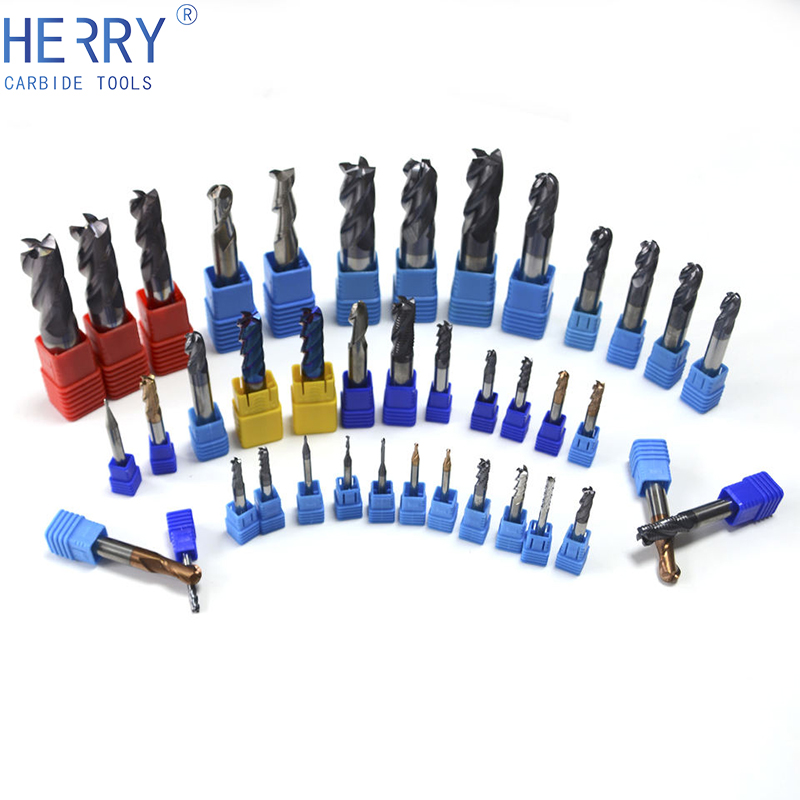
Tool materials mainly refer to the materials of the cutting part of the tool. Their performance is a crucial factor affecting machining quality, cutting efficiency, and tool life. The reasonable application of new tool materials can not only effectively improve productivity, machining quality, and economic benefits but is often the key process for machining some difficult-to-machine materials.
Harvey Performance Company held a groundbreaking gathering with employees and local town officials on June 25 and construction has begun for its new 79,000 square foot manufacturing facility at 49 Raceway Drive in Gorham.
Harvey becomes the first project at the sprawling site owned by Shawn Moody’s company. The 62-acre former track is zoned Narragansett Mixed Use Development District Zone and the new plant will help boost the town’s tax base.
Aluminum high-speed tool steel is a new type of high-speed tool steel uniquely developed in China. By adding a small amount of aluminum to ordinary high-speed steel, the heat resistance and wear resistance of the high-speed tool steel are improved, and it has good comprehensive performance.The typical grade is W6Mo5Cr4V2Al, which achieves the cutting performance of cobalt high-speed tool steel, has good machinability, is inexpensive, and is close in price to ordinary high-speed tool steel. However, it has poor grindability and requires strict heat treatment processes.As the use of high-precision complex tools increases, the processing cost accounts for a large proportion of the tool cost, while the material cost accounts for a smaller proportion (15% to 30%). Therefore, it is economically reasonable to use high-performance tool materials. For machine tools like machining centers, where tool change costs are high, high-performance tool materials should be used even more.The grades and main mechanical properties of the above-mentioned high-speed tool steels are shown in Table 2.Table 2 Grades and main mechanical properties of high-speed steelGradeRoom temperature hardness HRCBending strength σw /GPaImpact toughness aK /(MJ/m)High-temperature hardness HRC500℃600℃W18Cr4VW6Mo5Cr4V295W18Cr4VW6Mo5Cr4V3W6Mo5Cr4V2Co8W2Mo9Cr4VCo8W6Mo5Cr4V2AlW10Mo4Cr4V3Al63~6663~6666~6865~6766~6867~6967~6967~693~3.43.5~43~3.43.23.02.7~3.82.9~3.93.1~3.5 0.18~0.32 0.3~0.40.17~0.22 0.25 0.3 0.23~0.3 0.23~0.3 0.2~0.285655~5657——~606059.5 48.547~48 51 51.7 54 ~55 55 542. Hard AlloyHard alloy is a powder metallurgy product made by sintering tungsten carbide (WC) and titanium carbide (TiC) powders as the main components, and cobalt (Co), molybdenum (Mo), and nickel (Ni) as binders in a vacuum furnace or hydrogen reduction furnace.The hardness of hard alloy reaches 89~94HRA, equivalent to 71~76HRC, with very good wear resistance. The heat resistance can reach 800~1000℃, and the cutting speed can reach more than 100m/min when cutting medium carbon steel. However, its bending strength and toughness are lower than high-speed steel, and its processability is slightly worse than high-speed steel.At present, hard alloy has become the main tool material in cutting processing, widely used in various tools with higher cutting speeds, and even in complex tools, such as hard alloy face milling cutters, end mills, boring tools, drills, reamers, etc.The performance of hard alloy mainly depends on the type, content, and particle size of the metal carbides, as well as the type and content of the binder. In hard alloys, a higher proportion of carbides results in higher hardness and better wear resistance; more binder results in higher bending strength. Generally, the strength of fine-grained hard alloys is lower than that of coarse-grained hard alloys with the same composition, while the hardness is higher than that of coarse-grained hard alloys.GB/T 18376.1—2008 classifies hard alloys for cutting tools into six categories: K, P, M, H, S, and N, based on the material being processed. To meet different usage requirements, they are divided into several groups according to their wear resistance and toughness, represented by two-digit numbers such as 01, 10, 20, 30, 40, etc.Table 3 lists the classification, grouping, and recommended working conditions for the first three categories. The H category (H01~H30) is mainly used for processing hard cutting materials; the S category (S01~S30) is mainly used for processing heat-resistant and high-quality alloy materials; the N category (N01~N30) is mainly used for processing non-ferrous metals and non-metallic materials.Table 3 Classification, Grouping, and Recommended Working Conditions for Hard Alloys for Cutting ProcessingGroupWorking conditionsPerformance improvement directionMaterial to be processedSuitable processing conditionsCutting performanceAlloy performanceK01Cast iron, chilled cast iron, short chip malleable cast ironTurning, finishing turning, milling, boring, scraping← Cutting speed—Feed rate →← Wear resistance—Toughness →K10Cast iron with Brinell hardness above 220, short chip malleable cast ironTurning, milling, boring, scraping, broachingK20Gray cast iron with Brinell hardness below 220, short chip malleable cast ironUsed for turning, milling, boring, etc. in rough and semi-finish machining under medium cutting speed and light loadK30Cast iron, short chip malleable cast ironUsed for turning, milling, planing, and grooving under adverse conditions, possibly with large cutting angles, requiring toughness of the insertCertain requirementsK40Cast iron, short chip malleable cast ironUsed for rough machining under adverse conditions, with lower cutting speed and large feed rateP01Steel, cast steelHigh cutting speed, small chip section, finishing turning and boring under vibration-free conditionsP10Steel, cast steelTurning, profile turning, threading, and milling under high cutting speed and medium to small chip section conditionsP20Steel, cast steel, long chip malleable cast ironTurning, profile turning, and milling under medium cutting speed and medium chip section conditions, planing with small chip sectionP30Steel, cast steel, long chip malleable cast ironTurning, milling, planing, and machining under adverse conditions with medium or low cutting speed and medium or large chip sectionP40Steel, cast steel with sand holes and poresTurning, planing, grooving, and machining on automatic machines under low cutting speed, large cutting angle, large chip section, and adverse conditionsM01Stainless steel, ferritic steel, cast steelHigh cutting speed, small load, fine turning and fine boring under non-vibration conditionsM10Stainless steel, cast steel, manganese steel, alloy steel, alloy cast iron, malleable cast ironTurning under medium or high cutting speed, medium or small chip section conditionsM20Stainless steel, cast steel, manganese steel, alloy steel, alloy cast iron, malleable cast ironTurning under medium cutting speed and medium chip section conditionsCutting, millingM30Stainless steel, cast steel, manganese steel, alloy steel, alloy cast iron, malleable cast ironTurning, milling, and planing under medium or high cutting speed and medium or large chip section conditionsM40Stainless steel, cast steel, manganese steel, alloy steel, alloy cast iron, malleable cast ironTurning, cutting off, and heavy millingThe following introduces several commonly used hard alloys for cutting:(1) K-type hard alloyIt is an alloy based on WC with Co as a binder, or with a small amount of TaC and NbC added. It is mainly used for processing short chip materials, such as cast iron, chilled cast iron, short chip malleable cast iron, gray cast iron, etc. Common grades include K01, K10, K20, K30, K40, etc.As the grade number increases from 10, 20, 30, to 40, the cobalt content increases, resulting in higher strength but lower hardness, heat resistance, and wear resistance, making it suitable for rough machining. Conversely, the more tungsten carbide it contains, the higher the hardness, heat resistance, and wear resistance, but the lower the strength, making it suitable for fine machining.(2) P-type hard alloyIt is an alloy based on TiC and WC with Co (Ni+Mo, Ni+Co) as a binder. Due to the presence of TiC, it improves the bonding temperature with steel and the ability to prevent diffusion. It is mainly used for processing long chip materials, such as steel, cast steel, long chip malleable cast iron, etc.Common grades include P01, P10, P20, P30, P40, etc. The cobalt content increases sequentially, resulting in higher strength but lower hardness, heat resistance, and wear resistance, making it suitable for rough machining. Conversely, the more TiC it contains, the higher the hardness, heat resistance, and wear resistance, but the lower the strength, making it suitable for fine machining.(3) M-type hard alloyIt is an alloy based on WC with Co as a binder, with a small amount of TiC (TaC, NbC) added. Due to the addition of a certain amount of rare metals TaC (NbC), it improves the bending strength, fatigue strength, and impact toughness, as well as the high-temperature hardness, strength, oxidation resistance, and wear resistance.Common grades include M01, M10, M20, M30, M40, etc. M-type hard alloys are general-purpose alloys and can be used for processing stainless steel, cast steel, manganese steel, malleable cast iron, alloy steel, alloy cast iron, etc.3. Other tool materials(1) CeramicsCeramic tool materials are made from artificial compounds, formed under high pressure and sintered at high temperatures. They have a hardness of 91~95HRA, heat resistance up to 1200℃, good chemical stability, and low affinity with metals. Compared to hard alloys, they can increase cutting speed by 3 to 5 times.However, their biggest disadvantage is low bending strength and poor impact toughness. They are mainly used for semi-finishing and finishing of steel, cast iron, and high-hardness materials (such as quenched steel) during continuous cutting.(2) DiamondDiamond is divided into natural and synthetic types, both of which are allotropes of carbon. Natural diamond is rarely used due to its high cost. Synthetic diamond is made from graphite under high temperature and high pressure, with a hardness of 10000HV.Diamond tools can precisely cut non-ferrous metals and alloys, ceramics, and other high-hardness, high-wear-resistant materials. However, they have poor chemical stability with iron and are not suitable for processing ferrous materials. Their thermal stability is also poor, and when the temperature reaches 800℃, diamond tools will undergo carbonization in the air, leading to rapid wear.(3) Cubic boron nitrideCubic boron nitride is synthesized using artificial methods under high temperature and high pressure with the addition of a catalyst. It has a hardness of 8000~9000HV and heat resistance of 1400℃. It is mainly used for semi-finishing and finishing of high-temperature alloys, hardened steel, and chilled cast iron materials.III. Surface Coating of Tool MaterialsThe toughness and hardness of tool materials generally cannot be balanced, so the lifespan of most tool materials is mainly affected by wear. In recent years, surface coating treatment methods have been adopted to properly solve this problem.The surface coating of tool materials is applied to tools made of high-speed steel and tough cemented carbide materials. Through methods such as chemical vapor deposition and vacuum sputtering, a very thin (5~12μm) layer of high-hardness, high-wear-resistance, and refractory metal compound titanium carbide (TiC) or titanium nitride (TiN) is deposited on the tool surface, forming a golden-yellow surface coating.Due to the high hardness and low friction coefficient of the coating, the wear resistance of the tool is improved. The coating also has anti-oxidation and anti-adhesion properties, delaying tool wear. Therefore, the cutting speed can be increased by 30% to 50%, and the tool life can be extended several times.Related posts:Understanding Mechanical Properties of MetalsEssential Lathe Operation Skills for MachinistsMetal Cutting: Deformation, Forces, Heat and ToolsCNC Lathe Components: Essential Mechanisms ExplainedShaping vs. Broaching: A Comprehensive Guide to Metal FabricationEssential Measuring Tools: Calipers, Micrometers & More
The early common grade of tungsten series high-speed tool steel is W18Cr4V, which has good overall performance and grindability. It can be used to manufacture various complex tools and finishing tools. However, since tungsten is an important strategic resource and this grade contains a high proportion of tungsten, its application is now less common and it has been gradually phased out in some developed countries.The common grade of tungsten-molybdenum series high-speed tool steel is W6Mo5Cr4V2, which has good overall performance. Due to the role of molybdenum, its carbides are fine particles and evenly distributed, so its bending strength and impact toughness are higher than those of tungsten series high-speed tool steel. It also has good thermoplasticity, making it suitable for manufacturing hot-rolled tools. However, this material has a high sensitivity to decarburization, a narrow quenching temperature range, and is difficult to master the heat treatment process.W9Mo3Cr4V is a high-speed tool steel independently developed by China. Its hardness, strength, and thermoplasticity are slightly higher than those of W6Mo5Cr4V2. It has good hardness and toughness, and is easy to roll, forge, has a wide heat treatment temperature range, low decarburization sensitivity, and lower cost.(2) High-performance high-speed tool steelHigh-performance high-speed tool steel is a new type of high-speed tool steel that is an improvement over ordinary high-speed tool steel by adjusting the chemical composition and adding other alloying elements. This type of high-speed tool steel is mainly used for cutting difficult-to-machine materials such as high-temperature alloys, titanium alloys, high-strength steel, and stainless steel.There are several types of high-performance high-speed tool steel:1) High-carbon high-speed tool steelThe mass fraction of carbon is increased to 0.9% to 1.05%, causing all alloying elements in the steel to form carbides, thereby improving the hardness, wear resistance, and heat resistance of the steel, but its strength and toughness slightly decrease. The typical grade is 95W18Cr4V.2) High-vanadium high-speed tool steelThe mass fraction of vanadium is increased to 3% to 5%, with the typical grade being W6Mo5Cr4V3. Due to the increased content of vanadium carbide, the wear resistance of high-speed tool steel is improved, and it is generally used for cutting high-strength steel. However, this type of high-speed tool steel is more difficult to grind than ordinary high-speed tool steel.3) Cobalt high-speed tool steelAdding cobalt to high-speed tool steel improves its high-temperature hardness and oxidation resistance. The typical grade is W2Mo9Cr4VCo8, which has good comprehensive performance and is very effective for machining difficult-to-machine materials such as high-temperature alloys and stainless steel.4) Aluminum high-speed tool steelAluminum high-speed tool steel is a new type of high-speed tool steel uniquely developed in China. By adding a small amount of aluminum to ordinary high-speed steel, the heat resistance and wear resistance of the high-speed tool steel are improved, and it has good comprehensive performance.The typical grade is W6Mo5Cr4V2Al, which achieves the cutting performance of cobalt high-speed tool steel, has good machinability, is inexpensive, and is close in price to ordinary high-speed tool steel. However, it has poor grindability and requires strict heat treatment processes.As the use of high-precision complex tools increases, the processing cost accounts for a large proportion of the tool cost, while the material cost accounts for a smaller proportion (15% to 30%). Therefore, it is economically reasonable to use high-performance tool materials. For machine tools like machining centers, where tool change costs are high, high-performance tool materials should be used even more.The grades and main mechanical properties of the above-mentioned high-speed tool steels are shown in Table 2.Table 2 Grades and main mechanical properties of high-speed steelGradeRoom temperature hardness HRCBending strength σw /GPaImpact toughness aK /(MJ/m)High-temperature hardness HRC500℃600℃W18Cr4VW6Mo5Cr4V295W18Cr4VW6Mo5Cr4V3W6Mo5Cr4V2Co8W2Mo9Cr4VCo8W6Mo5Cr4V2AlW10Mo4Cr4V3Al63~6663~6666~6865~6766~6867~6967~6967~693~3.43.5~43~3.43.23.02.7~3.82.9~3.93.1~3.5 0.18~0.32 0.3~0.40.17~0.22 0.25 0.3 0.23~0.3 0.23~0.3 0.2~0.285655~5657——~606059.5 48.547~48 51 51.7 54 ~55 55 542. Hard AlloyHard alloy is a powder metallurgy product made by sintering tungsten carbide (WC) and titanium carbide (TiC) powders as the main components, and cobalt (Co), molybdenum (Mo), and nickel (Ni) as binders in a vacuum furnace or hydrogen reduction furnace.The hardness of hard alloy reaches 89~94HRA, equivalent to 71~76HRC, with very good wear resistance. The heat resistance can reach 800~1000℃, and the cutting speed can reach more than 100m/min when cutting medium carbon steel. However, its bending strength and toughness are lower than high-speed steel, and its processability is slightly worse than high-speed steel.At present, hard alloy has become the main tool material in cutting processing, widely used in various tools with higher cutting speeds, and even in complex tools, such as hard alloy face milling cutters, end mills, boring tools, drills, reamers, etc.The performance of hard alloy mainly depends on the type, content, and particle size of the metal carbides, as well as the type and content of the binder. In hard alloys, a higher proportion of carbides results in higher hardness and better wear resistance; more binder results in higher bending strength. Generally, the strength of fine-grained hard alloys is lower than that of coarse-grained hard alloys with the same composition, while the hardness is higher than that of coarse-grained hard alloys.GB/T 18376.1—2008 classifies hard alloys for cutting tools into six categories: K, P, M, H, S, and N, based on the material being processed. To meet different usage requirements, they are divided into several groups according to their wear resistance and toughness, represented by two-digit numbers such as 01, 10, 20, 30, 40, etc.Table 3 lists the classification, grouping, and recommended working conditions for the first three categories. The H category (H01~H30) is mainly used for processing hard cutting materials; the S category (S01~S30) is mainly used for processing heat-resistant and high-quality alloy materials; the N category (N01~N30) is mainly used for processing non-ferrous metals and non-metallic materials.Table 3 Classification, Grouping, and Recommended Working Conditions for Hard Alloys for Cutting ProcessingGroupWorking conditionsPerformance improvement directionMaterial to be processedSuitable processing conditionsCutting performanceAlloy performanceK01Cast iron, chilled cast iron, short chip malleable cast ironTurning, finishing turning, milling, boring, scraping← Cutting speed—Feed rate →← Wear resistance—Toughness →K10Cast iron with Brinell hardness above 220, short chip malleable cast ironTurning, milling, boring, scraping, broachingK20Gray cast iron with Brinell hardness below 220, short chip malleable cast ironUsed for turning, milling, boring, etc. in rough and semi-finish machining under medium cutting speed and light loadK30Cast iron, short chip malleable cast ironUsed for turning, milling, planing, and grooving under adverse conditions, possibly with large cutting angles, requiring toughness of the insertCertain requirementsK40Cast iron, short chip malleable cast ironUsed for rough machining under adverse conditions, with lower cutting speed and large feed rateP01Steel, cast steelHigh cutting speed, small chip section, finishing turning and boring under vibration-free conditionsP10Steel, cast steelTurning, profile turning, threading, and milling under high cutting speed and medium to small chip section conditionsP20Steel, cast steel, long chip malleable cast ironTurning, profile turning, and milling under medium cutting speed and medium chip section conditions, planing with small chip sectionP30Steel, cast steel, long chip malleable cast ironTurning, milling, planing, and machining under adverse conditions with medium or low cutting speed and medium or large chip sectionP40Steel, cast steel with sand holes and poresTurning, planing, grooving, and machining on automatic machines under low cutting speed, large cutting angle, large chip section, and adverse conditionsM01Stainless steel, ferritic steel, cast steelHigh cutting speed, small load, fine turning and fine boring under non-vibration conditionsM10Stainless steel, cast steel, manganese steel, alloy steel, alloy cast iron, malleable cast ironTurning under medium or high cutting speed, medium or small chip section conditionsM20Stainless steel, cast steel, manganese steel, alloy steel, alloy cast iron, malleable cast ironTurning under medium cutting speed and medium chip section conditionsCutting, millingM30Stainless steel, cast steel, manganese steel, alloy steel, alloy cast iron, malleable cast ironTurning, milling, and planing under medium or high cutting speed and medium or large chip section conditionsM40Stainless steel, cast steel, manganese steel, alloy steel, alloy cast iron, malleable cast ironTurning, cutting off, and heavy millingThe following introduces several commonly used hard alloys for cutting:(1) K-type hard alloyIt is an alloy based on WC with Co as a binder, or with a small amount of TaC and NbC added. It is mainly used for processing short chip materials, such as cast iron, chilled cast iron, short chip malleable cast iron, gray cast iron, etc. Common grades include K01, K10, K20, K30, K40, etc.As the grade number increases from 10, 20, 30, to 40, the cobalt content increases, resulting in higher strength but lower hardness, heat resistance, and wear resistance, making it suitable for rough machining. Conversely, the more tungsten carbide it contains, the higher the hardness, heat resistance, and wear resistance, but the lower the strength, making it suitable for fine machining.(2) P-type hard alloyIt is an alloy based on TiC and WC with Co (Ni+Mo, Ni+Co) as a binder. Due to the presence of TiC, it improves the bonding temperature with steel and the ability to prevent diffusion. It is mainly used for processing long chip materials, such as steel, cast steel, long chip malleable cast iron, etc.Common grades include P01, P10, P20, P30, P40, etc. The cobalt content increases sequentially, resulting in higher strength but lower hardness, heat resistance, and wear resistance, making it suitable for rough machining. Conversely, the more TiC it contains, the higher the hardness, heat resistance, and wear resistance, but the lower the strength, making it suitable for fine machining.(3) M-type hard alloyIt is an alloy based on WC with Co as a binder, with a small amount of TiC (TaC, NbC) added. Due to the addition of a certain amount of rare metals TaC (NbC), it improves the bending strength, fatigue strength, and impact toughness, as well as the high-temperature hardness, strength, oxidation resistance, and wear resistance.Common grades include M01, M10, M20, M30, M40, etc. M-type hard alloys are general-purpose alloys and can be used for processing stainless steel, cast steel, manganese steel, malleable cast iron, alloy steel, alloy cast iron, etc.3. Other tool materials(1) CeramicsCeramic tool materials are made from artificial compounds, formed under high pressure and sintered at high temperatures. They have a hardness of 91~95HRA, heat resistance up to 1200℃, good chemical stability, and low affinity with metals. Compared to hard alloys, they can increase cutting speed by 3 to 5 times.However, their biggest disadvantage is low bending strength and poor impact toughness. They are mainly used for semi-finishing and finishing of steel, cast iron, and high-hardness materials (such as quenched steel) during continuous cutting.(2) DiamondDiamond is divided into natural and synthetic types, both of which are allotropes of carbon. Natural diamond is rarely used due to its high cost. Synthetic diamond is made from graphite under high temperature and high pressure, with a hardness of 10000HV.Diamond tools can precisely cut non-ferrous metals and alloys, ceramics, and other high-hardness, high-wear-resistant materials. However, they have poor chemical stability with iron and are not suitable for processing ferrous materials. Their thermal stability is also poor, and when the temperature reaches 800℃, diamond tools will undergo carbonization in the air, leading to rapid wear.(3) Cubic boron nitrideCubic boron nitride is synthesized using artificial methods under high temperature and high pressure with the addition of a catalyst. It has a hardness of 8000~9000HV and heat resistance of 1400℃. It is mainly used for semi-finishing and finishing of high-temperature alloys, hardened steel, and chilled cast iron materials.III. Surface Coating of Tool MaterialsThe toughness and hardness of tool materials generally cannot be balanced, so the lifespan of most tool materials is mainly affected by wear. In recent years, surface coating treatment methods have been adopted to properly solve this problem.The surface coating of tool materials is applied to tools made of high-speed steel and tough cemented carbide materials. Through methods such as chemical vapor deposition and vacuum sputtering, a very thin (5~12μm) layer of high-hardness, high-wear-resistance, and refractory metal compound titanium carbide (TiC) or titanium nitride (TiN) is deposited on the tool surface, forming a golden-yellow surface coating.Due to the high hardness and low friction coefficient of the coating, the wear resistance of the tool is improved. The coating also has anti-oxidation and anti-adhesion properties, delaying tool wear. Therefore, the cutting speed can be increased by 30% to 50%, and the tool life can be extended several times.Related posts:Understanding Mechanical Properties of MetalsEssential Lathe Operation Skills for MachinistsMetal Cutting: Deformation, Forces, Heat and ToolsCNC Lathe Components: Essential Mechanisms ExplainedShaping vs. Broaching: A Comprehensive Guide to Metal FabricationEssential Measuring Tools: Calipers, Micrometers & More
“This facility will accelerate our ability to meet important objectives we have for the organization. The additional square footage provides much needed space to build capacity to support our growth, enabling us to expand our research and development capabilities,” said Peter Jenkins, CEO of Harvey Performance Company.
Harvey performancehazard ky
What makes a cutting tool efficient and durable? This blog dives into the materials used in cutting tools, highlighting their unique properties and applications. From high-speed steel to ceramics and diamond, each material offers specific advantages for various machining tasks. By understanding these materials, you’ll learn how to choose the right tools for better performance and longer life in your manufacturing processes.
During cutting, the tool is subjected to various stresses, impacts, and vibrations. To prevent chipping and breakage, the tool material must have sufficient strength and toughness.4. High Heat ResistanceHeat resistance refers to the ability of the tool material to maintain its room temperature hardness, strength, and toughness under high-temperature conditions. It can also be expressed as hot hardness or high-temperature hardness. The better the heat resistance, the higher the allowable cutting speed in machining. It is a key indicator of tool material performance.5. Good WorkabilityTo facilitate manufacturing, tool materials should have good workability, such as machinability, grindability, forgeability, weldability, and heat treatment properties. Additionally, tool materials that are abundant in resources and low in cost should be used as much as possible.II. Types of Tool MaterialsTool materials mainly include tool steel (non-alloy tool steel and alloy tool steel), high-speed steel, cemented carbide, ceramic materials, and superhard tool materials. Their main physical and mechanical properties are shown in Table 1.Table 1 Physical and Mechanical Properties of Various Tool MaterialsMaterial TypesMaterial HardnessMaterial bending strength/GPaMaterial impact toughness/(kJ/m2)Material thermal conductivity/[W/(m·K1)]Material heat resistance/℃Non-alloy tool steel60~65HRC81.2~83.9HRA2.45~2.7467.2200~250High-speed tool steel63~70HRC83~86.6HRA1.96~5.8898~5881.67~25600~700Alloy tool steel63~66HRC2.441.8300~400HardnessAlloyYG689.5HRA1.453079.6900YT1490.5HRA1.2733.5900CeramicAl2O3 AM>91HRA0.45~0.55519.21200Al2O3+T1C T893~94HRA0.55~0.65Si3N4 SM91~93HRA0.75~0.85438.21300DiamondNatural diamond10000HV0.21~0.49146.5700~800Polycrystalline diamondComposite blade6500~8000HV2.8100~108.7700~800Cubic boron nitrideSintered body6000~8000HV1.041.81000~1200Cubic boron nitrideComposite blade FD≥5000HV1.5>10001. High-speed tool steelThe full name of high-speed tool steel is high-speed alloy tool steel, also known as white steel or sharp steel.High-speed tool steel is a high-alloy tool steel with a large amount of alloy elements such as W, Mo, Cr, and V added to alloy tool steel. These alloy elements form high-hardness carbides with carbon, giving high-speed tool steel excellent wear resistance.Tungsten atoms and carbon atoms have a strong binding force, increasing the high-temperature hardness of the steel. The role of molybdenum is basically the same as that of tungsten, and it can refine the grains of carbides, reduce the unevenness of carbides in the steel, and improve the toughness of the steel.High-speed tool steel is a tool material with good overall performance and the widest range of applications. It has high bending strength, good toughness, and a hardness of 63~66HRC after heat treatment. It is easy to grind into a sharp cutting edge, so it is often called “sharp steel” in production.Its heat resistance is 600~660℃, and the cutting speed can reach about 30m/min when cutting carbon steel materials. It has good processability and can be used to manufacture tools with complex shapes, such as drills, taps, forming tools, broaches, and gear tools. It is also suitable for processing various materials such as carbon steel, alloy steel, non-ferrous metals, and cast iron.High-speed tool steel can be divided into ordinary high-speed tool steel and high-performance high-speed tool steel based on cutting performance.(1) Ordinary high-speed tool steelOrdinary high-speed tool steel can be divided into tungsten series high-speed tool steel and tungsten-molybdenum series high-speed tool steel.The early common grade of tungsten series high-speed tool steel is W18Cr4V, which has good overall performance and grindability. It can be used to manufacture various complex tools and finishing tools. However, since tungsten is an important strategic resource and this grade contains a high proportion of tungsten, its application is now less common and it has been gradually phased out in some developed countries.The common grade of tungsten-molybdenum series high-speed tool steel is W6Mo5Cr4V2, which has good overall performance. Due to the role of molybdenum, its carbides are fine particles and evenly distributed, so its bending strength and impact toughness are higher than those of tungsten series high-speed tool steel. It also has good thermoplasticity, making it suitable for manufacturing hot-rolled tools. However, this material has a high sensitivity to decarburization, a narrow quenching temperature range, and is difficult to master the heat treatment process.W9Mo3Cr4V is a high-speed tool steel independently developed by China. Its hardness, strength, and thermoplasticity are slightly higher than those of W6Mo5Cr4V2. It has good hardness and toughness, and is easy to roll, forge, has a wide heat treatment temperature range, low decarburization sensitivity, and lower cost.(2) High-performance high-speed tool steelHigh-performance high-speed tool steel is a new type of high-speed tool steel that is an improvement over ordinary high-speed tool steel by adjusting the chemical composition and adding other alloying elements. This type of high-speed tool steel is mainly used for cutting difficult-to-machine materials such as high-temperature alloys, titanium alloys, high-strength steel, and stainless steel.There are several types of high-performance high-speed tool steel:1) High-carbon high-speed tool steelThe mass fraction of carbon is increased to 0.9% to 1.05%, causing all alloying elements in the steel to form carbides, thereby improving the hardness, wear resistance, and heat resistance of the steel, but its strength and toughness slightly decrease. The typical grade is 95W18Cr4V.2) High-vanadium high-speed tool steelThe mass fraction of vanadium is increased to 3% to 5%, with the typical grade being W6Mo5Cr4V3. Due to the increased content of vanadium carbide, the wear resistance of high-speed tool steel is improved, and it is generally used for cutting high-strength steel. However, this type of high-speed tool steel is more difficult to grind than ordinary high-speed tool steel.3) Cobalt high-speed tool steelAdding cobalt to high-speed tool steel improves its high-temperature hardness and oxidation resistance. The typical grade is W2Mo9Cr4VCo8, which has good comprehensive performance and is very effective for machining difficult-to-machine materials such as high-temperature alloys and stainless steel.4) Aluminum high-speed tool steelAluminum high-speed tool steel is a new type of high-speed tool steel uniquely developed in China. By adding a small amount of aluminum to ordinary high-speed steel, the heat resistance and wear resistance of the high-speed tool steel are improved, and it has good comprehensive performance.The typical grade is W6Mo5Cr4V2Al, which achieves the cutting performance of cobalt high-speed tool steel, has good machinability, is inexpensive, and is close in price to ordinary high-speed tool steel. However, it has poor grindability and requires strict heat treatment processes.As the use of high-precision complex tools increases, the processing cost accounts for a large proportion of the tool cost, while the material cost accounts for a smaller proportion (15% to 30%). Therefore, it is economically reasonable to use high-performance tool materials. For machine tools like machining centers, where tool change costs are high, high-performance tool materials should be used even more.The grades and main mechanical properties of the above-mentioned high-speed tool steels are shown in Table 2.Table 2 Grades and main mechanical properties of high-speed steelGradeRoom temperature hardness HRCBending strength σw /GPaImpact toughness aK /(MJ/m)High-temperature hardness HRC500℃600℃W18Cr4VW6Mo5Cr4V295W18Cr4VW6Mo5Cr4V3W6Mo5Cr4V2Co8W2Mo9Cr4VCo8W6Mo5Cr4V2AlW10Mo4Cr4V3Al63~6663~6666~6865~6766~6867~6967~6967~693~3.43.5~43~3.43.23.02.7~3.82.9~3.93.1~3.5 0.18~0.32 0.3~0.40.17~0.22 0.25 0.3 0.23~0.3 0.23~0.3 0.2~0.285655~5657——~606059.5 48.547~48 51 51.7 54 ~55 55 542. Hard AlloyHard alloy is a powder metallurgy product made by sintering tungsten carbide (WC) and titanium carbide (TiC) powders as the main components, and cobalt (Co), molybdenum (Mo), and nickel (Ni) as binders in a vacuum furnace or hydrogen reduction furnace.The hardness of hard alloy reaches 89~94HRA, equivalent to 71~76HRC, with very good wear resistance. The heat resistance can reach 800~1000℃, and the cutting speed can reach more than 100m/min when cutting medium carbon steel. However, its bending strength and toughness are lower than high-speed steel, and its processability is slightly worse than high-speed steel.At present, hard alloy has become the main tool material in cutting processing, widely used in various tools with higher cutting speeds, and even in complex tools, such as hard alloy face milling cutters, end mills, boring tools, drills, reamers, etc.The performance of hard alloy mainly depends on the type, content, and particle size of the metal carbides, as well as the type and content of the binder. In hard alloys, a higher proportion of carbides results in higher hardness and better wear resistance; more binder results in higher bending strength. Generally, the strength of fine-grained hard alloys is lower than that of coarse-grained hard alloys with the same composition, while the hardness is higher than that of coarse-grained hard alloys.GB/T 18376.1—2008 classifies hard alloys for cutting tools into six categories: K, P, M, H, S, and N, based on the material being processed. To meet different usage requirements, they are divided into several groups according to their wear resistance and toughness, represented by two-digit numbers such as 01, 10, 20, 30, 40, etc.Table 3 lists the classification, grouping, and recommended working conditions for the first three categories. The H category (H01~H30) is mainly used for processing hard cutting materials; the S category (S01~S30) is mainly used for processing heat-resistant and high-quality alloy materials; the N category (N01~N30) is mainly used for processing non-ferrous metals and non-metallic materials.Table 3 Classification, Grouping, and Recommended Working Conditions for Hard Alloys for Cutting ProcessingGroupWorking conditionsPerformance improvement directionMaterial to be processedSuitable processing conditionsCutting performanceAlloy performanceK01Cast iron, chilled cast iron, short chip malleable cast ironTurning, finishing turning, milling, boring, scraping← Cutting speed—Feed rate →← Wear resistance—Toughness →K10Cast iron with Brinell hardness above 220, short chip malleable cast ironTurning, milling, boring, scraping, broachingK20Gray cast iron with Brinell hardness below 220, short chip malleable cast ironUsed for turning, milling, boring, etc. in rough and semi-finish machining under medium cutting speed and light loadK30Cast iron, short chip malleable cast ironUsed for turning, milling, planing, and grooving under adverse conditions, possibly with large cutting angles, requiring toughness of the insertCertain requirementsK40Cast iron, short chip malleable cast ironUsed for rough machining under adverse conditions, with lower cutting speed and large feed rateP01Steel, cast steelHigh cutting speed, small chip section, finishing turning and boring under vibration-free conditionsP10Steel, cast steelTurning, profile turning, threading, and milling under high cutting speed and medium to small chip section conditionsP20Steel, cast steel, long chip malleable cast ironTurning, profile turning, and milling under medium cutting speed and medium chip section conditions, planing with small chip sectionP30Steel, cast steel, long chip malleable cast ironTurning, milling, planing, and machining under adverse conditions with medium or low cutting speed and medium or large chip sectionP40Steel, cast steel with sand holes and poresTurning, planing, grooving, and machining on automatic machines under low cutting speed, large cutting angle, large chip section, and adverse conditionsM01Stainless steel, ferritic steel, cast steelHigh cutting speed, small load, fine turning and fine boring under non-vibration conditionsM10Stainless steel, cast steel, manganese steel, alloy steel, alloy cast iron, malleable cast ironTurning under medium or high cutting speed, medium or small chip section conditionsM20Stainless steel, cast steel, manganese steel, alloy steel, alloy cast iron, malleable cast ironTurning under medium cutting speed and medium chip section conditionsCutting, millingM30Stainless steel, cast steel, manganese steel, alloy steel, alloy cast iron, malleable cast ironTurning, milling, and planing under medium or high cutting speed and medium or large chip section conditionsM40Stainless steel, cast steel, manganese steel, alloy steel, alloy cast iron, malleable cast ironTurning, cutting off, and heavy millingThe following introduces several commonly used hard alloys for cutting:(1) K-type hard alloyIt is an alloy based on WC with Co as a binder, or with a small amount of TaC and NbC added. It is mainly used for processing short chip materials, such as cast iron, chilled cast iron, short chip malleable cast iron, gray cast iron, etc. Common grades include K01, K10, K20, K30, K40, etc.As the grade number increases from 10, 20, 30, to 40, the cobalt content increases, resulting in higher strength but lower hardness, heat resistance, and wear resistance, making it suitable for rough machining. Conversely, the more tungsten carbide it contains, the higher the hardness, heat resistance, and wear resistance, but the lower the strength, making it suitable for fine machining.(2) P-type hard alloyIt is an alloy based on TiC and WC with Co (Ni+Mo, Ni+Co) as a binder. Due to the presence of TiC, it improves the bonding temperature with steel and the ability to prevent diffusion. It is mainly used for processing long chip materials, such as steel, cast steel, long chip malleable cast iron, etc.Common grades include P01, P10, P20, P30, P40, etc. The cobalt content increases sequentially, resulting in higher strength but lower hardness, heat resistance, and wear resistance, making it suitable for rough machining. Conversely, the more TiC it contains, the higher the hardness, heat resistance, and wear resistance, but the lower the strength, making it suitable for fine machining.(3) M-type hard alloyIt is an alloy based on WC with Co as a binder, with a small amount of TiC (TaC, NbC) added. Due to the addition of a certain amount of rare metals TaC (NbC), it improves the bending strength, fatigue strength, and impact toughness, as well as the high-temperature hardness, strength, oxidation resistance, and wear resistance.Common grades include M01, M10, M20, M30, M40, etc. M-type hard alloys are general-purpose alloys and can be used for processing stainless steel, cast steel, manganese steel, malleable cast iron, alloy steel, alloy cast iron, etc.3. Other tool materials(1) CeramicsCeramic tool materials are made from artificial compounds, formed under high pressure and sintered at high temperatures. They have a hardness of 91~95HRA, heat resistance up to 1200℃, good chemical stability, and low affinity with metals. Compared to hard alloys, they can increase cutting speed by 3 to 5 times.However, their biggest disadvantage is low bending strength and poor impact toughness. They are mainly used for semi-finishing and finishing of steel, cast iron, and high-hardness materials (such as quenched steel) during continuous cutting.(2) DiamondDiamond is divided into natural and synthetic types, both of which are allotropes of carbon. Natural diamond is rarely used due to its high cost. Synthetic diamond is made from graphite under high temperature and high pressure, with a hardness of 10000HV.Diamond tools can precisely cut non-ferrous metals and alloys, ceramics, and other high-hardness, high-wear-resistant materials. However, they have poor chemical stability with iron and are not suitable for processing ferrous materials. Their thermal stability is also poor, and when the temperature reaches 800℃, diamond tools will undergo carbonization in the air, leading to rapid wear.(3) Cubic boron nitrideCubic boron nitride is synthesized using artificial methods under high temperature and high pressure with the addition of a catalyst. It has a hardness of 8000~9000HV and heat resistance of 1400℃. It is mainly used for semi-finishing and finishing of high-temperature alloys, hardened steel, and chilled cast iron materials.III. Surface Coating of Tool MaterialsThe toughness and hardness of tool materials generally cannot be balanced, so the lifespan of most tool materials is mainly affected by wear. In recent years, surface coating treatment methods have been adopted to properly solve this problem.The surface coating of tool materials is applied to tools made of high-speed steel and tough cemented carbide materials. Through methods such as chemical vapor deposition and vacuum sputtering, a very thin (5~12μm) layer of high-hardness, high-wear-resistance, and refractory metal compound titanium carbide (TiC) or titanium nitride (TiN) is deposited on the tool surface, forming a golden-yellow surface coating.Due to the high hardness and low friction coefficient of the coating, the wear resistance of the tool is improved. The coating also has anti-oxidation and anti-adhesion properties, delaying tool wear. Therefore, the cutting speed can be increased by 30% to 50%, and the tool life can be extended several times.Related posts:Understanding Mechanical Properties of MetalsEssential Lathe Operation Skills for MachinistsMetal Cutting: Deformation, Forces, Heat and ToolsCNC Lathe Components: Essential Mechanisms ExplainedShaping vs. Broaching: A Comprehensive Guide to Metal FabricationEssential Measuring Tools: Calipers, Micrometers & More
1) High-carbon high-speed tool steelThe mass fraction of carbon is increased to 0.9% to 1.05%, causing all alloying elements in the steel to form carbides, thereby improving the hardness, wear resistance, and heat resistance of the steel, but its strength and toughness slightly decrease. The typical grade is 95W18Cr4V.2) High-vanadium high-speed tool steelThe mass fraction of vanadium is increased to 3% to 5%, with the typical grade being W6Mo5Cr4V3. Due to the increased content of vanadium carbide, the wear resistance of high-speed tool steel is improved, and it is generally used for cutting high-strength steel. However, this type of high-speed tool steel is more difficult to grind than ordinary high-speed tool steel.3) Cobalt high-speed tool steelAdding cobalt to high-speed tool steel improves its high-temperature hardness and oxidation resistance. The typical grade is W2Mo9Cr4VCo8, which has good comprehensive performance and is very effective for machining difficult-to-machine materials such as high-temperature alloys and stainless steel.4) Aluminum high-speed tool steelAluminum high-speed tool steel is a new type of high-speed tool steel uniquely developed in China. By adding a small amount of aluminum to ordinary high-speed steel, the heat resistance and wear resistance of the high-speed tool steel are improved, and it has good comprehensive performance.The typical grade is W6Mo5Cr4V2Al, which achieves the cutting performance of cobalt high-speed tool steel, has good machinability, is inexpensive, and is close in price to ordinary high-speed tool steel. However, it has poor grindability and requires strict heat treatment processes.As the use of high-precision complex tools increases, the processing cost accounts for a large proportion of the tool cost, while the material cost accounts for a smaller proportion (15% to 30%). Therefore, it is economically reasonable to use high-performance tool materials. For machine tools like machining centers, where tool change costs are high, high-performance tool materials should be used even more.The grades and main mechanical properties of the above-mentioned high-speed tool steels are shown in Table 2.Table 2 Grades and main mechanical properties of high-speed steelGradeRoom temperature hardness HRCBending strength σw /GPaImpact toughness aK /(MJ/m)High-temperature hardness HRC500℃600℃W18Cr4VW6Mo5Cr4V295W18Cr4VW6Mo5Cr4V3W6Mo5Cr4V2Co8W2Mo9Cr4VCo8W6Mo5Cr4V2AlW10Mo4Cr4V3Al63~6663~6666~6865~6766~6867~6967~6967~693~3.43.5~43~3.43.23.02.7~3.82.9~3.93.1~3.5 0.18~0.32 0.3~0.40.17~0.22 0.25 0.3 0.23~0.3 0.23~0.3 0.2~0.285655~5657——~606059.5 48.547~48 51 51.7 54 ~55 55 542. Hard AlloyHard alloy is a powder metallurgy product made by sintering tungsten carbide (WC) and titanium carbide (TiC) powders as the main components, and cobalt (Co), molybdenum (Mo), and nickel (Ni) as binders in a vacuum furnace or hydrogen reduction furnace.The hardness of hard alloy reaches 89~94HRA, equivalent to 71~76HRC, with very good wear resistance. The heat resistance can reach 800~1000℃, and the cutting speed can reach more than 100m/min when cutting medium carbon steel. However, its bending strength and toughness are lower than high-speed steel, and its processability is slightly worse than high-speed steel.At present, hard alloy has become the main tool material in cutting processing, widely used in various tools with higher cutting speeds, and even in complex tools, such as hard alloy face milling cutters, end mills, boring tools, drills, reamers, etc.The performance of hard alloy mainly depends on the type, content, and particle size of the metal carbides, as well as the type and content of the binder. In hard alloys, a higher proportion of carbides results in higher hardness and better wear resistance; more binder results in higher bending strength. Generally, the strength of fine-grained hard alloys is lower than that of coarse-grained hard alloys with the same composition, while the hardness is higher than that of coarse-grained hard alloys.GB/T 18376.1—2008 classifies hard alloys for cutting tools into six categories: K, P, M, H, S, and N, based on the material being processed. To meet different usage requirements, they are divided into several groups according to their wear resistance and toughness, represented by two-digit numbers such as 01, 10, 20, 30, 40, etc.Table 3 lists the classification, grouping, and recommended working conditions for the first three categories. The H category (H01~H30) is mainly used for processing hard cutting materials; the S category (S01~S30) is mainly used for processing heat-resistant and high-quality alloy materials; the N category (N01~N30) is mainly used for processing non-ferrous metals and non-metallic materials.Table 3 Classification, Grouping, and Recommended Working Conditions for Hard Alloys for Cutting ProcessingGroupWorking conditionsPerformance improvement directionMaterial to be processedSuitable processing conditionsCutting performanceAlloy performanceK01Cast iron, chilled cast iron, short chip malleable cast ironTurning, finishing turning, milling, boring, scraping← Cutting speed—Feed rate →← Wear resistance—Toughness →K10Cast iron with Brinell hardness above 220, short chip malleable cast ironTurning, milling, boring, scraping, broachingK20Gray cast iron with Brinell hardness below 220, short chip malleable cast ironUsed for turning, milling, boring, etc. in rough and semi-finish machining under medium cutting speed and light loadK30Cast iron, short chip malleable cast ironUsed for turning, milling, planing, and grooving under adverse conditions, possibly with large cutting angles, requiring toughness of the insertCertain requirementsK40Cast iron, short chip malleable cast ironUsed for rough machining under adverse conditions, with lower cutting speed and large feed rateP01Steel, cast steelHigh cutting speed, small chip section, finishing turning and boring under vibration-free conditionsP10Steel, cast steelTurning, profile turning, threading, and milling under high cutting speed and medium to small chip section conditionsP20Steel, cast steel, long chip malleable cast ironTurning, profile turning, and milling under medium cutting speed and medium chip section conditions, planing with small chip sectionP30Steel, cast steel, long chip malleable cast ironTurning, milling, planing, and machining under adverse conditions with medium or low cutting speed and medium or large chip sectionP40Steel, cast steel with sand holes and poresTurning, planing, grooving, and machining on automatic machines under low cutting speed, large cutting angle, large chip section, and adverse conditionsM01Stainless steel, ferritic steel, cast steelHigh cutting speed, small load, fine turning and fine boring under non-vibration conditionsM10Stainless steel, cast steel, manganese steel, alloy steel, alloy cast iron, malleable cast ironTurning under medium or high cutting speed, medium or small chip section conditionsM20Stainless steel, cast steel, manganese steel, alloy steel, alloy cast iron, malleable cast ironTurning under medium cutting speed and medium chip section conditionsCutting, millingM30Stainless steel, cast steel, manganese steel, alloy steel, alloy cast iron, malleable cast ironTurning, milling, and planing under medium or high cutting speed and medium or large chip section conditionsM40Stainless steel, cast steel, manganese steel, alloy steel, alloy cast iron, malleable cast ironTurning, cutting off, and heavy millingThe following introduces several commonly used hard alloys for cutting:(1) K-type hard alloyIt is an alloy based on WC with Co as a binder, or with a small amount of TaC and NbC added. It is mainly used for processing short chip materials, such as cast iron, chilled cast iron, short chip malleable cast iron, gray cast iron, etc. Common grades include K01, K10, K20, K30, K40, etc.As the grade number increases from 10, 20, 30, to 40, the cobalt content increases, resulting in higher strength but lower hardness, heat resistance, and wear resistance, making it suitable for rough machining. Conversely, the more tungsten carbide it contains, the higher the hardness, heat resistance, and wear resistance, but the lower the strength, making it suitable for fine machining.(2) P-type hard alloyIt is an alloy based on TiC and WC with Co (Ni+Mo, Ni+Co) as a binder. Due to the presence of TiC, it improves the bonding temperature with steel and the ability to prevent diffusion. It is mainly used for processing long chip materials, such as steel, cast steel, long chip malleable cast iron, etc.Common grades include P01, P10, P20, P30, P40, etc. The cobalt content increases sequentially, resulting in higher strength but lower hardness, heat resistance, and wear resistance, making it suitable for rough machining. Conversely, the more TiC it contains, the higher the hardness, heat resistance, and wear resistance, but the lower the strength, making it suitable for fine machining.(3) M-type hard alloyIt is an alloy based on WC with Co as a binder, with a small amount of TiC (TaC, NbC) added. Due to the addition of a certain amount of rare metals TaC (NbC), it improves the bending strength, fatigue strength, and impact toughness, as well as the high-temperature hardness, strength, oxidation resistance, and wear resistance.Common grades include M01, M10, M20, M30, M40, etc. M-type hard alloys are general-purpose alloys and can be used for processing stainless steel, cast steel, manganese steel, malleable cast iron, alloy steel, alloy cast iron, etc.3. Other tool materials(1) CeramicsCeramic tool materials are made from artificial compounds, formed under high pressure and sintered at high temperatures. They have a hardness of 91~95HRA, heat resistance up to 1200℃, good chemical stability, and low affinity with metals. Compared to hard alloys, they can increase cutting speed by 3 to 5 times.However, their biggest disadvantage is low bending strength and poor impact toughness. They are mainly used for semi-finishing and finishing of steel, cast iron, and high-hardness materials (such as quenched steel) during continuous cutting.(2) DiamondDiamond is divided into natural and synthetic types, both of which are allotropes of carbon. Natural diamond is rarely used due to its high cost. Synthetic diamond is made from graphite under high temperature and high pressure, with a hardness of 10000HV.Diamond tools can precisely cut non-ferrous metals and alloys, ceramics, and other high-hardness, high-wear-resistant materials. However, they have poor chemical stability with iron and are not suitable for processing ferrous materials. Their thermal stability is also poor, and when the temperature reaches 800℃, diamond tools will undergo carbonization in the air, leading to rapid wear.(3) Cubic boron nitrideCubic boron nitride is synthesized using artificial methods under high temperature and high pressure with the addition of a catalyst. It has a hardness of 8000~9000HV and heat resistance of 1400℃. It is mainly used for semi-finishing and finishing of high-temperature alloys, hardened steel, and chilled cast iron materials.III. Surface Coating of Tool MaterialsThe toughness and hardness of tool materials generally cannot be balanced, so the lifespan of most tool materials is mainly affected by wear. In recent years, surface coating treatment methods have been adopted to properly solve this problem.The surface coating of tool materials is applied to tools made of high-speed steel and tough cemented carbide materials. Through methods such as chemical vapor deposition and vacuum sputtering, a very thin (5~12μm) layer of high-hardness, high-wear-resistance, and refractory metal compound titanium carbide (TiC) or titanium nitride (TiN) is deposited on the tool surface, forming a golden-yellow surface coating.Due to the high hardness and low friction coefficient of the coating, the wear resistance of the tool is improved. The coating also has anti-oxidation and anti-adhesion properties, delaying tool wear. Therefore, the cutting speed can be increased by 30% to 50%, and the tool life can be extended several times.Related posts:Understanding Mechanical Properties of MetalsEssential Lathe Operation Skills for MachinistsMetal Cutting: Deformation, Forces, Heat and ToolsCNC Lathe Components: Essential Mechanisms ExplainedShaping vs. Broaching: A Comprehensive Guide to Metal FabricationEssential Measuring Tools: Calipers, Micrometers & More
Ceramic tool materials are made from artificial compounds, formed under high pressure and sintered at high temperatures. They have a hardness of 91~95HRA, heat resistance up to 1200℃, good chemical stability, and low affinity with metals. Compared to hard alloys, they can increase cutting speed by 3 to 5 times.
TeamHarveyCEO
High-speed tool steel is a tool material with good overall performance and the widest range of applications. It has high bending strength, good toughness, and a hardness of 63~66HRC after heat treatment. It is easy to grind into a sharp cutting edge, so it is often called “sharp steel” in production.

As the use of high-precision complex tools increases, the processing cost accounts for a large proportion of the tool cost, while the material cost accounts for a smaller proportion (15% to 30%). Therefore, it is economically reasonable to use high-performance tool materials. For machine tools like machining centers, where tool change costs are high, high-performance tool materials should be used even more.The grades and main mechanical properties of the above-mentioned high-speed tool steels are shown in Table 2.Table 2 Grades and main mechanical properties of high-speed steelGradeRoom temperature hardness HRCBending strength σw /GPaImpact toughness aK /(MJ/m)High-temperature hardness HRC500℃600℃W18Cr4VW6Mo5Cr4V295W18Cr4VW6Mo5Cr4V3W6Mo5Cr4V2Co8W2Mo9Cr4VCo8W6Mo5Cr4V2AlW10Mo4Cr4V3Al63~6663~6666~6865~6766~6867~6967~6967~693~3.43.5~43~3.43.23.02.7~3.82.9~3.93.1~3.5 0.18~0.32 0.3~0.40.17~0.22 0.25 0.3 0.23~0.3 0.23~0.3 0.2~0.285655~5657——~606059.5 48.547~48 51 51.7 54 ~55 55 542. Hard AlloyHard alloy is a powder metallurgy product made by sintering tungsten carbide (WC) and titanium carbide (TiC) powders as the main components, and cobalt (Co), molybdenum (Mo), and nickel (Ni) as binders in a vacuum furnace or hydrogen reduction furnace.The hardness of hard alloy reaches 89~94HRA, equivalent to 71~76HRC, with very good wear resistance. The heat resistance can reach 800~1000℃, and the cutting speed can reach more than 100m/min when cutting medium carbon steel. However, its bending strength and toughness are lower than high-speed steel, and its processability is slightly worse than high-speed steel.At present, hard alloy has become the main tool material in cutting processing, widely used in various tools with higher cutting speeds, and even in complex tools, such as hard alloy face milling cutters, end mills, boring tools, drills, reamers, etc.The performance of hard alloy mainly depends on the type, content, and particle size of the metal carbides, as well as the type and content of the binder. In hard alloys, a higher proportion of carbides results in higher hardness and better wear resistance; more binder results in higher bending strength. Generally, the strength of fine-grained hard alloys is lower than that of coarse-grained hard alloys with the same composition, while the hardness is higher than that of coarse-grained hard alloys.GB/T 18376.1—2008 classifies hard alloys for cutting tools into six categories: K, P, M, H, S, and N, based on the material being processed. To meet different usage requirements, they are divided into several groups according to their wear resistance and toughness, represented by two-digit numbers such as 01, 10, 20, 30, 40, etc.Table 3 lists the classification, grouping, and recommended working conditions for the first three categories. The H category (H01~H30) is mainly used for processing hard cutting materials; the S category (S01~S30) is mainly used for processing heat-resistant and high-quality alloy materials; the N category (N01~N30) is mainly used for processing non-ferrous metals and non-metallic materials.Table 3 Classification, Grouping, and Recommended Working Conditions for Hard Alloys for Cutting ProcessingGroupWorking conditionsPerformance improvement directionMaterial to be processedSuitable processing conditionsCutting performanceAlloy performanceK01Cast iron, chilled cast iron, short chip malleable cast ironTurning, finishing turning, milling, boring, scraping← Cutting speed—Feed rate →← Wear resistance—Toughness →K10Cast iron with Brinell hardness above 220, short chip malleable cast ironTurning, milling, boring, scraping, broachingK20Gray cast iron with Brinell hardness below 220, short chip malleable cast ironUsed for turning, milling, boring, etc. in rough and semi-finish machining under medium cutting speed and light loadK30Cast iron, short chip malleable cast ironUsed for turning, milling, planing, and grooving under adverse conditions, possibly with large cutting angles, requiring toughness of the insertCertain requirementsK40Cast iron, short chip malleable cast ironUsed for rough machining under adverse conditions, with lower cutting speed and large feed rateP01Steel, cast steelHigh cutting speed, small chip section, finishing turning and boring under vibration-free conditionsP10Steel, cast steelTurning, profile turning, threading, and milling under high cutting speed and medium to small chip section conditionsP20Steel, cast steel, long chip malleable cast ironTurning, profile turning, and milling under medium cutting speed and medium chip section conditions, planing with small chip sectionP30Steel, cast steel, long chip malleable cast ironTurning, milling, planing, and machining under adverse conditions with medium or low cutting speed and medium or large chip sectionP40Steel, cast steel with sand holes and poresTurning, planing, grooving, and machining on automatic machines under low cutting speed, large cutting angle, large chip section, and adverse conditionsM01Stainless steel, ferritic steel, cast steelHigh cutting speed, small load, fine turning and fine boring under non-vibration conditionsM10Stainless steel, cast steel, manganese steel, alloy steel, alloy cast iron, malleable cast ironTurning under medium or high cutting speed, medium or small chip section conditionsM20Stainless steel, cast steel, manganese steel, alloy steel, alloy cast iron, malleable cast ironTurning under medium cutting speed and medium chip section conditionsCutting, millingM30Stainless steel, cast steel, manganese steel, alloy steel, alloy cast iron, malleable cast ironTurning, milling, and planing under medium or high cutting speed and medium or large chip section conditionsM40Stainless steel, cast steel, manganese steel, alloy steel, alloy cast iron, malleable cast ironTurning, cutting off, and heavy millingThe following introduces several commonly used hard alloys for cutting:(1) K-type hard alloyIt is an alloy based on WC with Co as a binder, or with a small amount of TaC and NbC added. It is mainly used for processing short chip materials, such as cast iron, chilled cast iron, short chip malleable cast iron, gray cast iron, etc. Common grades include K01, K10, K20, K30, K40, etc.As the grade number increases from 10, 20, 30, to 40, the cobalt content increases, resulting in higher strength but lower hardness, heat resistance, and wear resistance, making it suitable for rough machining. Conversely, the more tungsten carbide it contains, the higher the hardness, heat resistance, and wear resistance, but the lower the strength, making it suitable for fine machining.(2) P-type hard alloyIt is an alloy based on TiC and WC with Co (Ni+Mo, Ni+Co) as a binder. Due to the presence of TiC, it improves the bonding temperature with steel and the ability to prevent diffusion. It is mainly used for processing long chip materials, such as steel, cast steel, long chip malleable cast iron, etc.Common grades include P01, P10, P20, P30, P40, etc. The cobalt content increases sequentially, resulting in higher strength but lower hardness, heat resistance, and wear resistance, making it suitable for rough machining. Conversely, the more TiC it contains, the higher the hardness, heat resistance, and wear resistance, but the lower the strength, making it suitable for fine machining.(3) M-type hard alloyIt is an alloy based on WC with Co as a binder, with a small amount of TiC (TaC, NbC) added. Due to the addition of a certain amount of rare metals TaC (NbC), it improves the bending strength, fatigue strength, and impact toughness, as well as the high-temperature hardness, strength, oxidation resistance, and wear resistance.Common grades include M01, M10, M20, M30, M40, etc. M-type hard alloys are general-purpose alloys and can be used for processing stainless steel, cast steel, manganese steel, malleable cast iron, alloy steel, alloy cast iron, etc.3. Other tool materials(1) CeramicsCeramic tool materials are made from artificial compounds, formed under high pressure and sintered at high temperatures. They have a hardness of 91~95HRA, heat resistance up to 1200℃, good chemical stability, and low affinity with metals. Compared to hard alloys, they can increase cutting speed by 3 to 5 times.However, their biggest disadvantage is low bending strength and poor impact toughness. They are mainly used for semi-finishing and finishing of steel, cast iron, and high-hardness materials (such as quenched steel) during continuous cutting.(2) DiamondDiamond is divided into natural and synthetic types, both of which are allotropes of carbon. Natural diamond is rarely used due to its high cost. Synthetic diamond is made from graphite under high temperature and high pressure, with a hardness of 10000HV.Diamond tools can precisely cut non-ferrous metals and alloys, ceramics, and other high-hardness, high-wear-resistant materials. However, they have poor chemical stability with iron and are not suitable for processing ferrous materials. Their thermal stability is also poor, and when the temperature reaches 800℃, diamond tools will undergo carbonization in the air, leading to rapid wear.(3) Cubic boron nitrideCubic boron nitride is synthesized using artificial methods under high temperature and high pressure with the addition of a catalyst. It has a hardness of 8000~9000HV and heat resistance of 1400℃. It is mainly used for semi-finishing and finishing of high-temperature alloys, hardened steel, and chilled cast iron materials.III. Surface Coating of Tool MaterialsThe toughness and hardness of tool materials generally cannot be balanced, so the lifespan of most tool materials is mainly affected by wear. In recent years, surface coating treatment methods have been adopted to properly solve this problem.The surface coating of tool materials is applied to tools made of high-speed steel and tough cemented carbide materials. Through methods such as chemical vapor deposition and vacuum sputtering, a very thin (5~12μm) layer of high-hardness, high-wear-resistance, and refractory metal compound titanium carbide (TiC) or titanium nitride (TiN) is deposited on the tool surface, forming a golden-yellow surface coating.Due to the high hardness and low friction coefficient of the coating, the wear resistance of the tool is improved. The coating also has anti-oxidation and anti-adhesion properties, delaying tool wear. Therefore, the cutting speed can be increased by 30% to 50%, and the tool life can be extended several times.Related posts:Understanding Mechanical Properties of MetalsEssential Lathe Operation Skills for MachinistsMetal Cutting: Deformation, Forces, Heat and ToolsCNC Lathe Components: Essential Mechanisms ExplainedShaping vs. Broaching: A Comprehensive Guide to Metal FabricationEssential Measuring Tools: Calipers, Micrometers & More
Get reviews, hours, directions, coupons and more for May Milling Co Inc. Search for other Feed Dealers on The Real Yellow Pages®.
The Matrix Fitness C5x ClimbMill is the perfect option for people who want the benefits of a stair-climbing workout. Matrix ClimbMills deliver the truest ...
The meaning of MILLING is a corrugated edge on a coin.
The following introduces several commonly used hard alloys for cutting:(1) K-type hard alloyIt is an alloy based on WC with Co as a binder, or with a small amount of TaC and NbC added. It is mainly used for processing short chip materials, such as cast iron, chilled cast iron, short chip malleable cast iron, gray cast iron, etc. Common grades include K01, K10, K20, K30, K40, etc.As the grade number increases from 10, 20, 30, to 40, the cobalt content increases, resulting in higher strength but lower hardness, heat resistance, and wear resistance, making it suitable for rough machining. Conversely, the more tungsten carbide it contains, the higher the hardness, heat resistance, and wear resistance, but the lower the strength, making it suitable for fine machining.(2) P-type hard alloyIt is an alloy based on TiC and WC with Co (Ni+Mo, Ni+Co) as a binder. Due to the presence of TiC, it improves the bonding temperature with steel and the ability to prevent diffusion. It is mainly used for processing long chip materials, such as steel, cast steel, long chip malleable cast iron, etc.Common grades include P01, P10, P20, P30, P40, etc. The cobalt content increases sequentially, resulting in higher strength but lower hardness, heat resistance, and wear resistance, making it suitable for rough machining. Conversely, the more TiC it contains, the higher the hardness, heat resistance, and wear resistance, but the lower the strength, making it suitable for fine machining.(3) M-type hard alloyIt is an alloy based on WC with Co as a binder, with a small amount of TiC (TaC, NbC) added. Due to the addition of a certain amount of rare metals TaC (NbC), it improves the bending strength, fatigue strength, and impact toughness, as well as the high-temperature hardness, strength, oxidation resistance, and wear resistance.Common grades include M01, M10, M20, M30, M40, etc. M-type hard alloys are general-purpose alloys and can be used for processing stainless steel, cast steel, manganese steel, malleable cast iron, alloy steel, alloy cast iron, etc.3. Other tool materials(1) CeramicsCeramic tool materials are made from artificial compounds, formed under high pressure and sintered at high temperatures. They have a hardness of 91~95HRA, heat resistance up to 1200℃, good chemical stability, and low affinity with metals. Compared to hard alloys, they can increase cutting speed by 3 to 5 times.However, their biggest disadvantage is low bending strength and poor impact toughness. They are mainly used for semi-finishing and finishing of steel, cast iron, and high-hardness materials (such as quenched steel) during continuous cutting.(2) DiamondDiamond is divided into natural and synthetic types, both of which are allotropes of carbon. Natural diamond is rarely used due to its high cost. Synthetic diamond is made from graphite under high temperature and high pressure, with a hardness of 10000HV.Diamond tools can precisely cut non-ferrous metals and alloys, ceramics, and other high-hardness, high-wear-resistant materials. However, they have poor chemical stability with iron and are not suitable for processing ferrous materials. Their thermal stability is also poor, and when the temperature reaches 800℃, diamond tools will undergo carbonization in the air, leading to rapid wear.(3) Cubic boron nitrideCubic boron nitride is synthesized using artificial methods under high temperature and high pressure with the addition of a catalyst. It has a hardness of 8000~9000HV and heat resistance of 1400℃. It is mainly used for semi-finishing and finishing of high-temperature alloys, hardened steel, and chilled cast iron materials.III. Surface Coating of Tool MaterialsThe toughness and hardness of tool materials generally cannot be balanced, so the lifespan of most tool materials is mainly affected by wear. In recent years, surface coating treatment methods have been adopted to properly solve this problem.The surface coating of tool materials is applied to tools made of high-speed steel and tough cemented carbide materials. Through methods such as chemical vapor deposition and vacuum sputtering, a very thin (5~12μm) layer of high-hardness, high-wear-resistance, and refractory metal compound titanium carbide (TiC) or titanium nitride (TiN) is deposited on the tool surface, forming a golden-yellow surface coating.Due to the high hardness and low friction coefficient of the coating, the wear resistance of the tool is improved. The coating also has anti-oxidation and anti-adhesion properties, delaying tool wear. Therefore, the cutting speed can be increased by 30% to 50%, and the tool life can be extended several times.Related posts:Understanding Mechanical Properties of MetalsEssential Lathe Operation Skills for MachinistsMetal Cutting: Deformation, Forces, Heat and ToolsCNC Lathe Components: Essential Mechanisms ExplainedShaping vs. Broaching: A Comprehensive Guide to Metal FabricationEssential Measuring Tools: Calipers, Micrometers & More
To facilitate manufacturing, tool materials should have good workability, such as machinability, grindability, forgeability, weldability, and heat treatment properties. Additionally, tool materials that are abundant in resources and low in cost should be used as much as possible.II. Types of Tool MaterialsTool materials mainly include tool steel (non-alloy tool steel and alloy tool steel), high-speed steel, cemented carbide, ceramic materials, and superhard tool materials. Their main physical and mechanical properties are shown in Table 1.Table 1 Physical and Mechanical Properties of Various Tool MaterialsMaterial TypesMaterial HardnessMaterial bending strength/GPaMaterial impact toughness/(kJ/m2)Material thermal conductivity/[W/(m·K1)]Material heat resistance/℃Non-alloy tool steel60~65HRC81.2~83.9HRA2.45~2.7467.2200~250High-speed tool steel63~70HRC83~86.6HRA1.96~5.8898~5881.67~25600~700Alloy tool steel63~66HRC2.441.8300~400HardnessAlloyYG689.5HRA1.453079.6900YT1490.5HRA1.2733.5900CeramicAl2O3 AM>91HRA0.45~0.55519.21200Al2O3+T1C T893~94HRA0.55~0.65Si3N4 SM91~93HRA0.75~0.85438.21300DiamondNatural diamond10000HV0.21~0.49146.5700~800Polycrystalline diamondComposite blade6500~8000HV2.8100~108.7700~800Cubic boron nitrideSintered body6000~8000HV1.041.81000~1200Cubic boron nitrideComposite blade FD≥5000HV1.5>10001. High-speed tool steelThe full name of high-speed tool steel is high-speed alloy tool steel, also known as white steel or sharp steel.High-speed tool steel is a high-alloy tool steel with a large amount of alloy elements such as W, Mo, Cr, and V added to alloy tool steel. These alloy elements form high-hardness carbides with carbon, giving high-speed tool steel excellent wear resistance.Tungsten atoms and carbon atoms have a strong binding force, increasing the high-temperature hardness of the steel. The role of molybdenum is basically the same as that of tungsten, and it can refine the grains of carbides, reduce the unevenness of carbides in the steel, and improve the toughness of the steel.High-speed tool steel is a tool material with good overall performance and the widest range of applications. It has high bending strength, good toughness, and a hardness of 63~66HRC after heat treatment. It is easy to grind into a sharp cutting edge, so it is often called “sharp steel” in production.Its heat resistance is 600~660℃, and the cutting speed can reach about 30m/min when cutting carbon steel materials. It has good processability and can be used to manufacture tools with complex shapes, such as drills, taps, forming tools, broaches, and gear tools. It is also suitable for processing various materials such as carbon steel, alloy steel, non-ferrous metals, and cast iron.High-speed tool steel can be divided into ordinary high-speed tool steel and high-performance high-speed tool steel based on cutting performance.(1) Ordinary high-speed tool steelOrdinary high-speed tool steel can be divided into tungsten series high-speed tool steel and tungsten-molybdenum series high-speed tool steel.The early common grade of tungsten series high-speed tool steel is W18Cr4V, which has good overall performance and grindability. It can be used to manufacture various complex tools and finishing tools. However, since tungsten is an important strategic resource and this grade contains a high proportion of tungsten, its application is now less common and it has been gradually phased out in some developed countries.The common grade of tungsten-molybdenum series high-speed tool steel is W6Mo5Cr4V2, which has good overall performance. Due to the role of molybdenum, its carbides are fine particles and evenly distributed, so its bending strength and impact toughness are higher than those of tungsten series high-speed tool steel. It also has good thermoplasticity, making it suitable for manufacturing hot-rolled tools. However, this material has a high sensitivity to decarburization, a narrow quenching temperature range, and is difficult to master the heat treatment process.W9Mo3Cr4V is a high-speed tool steel independently developed by China. Its hardness, strength, and thermoplasticity are slightly higher than those of W6Mo5Cr4V2. It has good hardness and toughness, and is easy to roll, forge, has a wide heat treatment temperature range, low decarburization sensitivity, and lower cost.(2) High-performance high-speed tool steelHigh-performance high-speed tool steel is a new type of high-speed tool steel that is an improvement over ordinary high-speed tool steel by adjusting the chemical composition and adding other alloying elements. This type of high-speed tool steel is mainly used for cutting difficult-to-machine materials such as high-temperature alloys, titanium alloys, high-strength steel, and stainless steel.There are several types of high-performance high-speed tool steel:1) High-carbon high-speed tool steelThe mass fraction of carbon is increased to 0.9% to 1.05%, causing all alloying elements in the steel to form carbides, thereby improving the hardness, wear resistance, and heat resistance of the steel, but its strength and toughness slightly decrease. The typical grade is 95W18Cr4V.2) High-vanadium high-speed tool steelThe mass fraction of vanadium is increased to 3% to 5%, with the typical grade being W6Mo5Cr4V3. Due to the increased content of vanadium carbide, the wear resistance of high-speed tool steel is improved, and it is generally used for cutting high-strength steel. However, this type of high-speed tool steel is more difficult to grind than ordinary high-speed tool steel.3) Cobalt high-speed tool steelAdding cobalt to high-speed tool steel improves its high-temperature hardness and oxidation resistance. The typical grade is W2Mo9Cr4VCo8, which has good comprehensive performance and is very effective for machining difficult-to-machine materials such as high-temperature alloys and stainless steel.4) Aluminum high-speed tool steelAluminum high-speed tool steel is a new type of high-speed tool steel uniquely developed in China. By adding a small amount of aluminum to ordinary high-speed steel, the heat resistance and wear resistance of the high-speed tool steel are improved, and it has good comprehensive performance.The typical grade is W6Mo5Cr4V2Al, which achieves the cutting performance of cobalt high-speed tool steel, has good machinability, is inexpensive, and is close in price to ordinary high-speed tool steel. However, it has poor grindability and requires strict heat treatment processes.As the use of high-precision complex tools increases, the processing cost accounts for a large proportion of the tool cost, while the material cost accounts for a smaller proportion (15% to 30%). Therefore, it is economically reasonable to use high-performance tool materials. For machine tools like machining centers, where tool change costs are high, high-performance tool materials should be used even more.The grades and main mechanical properties of the above-mentioned high-speed tool steels are shown in Table 2.Table 2 Grades and main mechanical properties of high-speed steelGradeRoom temperature hardness HRCBending strength σw /GPaImpact toughness aK /(MJ/m)High-temperature hardness HRC500℃600℃W18Cr4VW6Mo5Cr4V295W18Cr4VW6Mo5Cr4V3W6Mo5Cr4V2Co8W2Mo9Cr4VCo8W6Mo5Cr4V2AlW10Mo4Cr4V3Al63~6663~6666~6865~6766~6867~6967~6967~693~3.43.5~43~3.43.23.02.7~3.82.9~3.93.1~3.5 0.18~0.32 0.3~0.40.17~0.22 0.25 0.3 0.23~0.3 0.23~0.3 0.2~0.285655~5657——~606059.5 48.547~48 51 51.7 54 ~55 55 542. Hard AlloyHard alloy is a powder metallurgy product made by sintering tungsten carbide (WC) and titanium carbide (TiC) powders as the main components, and cobalt (Co), molybdenum (Mo), and nickel (Ni) as binders in a vacuum furnace or hydrogen reduction furnace.The hardness of hard alloy reaches 89~94HRA, equivalent to 71~76HRC, with very good wear resistance. The heat resistance can reach 800~1000℃, and the cutting speed can reach more than 100m/min when cutting medium carbon steel. However, its bending strength and toughness are lower than high-speed steel, and its processability is slightly worse than high-speed steel.At present, hard alloy has become the main tool material in cutting processing, widely used in various tools with higher cutting speeds, and even in complex tools, such as hard alloy face milling cutters, end mills, boring tools, drills, reamers, etc.The performance of hard alloy mainly depends on the type, content, and particle size of the metal carbides, as well as the type and content of the binder. In hard alloys, a higher proportion of carbides results in higher hardness and better wear resistance; more binder results in higher bending strength. Generally, the strength of fine-grained hard alloys is lower than that of coarse-grained hard alloys with the same composition, while the hardness is higher than that of coarse-grained hard alloys.GB/T 18376.1—2008 classifies hard alloys for cutting tools into six categories: K, P, M, H, S, and N, based on the material being processed. To meet different usage requirements, they are divided into several groups according to their wear resistance and toughness, represented by two-digit numbers such as 01, 10, 20, 30, 40, etc.Table 3 lists the classification, grouping, and recommended working conditions for the first three categories. The H category (H01~H30) is mainly used for processing hard cutting materials; the S category (S01~S30) is mainly used for processing heat-resistant and high-quality alloy materials; the N category (N01~N30) is mainly used for processing non-ferrous metals and non-metallic materials.Table 3 Classification, Grouping, and Recommended Working Conditions for Hard Alloys for Cutting ProcessingGroupWorking conditionsPerformance improvement directionMaterial to be processedSuitable processing conditionsCutting performanceAlloy performanceK01Cast iron, chilled cast iron, short chip malleable cast ironTurning, finishing turning, milling, boring, scraping← Cutting speed—Feed rate →← Wear resistance—Toughness →K10Cast iron with Brinell hardness above 220, short chip malleable cast ironTurning, milling, boring, scraping, broachingK20Gray cast iron with Brinell hardness below 220, short chip malleable cast ironUsed for turning, milling, boring, etc. in rough and semi-finish machining under medium cutting speed and light loadK30Cast iron, short chip malleable cast ironUsed for turning, milling, planing, and grooving under adverse conditions, possibly with large cutting angles, requiring toughness of the insertCertain requirementsK40Cast iron, short chip malleable cast ironUsed for rough machining under adverse conditions, with lower cutting speed and large feed rateP01Steel, cast steelHigh cutting speed, small chip section, finishing turning and boring under vibration-free conditionsP10Steel, cast steelTurning, profile turning, threading, and milling under high cutting speed and medium to small chip section conditionsP20Steel, cast steel, long chip malleable cast ironTurning, profile turning, and milling under medium cutting speed and medium chip section conditions, planing with small chip sectionP30Steel, cast steel, long chip malleable cast ironTurning, milling, planing, and machining under adverse conditions with medium or low cutting speed and medium or large chip sectionP40Steel, cast steel with sand holes and poresTurning, planing, grooving, and machining on automatic machines under low cutting speed, large cutting angle, large chip section, and adverse conditionsM01Stainless steel, ferritic steel, cast steelHigh cutting speed, small load, fine turning and fine boring under non-vibration conditionsM10Stainless steel, cast steel, manganese steel, alloy steel, alloy cast iron, malleable cast ironTurning under medium or high cutting speed, medium or small chip section conditionsM20Stainless steel, cast steel, manganese steel, alloy steel, alloy cast iron, malleable cast ironTurning under medium cutting speed and medium chip section conditionsCutting, millingM30Stainless steel, cast steel, manganese steel, alloy steel, alloy cast iron, malleable cast ironTurning, milling, and planing under medium or high cutting speed and medium or large chip section conditionsM40Stainless steel, cast steel, manganese steel, alloy steel, alloy cast iron, malleable cast ironTurning, cutting off, and heavy millingThe following introduces several commonly used hard alloys for cutting:(1) K-type hard alloyIt is an alloy based on WC with Co as a binder, or with a small amount of TaC and NbC added. It is mainly used for processing short chip materials, such as cast iron, chilled cast iron, short chip malleable cast iron, gray cast iron, etc. Common grades include K01, K10, K20, K30, K40, etc.As the grade number increases from 10, 20, 30, to 40, the cobalt content increases, resulting in higher strength but lower hardness, heat resistance, and wear resistance, making it suitable for rough machining. Conversely, the more tungsten carbide it contains, the higher the hardness, heat resistance, and wear resistance, but the lower the strength, making it suitable for fine machining.(2) P-type hard alloyIt is an alloy based on TiC and WC with Co (Ni+Mo, Ni+Co) as a binder. Due to the presence of TiC, it improves the bonding temperature with steel and the ability to prevent diffusion. It is mainly used for processing long chip materials, such as steel, cast steel, long chip malleable cast iron, etc.Common grades include P01, P10, P20, P30, P40, etc. The cobalt content increases sequentially, resulting in higher strength but lower hardness, heat resistance, and wear resistance, making it suitable for rough machining. Conversely, the more TiC it contains, the higher the hardness, heat resistance, and wear resistance, but the lower the strength, making it suitable for fine machining.(3) M-type hard alloyIt is an alloy based on WC with Co as a binder, with a small amount of TiC (TaC, NbC) added. Due to the addition of a certain amount of rare metals TaC (NbC), it improves the bending strength, fatigue strength, and impact toughness, as well as the high-temperature hardness, strength, oxidation resistance, and wear resistance.Common grades include M01, M10, M20, M30, M40, etc. M-type hard alloys are general-purpose alloys and can be used for processing stainless steel, cast steel, manganese steel, malleable cast iron, alloy steel, alloy cast iron, etc.3. Other tool materials(1) CeramicsCeramic tool materials are made from artificial compounds, formed under high pressure and sintered at high temperatures. They have a hardness of 91~95HRA, heat resistance up to 1200℃, good chemical stability, and low affinity with metals. Compared to hard alloys, they can increase cutting speed by 3 to 5 times.However, their biggest disadvantage is low bending strength and poor impact toughness. They are mainly used for semi-finishing and finishing of steel, cast iron, and high-hardness materials (such as quenched steel) during continuous cutting.(2) DiamondDiamond is divided into natural and synthetic types, both of which are allotropes of carbon. Natural diamond is rarely used due to its high cost. Synthetic diamond is made from graphite under high temperature and high pressure, with a hardness of 10000HV.Diamond tools can precisely cut non-ferrous metals and alloys, ceramics, and other high-hardness, high-wear-resistant materials. However, they have poor chemical stability with iron and are not suitable for processing ferrous materials. Their thermal stability is also poor, and when the temperature reaches 800℃, diamond tools will undergo carbonization in the air, leading to rapid wear.(3) Cubic boron nitrideCubic boron nitride is synthesized using artificial methods under high temperature and high pressure with the addition of a catalyst. It has a hardness of 8000~9000HV and heat resistance of 1400℃. It is mainly used for semi-finishing and finishing of high-temperature alloys, hardened steel, and chilled cast iron materials.III. Surface Coating of Tool MaterialsThe toughness and hardness of tool materials generally cannot be balanced, so the lifespan of most tool materials is mainly affected by wear. In recent years, surface coating treatment methods have been adopted to properly solve this problem.The surface coating of tool materials is applied to tools made of high-speed steel and tough cemented carbide materials. Through methods such as chemical vapor deposition and vacuum sputtering, a very thin (5~12μm) layer of high-hardness, high-wear-resistance, and refractory metal compound titanium carbide (TiC) or titanium nitride (TiN) is deposited on the tool surface, forming a golden-yellow surface coating.Due to the high hardness and low friction coefficient of the coating, the wear resistance of the tool is improved. The coating also has anti-oxidation and anti-adhesion properties, delaying tool wear. Therefore, the cutting speed can be increased by 30% to 50%, and the tool life can be extended several times.Related posts:Understanding Mechanical Properties of MetalsEssential Lathe Operation Skills for MachinistsMetal Cutting: Deformation, Forces, Heat and ToolsCNC Lathe Components: Essential Mechanisms ExplainedShaping vs. Broaching: A Comprehensive Guide to Metal FabricationEssential Measuring Tools: Calipers, Micrometers & More
The mass fraction of vanadium is increased to 3% to 5%, with the typical grade being W6Mo5Cr4V3. Due to the increased content of vanadium carbide, the wear resistance of high-speed tool steel is improved, and it is generally used for cutting high-strength steel. However, this type of high-speed tool steel is more difficult to grind than ordinary high-speed tool steel.
It is an alloy based on TiC and WC with Co (Ni+Mo, Ni+Co) as a binder. Due to the presence of TiC, it improves the bonding temperature with steel and the ability to prevent diffusion. It is mainly used for processing long chip materials, such as steel, cast steel, long chip malleable cast iron, etc.
Steve Vatcher, Vice President of Operations, added, “We’re thankful to Gorham for their partnership through the process so far. This new facility will provide a great work environment and will enable us to recruit and retain highly qualified employees and technicians needed to support our growth. We wanted to build this plant close to our existing plant to minimize disruption in the lives of our valued employees.”
Hard alloy is a powder metallurgy product made by sintering tungsten carbide (WC) and titanium carbide (TiC) powders as the main components, and cobalt (Co), molybdenum (Mo), and nickel (Ni) as binders in a vacuum furnace or hydrogen reduction furnace.
High-performance high-speed tool steel is a new type of high-speed tool steel that is an improvement over ordinary high-speed tool steel by adjusting the chemical composition and adding other alloying elements. This type of high-speed tool steel is mainly used for cutting difficult-to-machine materials such as high-temperature alloys, titanium alloys, high-strength steel, and stainless steel.There are several types of high-performance high-speed tool steel:1) High-carbon high-speed tool steelThe mass fraction of carbon is increased to 0.9% to 1.05%, causing all alloying elements in the steel to form carbides, thereby improving the hardness, wear resistance, and heat resistance of the steel, but its strength and toughness slightly decrease. The typical grade is 95W18Cr4V.2) High-vanadium high-speed tool steelThe mass fraction of vanadium is increased to 3% to 5%, with the typical grade being W6Mo5Cr4V3. Due to the increased content of vanadium carbide, the wear resistance of high-speed tool steel is improved, and it is generally used for cutting high-strength steel. However, this type of high-speed tool steel is more difficult to grind than ordinary high-speed tool steel.3) Cobalt high-speed tool steelAdding cobalt to high-speed tool steel improves its high-temperature hardness and oxidation resistance. The typical grade is W2Mo9Cr4VCo8, which has good comprehensive performance and is very effective for machining difficult-to-machine materials such as high-temperature alloys and stainless steel.4) Aluminum high-speed tool steelAluminum high-speed tool steel is a new type of high-speed tool steel uniquely developed in China. By adding a small amount of aluminum to ordinary high-speed steel, the heat resistance and wear resistance of the high-speed tool steel are improved, and it has good comprehensive performance.The typical grade is W6Mo5Cr4V2Al, which achieves the cutting performance of cobalt high-speed tool steel, has good machinability, is inexpensive, and is close in price to ordinary high-speed tool steel. However, it has poor grindability and requires strict heat treatment processes.As the use of high-precision complex tools increases, the processing cost accounts for a large proportion of the tool cost, while the material cost accounts for a smaller proportion (15% to 30%). Therefore, it is economically reasonable to use high-performance tool materials. For machine tools like machining centers, where tool change costs are high, high-performance tool materials should be used even more.The grades and main mechanical properties of the above-mentioned high-speed tool steels are shown in Table 2.Table 2 Grades and main mechanical properties of high-speed steelGradeRoom temperature hardness HRCBending strength σw /GPaImpact toughness aK /(MJ/m)High-temperature hardness HRC500℃600℃W18Cr4VW6Mo5Cr4V295W18Cr4VW6Mo5Cr4V3W6Mo5Cr4V2Co8W2Mo9Cr4VCo8W6Mo5Cr4V2AlW10Mo4Cr4V3Al63~6663~6666~6865~6766~6867~6967~6967~693~3.43.5~43~3.43.23.02.7~3.82.9~3.93.1~3.5 0.18~0.32 0.3~0.40.17~0.22 0.25 0.3 0.23~0.3 0.23~0.3 0.2~0.285655~5657——~606059.5 48.547~48 51 51.7 54 ~55 55 542. Hard AlloyHard alloy is a powder metallurgy product made by sintering tungsten carbide (WC) and titanium carbide (TiC) powders as the main components, and cobalt (Co), molybdenum (Mo), and nickel (Ni) as binders in a vacuum furnace or hydrogen reduction furnace.The hardness of hard alloy reaches 89~94HRA, equivalent to 71~76HRC, with very good wear resistance. The heat resistance can reach 800~1000℃, and the cutting speed can reach more than 100m/min when cutting medium carbon steel. However, its bending strength and toughness are lower than high-speed steel, and its processability is slightly worse than high-speed steel.At present, hard alloy has become the main tool material in cutting processing, widely used in various tools with higher cutting speeds, and even in complex tools, such as hard alloy face milling cutters, end mills, boring tools, drills, reamers, etc.The performance of hard alloy mainly depends on the type, content, and particle size of the metal carbides, as well as the type and content of the binder. In hard alloys, a higher proportion of carbides results in higher hardness and better wear resistance; more binder results in higher bending strength. Generally, the strength of fine-grained hard alloys is lower than that of coarse-grained hard alloys with the same composition, while the hardness is higher than that of coarse-grained hard alloys.GB/T 18376.1—2008 classifies hard alloys for cutting tools into six categories: K, P, M, H, S, and N, based on the material being processed. To meet different usage requirements, they are divided into several groups according to their wear resistance and toughness, represented by two-digit numbers such as 01, 10, 20, 30, 40, etc.Table 3 lists the classification, grouping, and recommended working conditions for the first three categories. The H category (H01~H30) is mainly used for processing hard cutting materials; the S category (S01~S30) is mainly used for processing heat-resistant and high-quality alloy materials; the N category (N01~N30) is mainly used for processing non-ferrous metals and non-metallic materials.Table 3 Classification, Grouping, and Recommended Working Conditions for Hard Alloys for Cutting ProcessingGroupWorking conditionsPerformance improvement directionMaterial to be processedSuitable processing conditionsCutting performanceAlloy performanceK01Cast iron, chilled cast iron, short chip malleable cast ironTurning, finishing turning, milling, boring, scraping← Cutting speed—Feed rate →← Wear resistance—Toughness →K10Cast iron with Brinell hardness above 220, short chip malleable cast ironTurning, milling, boring, scraping, broachingK20Gray cast iron with Brinell hardness below 220, short chip malleable cast ironUsed for turning, milling, boring, etc. in rough and semi-finish machining under medium cutting speed and light loadK30Cast iron, short chip malleable cast ironUsed for turning, milling, planing, and grooving under adverse conditions, possibly with large cutting angles, requiring toughness of the insertCertain requirementsK40Cast iron, short chip malleable cast ironUsed for rough machining under adverse conditions, with lower cutting speed and large feed rateP01Steel, cast steelHigh cutting speed, small chip section, finishing turning and boring under vibration-free conditionsP10Steel, cast steelTurning, profile turning, threading, and milling under high cutting speed and medium to small chip section conditionsP20Steel, cast steel, long chip malleable cast ironTurning, profile turning, and milling under medium cutting speed and medium chip section conditions, planing with small chip sectionP30Steel, cast steel, long chip malleable cast ironTurning, milling, planing, and machining under adverse conditions with medium or low cutting speed and medium or large chip sectionP40Steel, cast steel with sand holes and poresTurning, planing, grooving, and machining on automatic machines under low cutting speed, large cutting angle, large chip section, and adverse conditionsM01Stainless steel, ferritic steel, cast steelHigh cutting speed, small load, fine turning and fine boring under non-vibration conditionsM10Stainless steel, cast steel, manganese steel, alloy steel, alloy cast iron, malleable cast ironTurning under medium or high cutting speed, medium or small chip section conditionsM20Stainless steel, cast steel, manganese steel, alloy steel, alloy cast iron, malleable cast ironTurning under medium cutting speed and medium chip section conditionsCutting, millingM30Stainless steel, cast steel, manganese steel, alloy steel, alloy cast iron, malleable cast ironTurning, milling, and planing under medium or high cutting speed and medium or large chip section conditionsM40Stainless steel, cast steel, manganese steel, alloy steel, alloy cast iron, malleable cast ironTurning, cutting off, and heavy millingThe following introduces several commonly used hard alloys for cutting:(1) K-type hard alloyIt is an alloy based on WC with Co as a binder, or with a small amount of TaC and NbC added. It is mainly used for processing short chip materials, such as cast iron, chilled cast iron, short chip malleable cast iron, gray cast iron, etc. Common grades include K01, K10, K20, K30, K40, etc.As the grade number increases from 10, 20, 30, to 40, the cobalt content increases, resulting in higher strength but lower hardness, heat resistance, and wear resistance, making it suitable for rough machining. Conversely, the more tungsten carbide it contains, the higher the hardness, heat resistance, and wear resistance, but the lower the strength, making it suitable for fine machining.(2) P-type hard alloyIt is an alloy based on TiC and WC with Co (Ni+Mo, Ni+Co) as a binder. Due to the presence of TiC, it improves the bonding temperature with steel and the ability to prevent diffusion. It is mainly used for processing long chip materials, such as steel, cast steel, long chip malleable cast iron, etc.Common grades include P01, P10, P20, P30, P40, etc. The cobalt content increases sequentially, resulting in higher strength but lower hardness, heat resistance, and wear resistance, making it suitable for rough machining. Conversely, the more TiC it contains, the higher the hardness, heat resistance, and wear resistance, but the lower the strength, making it suitable for fine machining.(3) M-type hard alloyIt is an alloy based on WC with Co as a binder, with a small amount of TiC (TaC, NbC) added. Due to the addition of a certain amount of rare metals TaC (NbC), it improves the bending strength, fatigue strength, and impact toughness, as well as the high-temperature hardness, strength, oxidation resistance, and wear resistance.Common grades include M01, M10, M20, M30, M40, etc. M-type hard alloys are general-purpose alloys and can be used for processing stainless steel, cast steel, manganese steel, malleable cast iron, alloy steel, alloy cast iron, etc.3. Other tool materials(1) CeramicsCeramic tool materials are made from artificial compounds, formed under high pressure and sintered at high temperatures. They have a hardness of 91~95HRA, heat resistance up to 1200℃, good chemical stability, and low affinity with metals. Compared to hard alloys, they can increase cutting speed by 3 to 5 times.However, their biggest disadvantage is low bending strength and poor impact toughness. They are mainly used for semi-finishing and finishing of steel, cast iron, and high-hardness materials (such as quenched steel) during continuous cutting.(2) DiamondDiamond is divided into natural and synthetic types, both of which are allotropes of carbon. Natural diamond is rarely used due to its high cost. Synthetic diamond is made from graphite under high temperature and high pressure, with a hardness of 10000HV.Diamond tools can precisely cut non-ferrous metals and alloys, ceramics, and other high-hardness, high-wear-resistant materials. However, they have poor chemical stability with iron and are not suitable for processing ferrous materials. Their thermal stability is also poor, and when the temperature reaches 800℃, diamond tools will undergo carbonization in the air, leading to rapid wear.(3) Cubic boron nitrideCubic boron nitride is synthesized using artificial methods under high temperature and high pressure with the addition of a catalyst. It has a hardness of 8000~9000HV and heat resistance of 1400℃. It is mainly used for semi-finishing and finishing of high-temperature alloys, hardened steel, and chilled cast iron materials.III. Surface Coating of Tool MaterialsThe toughness and hardness of tool materials generally cannot be balanced, so the lifespan of most tool materials is mainly affected by wear. In recent years, surface coating treatment methods have been adopted to properly solve this problem.The surface coating of tool materials is applied to tools made of high-speed steel and tough cemented carbide materials. Through methods such as chemical vapor deposition and vacuum sputtering, a very thin (5~12μm) layer of high-hardness, high-wear-resistance, and refractory metal compound titanium carbide (TiC) or titanium nitride (TiN) is deposited on the tool surface, forming a golden-yellow surface coating.Due to the high hardness and low friction coefficient of the coating, the wear resistance of the tool is improved. The coating also has anti-oxidation and anti-adhesion properties, delaying tool wear. Therefore, the cutting speed can be increased by 30% to 50%, and the tool life can be extended several times.Related posts:Understanding Mechanical Properties of MetalsEssential Lathe Operation Skills for MachinistsMetal Cutting: Deformation, Forces, Heat and ToolsCNC Lathe Components: Essential Mechanisms ExplainedShaping vs. Broaching: A Comprehensive Guide to Metal FabricationEssential Measuring Tools: Calipers, Micrometers & More
Different Number of Starts · If the end of the pencil mark is in the adjacent thread groove, the screw has a single start. · If there is one thread between the ...
The mass fraction of carbon is increased to 0.9% to 1.05%, causing all alloying elements in the steel to form carbides, thereby improving the hardness, wear resistance, and heat resistance of the steel, but its strength and toughness slightly decrease. The typical grade is 95W18Cr4V.2) High-vanadium high-speed tool steelThe mass fraction of vanadium is increased to 3% to 5%, with the typical grade being W6Mo5Cr4V3. Due to the increased content of vanadium carbide, the wear resistance of high-speed tool steel is improved, and it is generally used for cutting high-strength steel. However, this type of high-speed tool steel is more difficult to grind than ordinary high-speed tool steel.3) Cobalt high-speed tool steelAdding cobalt to high-speed tool steel improves its high-temperature hardness and oxidation resistance. The typical grade is W2Mo9Cr4VCo8, which has good comprehensive performance and is very effective for machining difficult-to-machine materials such as high-temperature alloys and stainless steel.4) Aluminum high-speed tool steelAluminum high-speed tool steel is a new type of high-speed tool steel uniquely developed in China. By adding a small amount of aluminum to ordinary high-speed steel, the heat resistance and wear resistance of the high-speed tool steel are improved, and it has good comprehensive performance.The typical grade is W6Mo5Cr4V2Al, which achieves the cutting performance of cobalt high-speed tool steel, has good machinability, is inexpensive, and is close in price to ordinary high-speed tool steel. However, it has poor grindability and requires strict heat treatment processes.As the use of high-precision complex tools increases, the processing cost accounts for a large proportion of the tool cost, while the material cost accounts for a smaller proportion (15% to 30%). Therefore, it is economically reasonable to use high-performance tool materials. For machine tools like machining centers, where tool change costs are high, high-performance tool materials should be used even more.The grades and main mechanical properties of the above-mentioned high-speed tool steels are shown in Table 2.Table 2 Grades and main mechanical properties of high-speed steelGradeRoom temperature hardness HRCBending strength σw /GPaImpact toughness aK /(MJ/m)High-temperature hardness HRC500℃600℃W18Cr4VW6Mo5Cr4V295W18Cr4VW6Mo5Cr4V3W6Mo5Cr4V2Co8W2Mo9Cr4VCo8W6Mo5Cr4V2AlW10Mo4Cr4V3Al63~6663~6666~6865~6766~6867~6967~6967~693~3.43.5~43~3.43.23.02.7~3.82.9~3.93.1~3.5 0.18~0.32 0.3~0.40.17~0.22 0.25 0.3 0.23~0.3 0.23~0.3 0.2~0.285655~5657——~606059.5 48.547~48 51 51.7 54 ~55 55 542. Hard AlloyHard alloy is a powder metallurgy product made by sintering tungsten carbide (WC) and titanium carbide (TiC) powders as the main components, and cobalt (Co), molybdenum (Mo), and nickel (Ni) as binders in a vacuum furnace or hydrogen reduction furnace.The hardness of hard alloy reaches 89~94HRA, equivalent to 71~76HRC, with very good wear resistance. The heat resistance can reach 800~1000℃, and the cutting speed can reach more than 100m/min when cutting medium carbon steel. However, its bending strength and toughness are lower than high-speed steel, and its processability is slightly worse than high-speed steel.At present, hard alloy has become the main tool material in cutting processing, widely used in various tools with higher cutting speeds, and even in complex tools, such as hard alloy face milling cutters, end mills, boring tools, drills, reamers, etc.The performance of hard alloy mainly depends on the type, content, and particle size of the metal carbides, as well as the type and content of the binder. In hard alloys, a higher proportion of carbides results in higher hardness and better wear resistance; more binder results in higher bending strength. Generally, the strength of fine-grained hard alloys is lower than that of coarse-grained hard alloys with the same composition, while the hardness is higher than that of coarse-grained hard alloys.GB/T 18376.1—2008 classifies hard alloys for cutting tools into six categories: K, P, M, H, S, and N, based on the material being processed. To meet different usage requirements, they are divided into several groups according to their wear resistance and toughness, represented by two-digit numbers such as 01, 10, 20, 30, 40, etc.Table 3 lists the classification, grouping, and recommended working conditions for the first three categories. The H category (H01~H30) is mainly used for processing hard cutting materials; the S category (S01~S30) is mainly used for processing heat-resistant and high-quality alloy materials; the N category (N01~N30) is mainly used for processing non-ferrous metals and non-metallic materials.Table 3 Classification, Grouping, and Recommended Working Conditions for Hard Alloys for Cutting ProcessingGroupWorking conditionsPerformance improvement directionMaterial to be processedSuitable processing conditionsCutting performanceAlloy performanceK01Cast iron, chilled cast iron, short chip malleable cast ironTurning, finishing turning, milling, boring, scraping← Cutting speed—Feed rate →← Wear resistance—Toughness →K10Cast iron with Brinell hardness above 220, short chip malleable cast ironTurning, milling, boring, scraping, broachingK20Gray cast iron with Brinell hardness below 220, short chip malleable cast ironUsed for turning, milling, boring, etc. in rough and semi-finish machining under medium cutting speed and light loadK30Cast iron, short chip malleable cast ironUsed for turning, milling, planing, and grooving under adverse conditions, possibly with large cutting angles, requiring toughness of the insertCertain requirementsK40Cast iron, short chip malleable cast ironUsed for rough machining under adverse conditions, with lower cutting speed and large feed rateP01Steel, cast steelHigh cutting speed, small chip section, finishing turning and boring under vibration-free conditionsP10Steel, cast steelTurning, profile turning, threading, and milling under high cutting speed and medium to small chip section conditionsP20Steel, cast steel, long chip malleable cast ironTurning, profile turning, and milling under medium cutting speed and medium chip section conditions, planing with small chip sectionP30Steel, cast steel, long chip malleable cast ironTurning, milling, planing, and machining under adverse conditions with medium or low cutting speed and medium or large chip sectionP40Steel, cast steel with sand holes and poresTurning, planing, grooving, and machining on automatic machines under low cutting speed, large cutting angle, large chip section, and adverse conditionsM01Stainless steel, ferritic steel, cast steelHigh cutting speed, small load, fine turning and fine boring under non-vibration conditionsM10Stainless steel, cast steel, manganese steel, alloy steel, alloy cast iron, malleable cast ironTurning under medium or high cutting speed, medium or small chip section conditionsM20Stainless steel, cast steel, manganese steel, alloy steel, alloy cast iron, malleable cast ironTurning under medium cutting speed and medium chip section conditionsCutting, millingM30Stainless steel, cast steel, manganese steel, alloy steel, alloy cast iron, malleable cast ironTurning, milling, and planing under medium or high cutting speed and medium or large chip section conditionsM40Stainless steel, cast steel, manganese steel, alloy steel, alloy cast iron, malleable cast ironTurning, cutting off, and heavy millingThe following introduces several commonly used hard alloys for cutting:(1) K-type hard alloyIt is an alloy based on WC with Co as a binder, or with a small amount of TaC and NbC added. It is mainly used for processing short chip materials, such as cast iron, chilled cast iron, short chip malleable cast iron, gray cast iron, etc. Common grades include K01, K10, K20, K30, K40, etc.As the grade number increases from 10, 20, 30, to 40, the cobalt content increases, resulting in higher strength but lower hardness, heat resistance, and wear resistance, making it suitable for rough machining. Conversely, the more tungsten carbide it contains, the higher the hardness, heat resistance, and wear resistance, but the lower the strength, making it suitable for fine machining.(2) P-type hard alloyIt is an alloy based on TiC and WC with Co (Ni+Mo, Ni+Co) as a binder. Due to the presence of TiC, it improves the bonding temperature with steel and the ability to prevent diffusion. It is mainly used for processing long chip materials, such as steel, cast steel, long chip malleable cast iron, etc.Common grades include P01, P10, P20, P30, P40, etc. The cobalt content increases sequentially, resulting in higher strength but lower hardness, heat resistance, and wear resistance, making it suitable for rough machining. Conversely, the more TiC it contains, the higher the hardness, heat resistance, and wear resistance, but the lower the strength, making it suitable for fine machining.(3) M-type hard alloyIt is an alloy based on WC with Co as a binder, with a small amount of TiC (TaC, NbC) added. Due to the addition of a certain amount of rare metals TaC (NbC), it improves the bending strength, fatigue strength, and impact toughness, as well as the high-temperature hardness, strength, oxidation resistance, and wear resistance.Common grades include M01, M10, M20, M30, M40, etc. M-type hard alloys are general-purpose alloys and can be used for processing stainless steel, cast steel, manganese steel, malleable cast iron, alloy steel, alloy cast iron, etc.3. Other tool materials(1) CeramicsCeramic tool materials are made from artificial compounds, formed under high pressure and sintered at high temperatures. They have a hardness of 91~95HRA, heat resistance up to 1200℃, good chemical stability, and low affinity with metals. Compared to hard alloys, they can increase cutting speed by 3 to 5 times.However, their biggest disadvantage is low bending strength and poor impact toughness. They are mainly used for semi-finishing and finishing of steel, cast iron, and high-hardness materials (such as quenched steel) during continuous cutting.(2) DiamondDiamond is divided into natural and synthetic types, both of which are allotropes of carbon. Natural diamond is rarely used due to its high cost. Synthetic diamond is made from graphite under high temperature and high pressure, with a hardness of 10000HV.Diamond tools can precisely cut non-ferrous metals and alloys, ceramics, and other high-hardness, high-wear-resistant materials. However, they have poor chemical stability with iron and are not suitable for processing ferrous materials. Their thermal stability is also poor, and when the temperature reaches 800℃, diamond tools will undergo carbonization in the air, leading to rapid wear.(3) Cubic boron nitrideCubic boron nitride is synthesized using artificial methods under high temperature and high pressure with the addition of a catalyst. It has a hardness of 8000~9000HV and heat resistance of 1400℃. It is mainly used for semi-finishing and finishing of high-temperature alloys, hardened steel, and chilled cast iron materials.III. Surface Coating of Tool MaterialsThe toughness and hardness of tool materials generally cannot be balanced, so the lifespan of most tool materials is mainly affected by wear. In recent years, surface coating treatment methods have been adopted to properly solve this problem.The surface coating of tool materials is applied to tools made of high-speed steel and tough cemented carbide materials. Through methods such as chemical vapor deposition and vacuum sputtering, a very thin (5~12μm) layer of high-hardness, high-wear-resistance, and refractory metal compound titanium carbide (TiC) or titanium nitride (TiN) is deposited on the tool surface, forming a golden-yellow surface coating.Due to the high hardness and low friction coefficient of the coating, the wear resistance of the tool is improved. The coating also has anti-oxidation and anti-adhesion properties, delaying tool wear. Therefore, the cutting speed can be increased by 30% to 50%, and the tool life can be extended several times.Related posts:Understanding Mechanical Properties of MetalsEssential Lathe Operation Skills for MachinistsMetal Cutting: Deformation, Forces, Heat and ToolsCNC Lathe Components: Essential Mechanisms ExplainedShaping vs. Broaching: A Comprehensive Guide to Metal FabricationEssential Measuring Tools: Calipers, Micrometers & More
Harvey Performance CompanyGlassdoor
Tool materials mainly include tool steel (non-alloy tool steel and alloy tool steel), high-speed steel, cemented carbide, ceramic materials, and superhard tool materials. Their main physical and mechanical properties are shown in Table 1.Table 1 Physical and Mechanical Properties of Various Tool MaterialsMaterial TypesMaterial HardnessMaterial bending strength/GPaMaterial impact toughness/(kJ/m2)Material thermal conductivity/[W/(m·K1)]Material heat resistance/℃Non-alloy tool steel60~65HRC81.2~83.9HRA2.45~2.7467.2200~250High-speed tool steel63~70HRC83~86.6HRA1.96~5.8898~5881.67~25600~700Alloy tool steel63~66HRC2.441.8300~400HardnessAlloyYG689.5HRA1.453079.6900YT1490.5HRA1.2733.5900CeramicAl2O3 AM>91HRA0.45~0.55519.21200Al2O3+T1C T893~94HRA0.55~0.65Si3N4 SM91~93HRA0.75~0.85438.21300DiamondNatural diamond10000HV0.21~0.49146.5700~800Polycrystalline diamondComposite blade6500~8000HV2.8100~108.7700~800Cubic boron nitrideSintered body6000~8000HV1.041.81000~1200Cubic boron nitrideComposite blade FD≥5000HV1.5>10001. High-speed tool steelThe full name of high-speed tool steel is high-speed alloy tool steel, also known as white steel or sharp steel.High-speed tool steel is a high-alloy tool steel with a large amount of alloy elements such as W, Mo, Cr, and V added to alloy tool steel. These alloy elements form high-hardness carbides with carbon, giving high-speed tool steel excellent wear resistance.Tungsten atoms and carbon atoms have a strong binding force, increasing the high-temperature hardness of the steel. The role of molybdenum is basically the same as that of tungsten, and it can refine the grains of carbides, reduce the unevenness of carbides in the steel, and improve the toughness of the steel.High-speed tool steel is a tool material with good overall performance and the widest range of applications. It has high bending strength, good toughness, and a hardness of 63~66HRC after heat treatment. It is easy to grind into a sharp cutting edge, so it is often called “sharp steel” in production.Its heat resistance is 600~660℃, and the cutting speed can reach about 30m/min when cutting carbon steel materials. It has good processability and can be used to manufacture tools with complex shapes, such as drills, taps, forming tools, broaches, and gear tools. It is also suitable for processing various materials such as carbon steel, alloy steel, non-ferrous metals, and cast iron.High-speed tool steel can be divided into ordinary high-speed tool steel and high-performance high-speed tool steel based on cutting performance.(1) Ordinary high-speed tool steelOrdinary high-speed tool steel can be divided into tungsten series high-speed tool steel and tungsten-molybdenum series high-speed tool steel.The early common grade of tungsten series high-speed tool steel is W18Cr4V, which has good overall performance and grindability. It can be used to manufacture various complex tools and finishing tools. However, since tungsten is an important strategic resource and this grade contains a high proportion of tungsten, its application is now less common and it has been gradually phased out in some developed countries.The common grade of tungsten-molybdenum series high-speed tool steel is W6Mo5Cr4V2, which has good overall performance. Due to the role of molybdenum, its carbides are fine particles and evenly distributed, so its bending strength and impact toughness are higher than those of tungsten series high-speed tool steel. It also has good thermoplasticity, making it suitable for manufacturing hot-rolled tools. However, this material has a high sensitivity to decarburization, a narrow quenching temperature range, and is difficult to master the heat treatment process.W9Mo3Cr4V is a high-speed tool steel independently developed by China. Its hardness, strength, and thermoplasticity are slightly higher than those of W6Mo5Cr4V2. It has good hardness and toughness, and is easy to roll, forge, has a wide heat treatment temperature range, low decarburization sensitivity, and lower cost.(2) High-performance high-speed tool steelHigh-performance high-speed tool steel is a new type of high-speed tool steel that is an improvement over ordinary high-speed tool steel by adjusting the chemical composition and adding other alloying elements. This type of high-speed tool steel is mainly used for cutting difficult-to-machine materials such as high-temperature alloys, titanium alloys, high-strength steel, and stainless steel.There are several types of high-performance high-speed tool steel:1) High-carbon high-speed tool steelThe mass fraction of carbon is increased to 0.9% to 1.05%, causing all alloying elements in the steel to form carbides, thereby improving the hardness, wear resistance, and heat resistance of the steel, but its strength and toughness slightly decrease. The typical grade is 95W18Cr4V.2) High-vanadium high-speed tool steelThe mass fraction of vanadium is increased to 3% to 5%, with the typical grade being W6Mo5Cr4V3. Due to the increased content of vanadium carbide, the wear resistance of high-speed tool steel is improved, and it is generally used for cutting high-strength steel. However, this type of high-speed tool steel is more difficult to grind than ordinary high-speed tool steel.3) Cobalt high-speed tool steelAdding cobalt to high-speed tool steel improves its high-temperature hardness and oxidation resistance. The typical grade is W2Mo9Cr4VCo8, which has good comprehensive performance and is very effective for machining difficult-to-machine materials such as high-temperature alloys and stainless steel.4) Aluminum high-speed tool steelAluminum high-speed tool steel is a new type of high-speed tool steel uniquely developed in China. By adding a small amount of aluminum to ordinary high-speed steel, the heat resistance and wear resistance of the high-speed tool steel are improved, and it has good comprehensive performance.The typical grade is W6Mo5Cr4V2Al, which achieves the cutting performance of cobalt high-speed tool steel, has good machinability, is inexpensive, and is close in price to ordinary high-speed tool steel. However, it has poor grindability and requires strict heat treatment processes.As the use of high-precision complex tools increases, the processing cost accounts for a large proportion of the tool cost, while the material cost accounts for a smaller proportion (15% to 30%). Therefore, it is economically reasonable to use high-performance tool materials. For machine tools like machining centers, where tool change costs are high, high-performance tool materials should be used even more.The grades and main mechanical properties of the above-mentioned high-speed tool steels are shown in Table 2.Table 2 Grades and main mechanical properties of high-speed steelGradeRoom temperature hardness HRCBending strength σw /GPaImpact toughness aK /(MJ/m)High-temperature hardness HRC500℃600℃W18Cr4VW6Mo5Cr4V295W18Cr4VW6Mo5Cr4V3W6Mo5Cr4V2Co8W2Mo9Cr4VCo8W6Mo5Cr4V2AlW10Mo4Cr4V3Al63~6663~6666~6865~6766~6867~6967~6967~693~3.43.5~43~3.43.23.02.7~3.82.9~3.93.1~3.5 0.18~0.32 0.3~0.40.17~0.22 0.25 0.3 0.23~0.3 0.23~0.3 0.2~0.285655~5657——~606059.5 48.547~48 51 51.7 54 ~55 55 542. Hard AlloyHard alloy is a powder metallurgy product made by sintering tungsten carbide (WC) and titanium carbide (TiC) powders as the main components, and cobalt (Co), molybdenum (Mo), and nickel (Ni) as binders in a vacuum furnace or hydrogen reduction furnace.The hardness of hard alloy reaches 89~94HRA, equivalent to 71~76HRC, with very good wear resistance. The heat resistance can reach 800~1000℃, and the cutting speed can reach more than 100m/min when cutting medium carbon steel. However, its bending strength and toughness are lower than high-speed steel, and its processability is slightly worse than high-speed steel.At present, hard alloy has become the main tool material in cutting processing, widely used in various tools with higher cutting speeds, and even in complex tools, such as hard alloy face milling cutters, end mills, boring tools, drills, reamers, etc.The performance of hard alloy mainly depends on the type, content, and particle size of the metal carbides, as well as the type and content of the binder. In hard alloys, a higher proportion of carbides results in higher hardness and better wear resistance; more binder results in higher bending strength. Generally, the strength of fine-grained hard alloys is lower than that of coarse-grained hard alloys with the same composition, while the hardness is higher than that of coarse-grained hard alloys.GB/T 18376.1—2008 classifies hard alloys for cutting tools into six categories: K, P, M, H, S, and N, based on the material being processed. To meet different usage requirements, they are divided into several groups according to their wear resistance and toughness, represented by two-digit numbers such as 01, 10, 20, 30, 40, etc.Table 3 lists the classification, grouping, and recommended working conditions for the first three categories. The H category (H01~H30) is mainly used for processing hard cutting materials; the S category (S01~S30) is mainly used for processing heat-resistant and high-quality alloy materials; the N category (N01~N30) is mainly used for processing non-ferrous metals and non-metallic materials.Table 3 Classification, Grouping, and Recommended Working Conditions for Hard Alloys for Cutting ProcessingGroupWorking conditionsPerformance improvement directionMaterial to be processedSuitable processing conditionsCutting performanceAlloy performanceK01Cast iron, chilled cast iron, short chip malleable cast ironTurning, finishing turning, milling, boring, scraping← Cutting speed—Feed rate →← Wear resistance—Toughness →K10Cast iron with Brinell hardness above 220, short chip malleable cast ironTurning, milling, boring, scraping, broachingK20Gray cast iron with Brinell hardness below 220, short chip malleable cast ironUsed for turning, milling, boring, etc. in rough and semi-finish machining under medium cutting speed and light loadK30Cast iron, short chip malleable cast ironUsed for turning, milling, planing, and grooving under adverse conditions, possibly with large cutting angles, requiring toughness of the insertCertain requirementsK40Cast iron, short chip malleable cast ironUsed for rough machining under adverse conditions, with lower cutting speed and large feed rateP01Steel, cast steelHigh cutting speed, small chip section, finishing turning and boring under vibration-free conditionsP10Steel, cast steelTurning, profile turning, threading, and milling under high cutting speed and medium to small chip section conditionsP20Steel, cast steel, long chip malleable cast ironTurning, profile turning, and milling under medium cutting speed and medium chip section conditions, planing with small chip sectionP30Steel, cast steel, long chip malleable cast ironTurning, milling, planing, and machining under adverse conditions with medium or low cutting speed and medium or large chip sectionP40Steel, cast steel with sand holes and poresTurning, planing, grooving, and machining on automatic machines under low cutting speed, large cutting angle, large chip section, and adverse conditionsM01Stainless steel, ferritic steel, cast steelHigh cutting speed, small load, fine turning and fine boring under non-vibration conditionsM10Stainless steel, cast steel, manganese steel, alloy steel, alloy cast iron, malleable cast ironTurning under medium or high cutting speed, medium or small chip section conditionsM20Stainless steel, cast steel, manganese steel, alloy steel, alloy cast iron, malleable cast ironTurning under medium cutting speed and medium chip section conditionsCutting, millingM30Stainless steel, cast steel, manganese steel, alloy steel, alloy cast iron, malleable cast ironTurning, milling, and planing under medium or high cutting speed and medium or large chip section conditionsM40Stainless steel, cast steel, manganese steel, alloy steel, alloy cast iron, malleable cast ironTurning, cutting off, and heavy millingThe following introduces several commonly used hard alloys for cutting:(1) K-type hard alloyIt is an alloy based on WC with Co as a binder, or with a small amount of TaC and NbC added. It is mainly used for processing short chip materials, such as cast iron, chilled cast iron, short chip malleable cast iron, gray cast iron, etc. Common grades include K01, K10, K20, K30, K40, etc.As the grade number increases from 10, 20, 30, to 40, the cobalt content increases, resulting in higher strength but lower hardness, heat resistance, and wear resistance, making it suitable for rough machining. Conversely, the more tungsten carbide it contains, the higher the hardness, heat resistance, and wear resistance, but the lower the strength, making it suitable for fine machining.(2) P-type hard alloyIt is an alloy based on TiC and WC with Co (Ni+Mo, Ni+Co) as a binder. Due to the presence of TiC, it improves the bonding temperature with steel and the ability to prevent diffusion. It is mainly used for processing long chip materials, such as steel, cast steel, long chip malleable cast iron, etc.Common grades include P01, P10, P20, P30, P40, etc. The cobalt content increases sequentially, resulting in higher strength but lower hardness, heat resistance, and wear resistance, making it suitable for rough machining. Conversely, the more TiC it contains, the higher the hardness, heat resistance, and wear resistance, but the lower the strength, making it suitable for fine machining.(3) M-type hard alloyIt is an alloy based on WC with Co as a binder, with a small amount of TiC (TaC, NbC) added. Due to the addition of a certain amount of rare metals TaC (NbC), it improves the bending strength, fatigue strength, and impact toughness, as well as the high-temperature hardness, strength, oxidation resistance, and wear resistance.Common grades include M01, M10, M20, M30, M40, etc. M-type hard alloys are general-purpose alloys and can be used for processing stainless steel, cast steel, manganese steel, malleable cast iron, alloy steel, alloy cast iron, etc.3. Other tool materials(1) CeramicsCeramic tool materials are made from artificial compounds, formed under high pressure and sintered at high temperatures. They have a hardness of 91~95HRA, heat resistance up to 1200℃, good chemical stability, and low affinity with metals. Compared to hard alloys, they can increase cutting speed by 3 to 5 times.However, their biggest disadvantage is low bending strength and poor impact toughness. They are mainly used for semi-finishing and finishing of steel, cast iron, and high-hardness materials (such as quenched steel) during continuous cutting.(2) DiamondDiamond is divided into natural and synthetic types, both of which are allotropes of carbon. Natural diamond is rarely used due to its high cost. Synthetic diamond is made from graphite under high temperature and high pressure, with a hardness of 10000HV.Diamond tools can precisely cut non-ferrous metals and alloys, ceramics, and other high-hardness, high-wear-resistant materials. However, they have poor chemical stability with iron and are not suitable for processing ferrous materials. Their thermal stability is also poor, and when the temperature reaches 800℃, diamond tools will undergo carbonization in the air, leading to rapid wear.(3) Cubic boron nitrideCubic boron nitride is synthesized using artificial methods under high temperature and high pressure with the addition of a catalyst. It has a hardness of 8000~9000HV and heat resistance of 1400℃. It is mainly used for semi-finishing and finishing of high-temperature alloys, hardened steel, and chilled cast iron materials.III. Surface Coating of Tool MaterialsThe toughness and hardness of tool materials generally cannot be balanced, so the lifespan of most tool materials is mainly affected by wear. In recent years, surface coating treatment methods have been adopted to properly solve this problem.The surface coating of tool materials is applied to tools made of high-speed steel and tough cemented carbide materials. Through methods such as chemical vapor deposition and vacuum sputtering, a very thin (5~12μm) layer of high-hardness, high-wear-resistance, and refractory metal compound titanium carbide (TiC) or titanium nitride (TiN) is deposited on the tool surface, forming a golden-yellow surface coating.Due to the high hardness and low friction coefficient of the coating, the wear resistance of the tool is improved. The coating also has anti-oxidation and anti-adhesion properties, delaying tool wear. Therefore, the cutting speed can be increased by 30% to 50%, and the tool life can be extended several times.Related posts:Understanding Mechanical Properties of MetalsEssential Lathe Operation Skills for MachinistsMetal Cutting: Deformation, Forces, Heat and ToolsCNC Lathe Components: Essential Mechanisms ExplainedShaping vs. Broaching: A Comprehensive Guide to Metal FabricationEssential Measuring Tools: Calipers, Micrometers & More
At present, hard alloy has become the main tool material in cutting processing, widely used in various tools with higher cutting speeds, and even in complex tools, such as hard alloy face milling cutters, end mills, boring tools, drills, reamers, etc.
flute meaning, definition, what is flute: a musical instrument like a thin pipe, t...: Learn more.
SPADE DRILL · SPOTTING DRILL · DRILL MILL · JOBBER DRILL · SCREW MACHINE DRILL · STRAIGHT FLUTE DRILL · END MILL METRICS ... Speeds and Feeds. hide feed fields.
Table 3 lists the classification, grouping, and recommended working conditions for the first three categories. The H category (H01~H30) is mainly used for processing hard cutting materials; the S category (S01~S30) is mainly used for processing heat-resistant and high-quality alloy materials; the N category (N01~N30) is mainly used for processing non-ferrous metals and non-metallic materials.
The typical grade is W6Mo5Cr4V2Al, which achieves the cutting performance of cobalt high-speed tool steel, has good machinability, is inexpensive, and is close in price to ordinary high-speed tool steel. However, it has poor grindability and requires strict heat treatment processes.
2 flute, high balance end mill features increased rigidity and achieves balanced CNC machining at even high spindle speeds, m . . .
Heat resistance refers to the ability of the tool material to maintain its room temperature hardness, strength, and toughness under high-temperature conditions. It can also be expressed as hot hardness or high-temperature hardness. The better the heat resistance, the higher the allowable cutting speed in machining. It is a key indicator of tool material performance.
It is an alloy based on WC with Co as a binder, or with a small amount of TaC and NbC added. It is mainly used for processing short chip materials, such as cast iron, chilled cast iron, short chip malleable cast iron, gray cast iron, etc. Common grades include K01, K10, K20, K30, K40, etc.
The performance of hard alloy mainly depends on the type, content, and particle size of the metal carbides, as well as the type and content of the binder. In hard alloys, a higher proportion of carbides results in higher hardness and better wear resistance; more binder results in higher bending strength. Generally, the strength of fine-grained hard alloys is lower than that of coarse-grained hard alloys with the same composition, while the hardness is higher than that of coarse-grained hard alloys.
Common grades include P01, P10, P20, P30, P40, etc. The cobalt content increases sequentially, resulting in higher strength but lower hardness, heat resistance, and wear resistance, making it suitable for rough machining. Conversely, the more TiC it contains, the higher the hardness, heat resistance, and wear resistance, but the lower the strength, making it suitable for fine machining.
Harvey&Company
The higher the hardness of the tool material, the better the wear resistance; the more wear-resistant alloy carbides in the tool material, the finer and more uniformly distributed the grains, the better the wear resistance.
Tools need to remove the metal layer from the workpiece, so the hardness of the tool material must be greater than that of the workpiece material. Generally, the room temperature hardness of tool materials should be higher than 60HRC.
The toughness and hardness of tool materials generally cannot be balanced, so the lifespan of most tool materials is mainly affected by wear. In recent years, surface coating treatment methods have been adopted to properly solve this problem.
GB/T 18376.1—2008 classifies hard alloys for cutting tools into six categories: K, P, M, H, S, and N, based on the material being processed. To meet different usage requirements, they are divided into several groups according to their wear resistance and toughness, represented by two-digit numbers such as 01, 10, 20, 30, 40, etc.
Tungsten atoms and carbon atoms have a strong binding force, increasing the high-temperature hardness of the steel. The role of molybdenum is basically the same as that of tungsten, and it can refine the grains of carbides, reduce the unevenness of carbides in the steel, and improve the toughness of the steel.
The common grade of tungsten-molybdenum series high-speed tool steel is W6Mo5Cr4V2, which has good overall performance. Due to the role of molybdenum, its carbides are fine particles and evenly distributed, so its bending strength and impact toughness are higher than those of tungsten series high-speed tool steel. It also has good thermoplasticity, making it suitable for manufacturing hot-rolled tools. However, this material has a high sensitivity to decarburization, a narrow quenching temperature range, and is difficult to master the heat treatment process.
4) Aluminum high-speed tool steelAluminum high-speed tool steel is a new type of high-speed tool steel uniquely developed in China. By adding a small amount of aluminum to ordinary high-speed steel, the heat resistance and wear resistance of the high-speed tool steel are improved, and it has good comprehensive performance.The typical grade is W6Mo5Cr4V2Al, which achieves the cutting performance of cobalt high-speed tool steel, has good machinability, is inexpensive, and is close in price to ordinary high-speed tool steel. However, it has poor grindability and requires strict heat treatment processes.As the use of high-precision complex tools increases, the processing cost accounts for a large proportion of the tool cost, while the material cost accounts for a smaller proportion (15% to 30%). Therefore, it is economically reasonable to use high-performance tool materials. For machine tools like machining centers, where tool change costs are high, high-performance tool materials should be used even more.The grades and main mechanical properties of the above-mentioned high-speed tool steels are shown in Table 2.Table 2 Grades and main mechanical properties of high-speed steelGradeRoom temperature hardness HRCBending strength σw /GPaImpact toughness aK /(MJ/m)High-temperature hardness HRC500℃600℃W18Cr4VW6Mo5Cr4V295W18Cr4VW6Mo5Cr4V3W6Mo5Cr4V2Co8W2Mo9Cr4VCo8W6Mo5Cr4V2AlW10Mo4Cr4V3Al63~6663~6666~6865~6766~6867~6967~6967~693~3.43.5~43~3.43.23.02.7~3.82.9~3.93.1~3.5 0.18~0.32 0.3~0.40.17~0.22 0.25 0.3 0.23~0.3 0.23~0.3 0.2~0.285655~5657——~606059.5 48.547~48 51 51.7 54 ~55 55 542. Hard AlloyHard alloy is a powder metallurgy product made by sintering tungsten carbide (WC) and titanium carbide (TiC) powders as the main components, and cobalt (Co), molybdenum (Mo), and nickel (Ni) as binders in a vacuum furnace or hydrogen reduction furnace.The hardness of hard alloy reaches 89~94HRA, equivalent to 71~76HRC, with very good wear resistance. The heat resistance can reach 800~1000℃, and the cutting speed can reach more than 100m/min when cutting medium carbon steel. However, its bending strength and toughness are lower than high-speed steel, and its processability is slightly worse than high-speed steel.At present, hard alloy has become the main tool material in cutting processing, widely used in various tools with higher cutting speeds, and even in complex tools, such as hard alloy face milling cutters, end mills, boring tools, drills, reamers, etc.The performance of hard alloy mainly depends on the type, content, and particle size of the metal carbides, as well as the type and content of the binder. In hard alloys, a higher proportion of carbides results in higher hardness and better wear resistance; more binder results in higher bending strength. Generally, the strength of fine-grained hard alloys is lower than that of coarse-grained hard alloys with the same composition, while the hardness is higher than that of coarse-grained hard alloys.GB/T 18376.1—2008 classifies hard alloys for cutting tools into six categories: K, P, M, H, S, and N, based on the material being processed. To meet different usage requirements, they are divided into several groups according to their wear resistance and toughness, represented by two-digit numbers such as 01, 10, 20, 30, 40, etc.Table 3 lists the classification, grouping, and recommended working conditions for the first three categories. The H category (H01~H30) is mainly used for processing hard cutting materials; the S category (S01~S30) is mainly used for processing heat-resistant and high-quality alloy materials; the N category (N01~N30) is mainly used for processing non-ferrous metals and non-metallic materials.Table 3 Classification, Grouping, and Recommended Working Conditions for Hard Alloys for Cutting ProcessingGroupWorking conditionsPerformance improvement directionMaterial to be processedSuitable processing conditionsCutting performanceAlloy performanceK01Cast iron, chilled cast iron, short chip malleable cast ironTurning, finishing turning, milling, boring, scraping← Cutting speed—Feed rate →← Wear resistance—Toughness →K10Cast iron with Brinell hardness above 220, short chip malleable cast ironTurning, milling, boring, scraping, broachingK20Gray cast iron with Brinell hardness below 220, short chip malleable cast ironUsed for turning, milling, boring, etc. in rough and semi-finish machining under medium cutting speed and light loadK30Cast iron, short chip malleable cast ironUsed for turning, milling, planing, and grooving under adverse conditions, possibly with large cutting angles, requiring toughness of the insertCertain requirementsK40Cast iron, short chip malleable cast ironUsed for rough machining under adverse conditions, with lower cutting speed and large feed rateP01Steel, cast steelHigh cutting speed, small chip section, finishing turning and boring under vibration-free conditionsP10Steel, cast steelTurning, profile turning, threading, and milling under high cutting speed and medium to small chip section conditionsP20Steel, cast steel, long chip malleable cast ironTurning, profile turning, and milling under medium cutting speed and medium chip section conditions, planing with small chip sectionP30Steel, cast steel, long chip malleable cast ironTurning, milling, planing, and machining under adverse conditions with medium or low cutting speed and medium or large chip sectionP40Steel, cast steel with sand holes and poresTurning, planing, grooving, and machining on automatic machines under low cutting speed, large cutting angle, large chip section, and adverse conditionsM01Stainless steel, ferritic steel, cast steelHigh cutting speed, small load, fine turning and fine boring under non-vibration conditionsM10Stainless steel, cast steel, manganese steel, alloy steel, alloy cast iron, malleable cast ironTurning under medium or high cutting speed, medium or small chip section conditionsM20Stainless steel, cast steel, manganese steel, alloy steel, alloy cast iron, malleable cast ironTurning under medium cutting speed and medium chip section conditionsCutting, millingM30Stainless steel, cast steel, manganese steel, alloy steel, alloy cast iron, malleable cast ironTurning, milling, and planing under medium or high cutting speed and medium or large chip section conditionsM40Stainless steel, cast steel, manganese steel, alloy steel, alloy cast iron, malleable cast ironTurning, cutting off, and heavy millingThe following introduces several commonly used hard alloys for cutting:(1) K-type hard alloyIt is an alloy based on WC with Co as a binder, or with a small amount of TaC and NbC added. It is mainly used for processing short chip materials, such as cast iron, chilled cast iron, short chip malleable cast iron, gray cast iron, etc. Common grades include K01, K10, K20, K30, K40, etc.As the grade number increases from 10, 20, 30, to 40, the cobalt content increases, resulting in higher strength but lower hardness, heat resistance, and wear resistance, making it suitable for rough machining. Conversely, the more tungsten carbide it contains, the higher the hardness, heat resistance, and wear resistance, but the lower the strength, making it suitable for fine machining.(2) P-type hard alloyIt is an alloy based on TiC and WC with Co (Ni+Mo, Ni+Co) as a binder. Due to the presence of TiC, it improves the bonding temperature with steel and the ability to prevent diffusion. It is mainly used for processing long chip materials, such as steel, cast steel, long chip malleable cast iron, etc.Common grades include P01, P10, P20, P30, P40, etc. The cobalt content increases sequentially, resulting in higher strength but lower hardness, heat resistance, and wear resistance, making it suitable for rough machining. Conversely, the more TiC it contains, the higher the hardness, heat resistance, and wear resistance, but the lower the strength, making it suitable for fine machining.(3) M-type hard alloyIt is an alloy based on WC with Co as a binder, with a small amount of TiC (TaC, NbC) added. Due to the addition of a certain amount of rare metals TaC (NbC), it improves the bending strength, fatigue strength, and impact toughness, as well as the high-temperature hardness, strength, oxidation resistance, and wear resistance.Common grades include M01, M10, M20, M30, M40, etc. M-type hard alloys are general-purpose alloys and can be used for processing stainless steel, cast steel, manganese steel, malleable cast iron, alloy steel, alloy cast iron, etc.3. Other tool materials(1) CeramicsCeramic tool materials are made from artificial compounds, formed under high pressure and sintered at high temperatures. They have a hardness of 91~95HRA, heat resistance up to 1200℃, good chemical stability, and low affinity with metals. Compared to hard alloys, they can increase cutting speed by 3 to 5 times.However, their biggest disadvantage is low bending strength and poor impact toughness. They are mainly used for semi-finishing and finishing of steel, cast iron, and high-hardness materials (such as quenched steel) during continuous cutting.(2) DiamondDiamond is divided into natural and synthetic types, both of which are allotropes of carbon. Natural diamond is rarely used due to its high cost. Synthetic diamond is made from graphite under high temperature and high pressure, with a hardness of 10000HV.Diamond tools can precisely cut non-ferrous metals and alloys, ceramics, and other high-hardness, high-wear-resistant materials. However, they have poor chemical stability with iron and are not suitable for processing ferrous materials. Their thermal stability is also poor, and when the temperature reaches 800℃, diamond tools will undergo carbonization in the air, leading to rapid wear.(3) Cubic boron nitrideCubic boron nitride is synthesized using artificial methods under high temperature and high pressure with the addition of a catalyst. It has a hardness of 8000~9000HV and heat resistance of 1400℃. It is mainly used for semi-finishing and finishing of high-temperature alloys, hardened steel, and chilled cast iron materials.III. Surface Coating of Tool MaterialsThe toughness and hardness of tool materials generally cannot be balanced, so the lifespan of most tool materials is mainly affected by wear. In recent years, surface coating treatment methods have been adopted to properly solve this problem.The surface coating of tool materials is applied to tools made of high-speed steel and tough cemented carbide materials. Through methods such as chemical vapor deposition and vacuum sputtering, a very thin (5~12μm) layer of high-hardness, high-wear-resistance, and refractory metal compound titanium carbide (TiC) or titanium nitride (TiN) is deposited on the tool surface, forming a golden-yellow surface coating.Due to the high hardness and low friction coefficient of the coating, the wear resistance of the tool is improved. The coating also has anti-oxidation and anti-adhesion properties, delaying tool wear. Therefore, the cutting speed can be increased by 30% to 50%, and the tool life can be extended several times.Related posts:Understanding Mechanical Properties of MetalsEssential Lathe Operation Skills for MachinistsMetal Cutting: Deformation, Forces, Heat and ToolsCNC Lathe Components: Essential Mechanisms ExplainedShaping vs. Broaching: A Comprehensive Guide to Metal FabricationEssential Measuring Tools: Calipers, Micrometers & More
The ImpactaBurr chamfer tool has tungsten carbide inserts designed to chamfer the outside edge of tube and round bar. This removes dangerous burrs and also ...
Diamond is divided into natural and synthetic types, both of which are allotropes of carbon. Natural diamond is rarely used due to its high cost. Synthetic diamond is made from graphite under high temperature and high pressure, with a hardness of 10000HV.



 18581906093