
Beginner's Guide to End Mills - small end mill
Hardened steelprice
Simon is connecting people to local farms through his grocery delivery service! Harvie is an online-only home ... food into prepared food products through the ...
Hardened steelhardness
20111129 — How about double speed tracking? I tried in pt7.4 using an external a/d as master clock at 88.2K on a session set at 44.1. I couldn' ...
2023511 — An end mill is a type of cutting tool that is used in milling applications. It is a rotating tool that is used to remove material from a workpiece.
A slot of 25*25mm is milled in a part of 300mm length using a side and face milling cutter of diameter 100, width 25mm and 20 teeth, the depth of cut is 5mm, feed per tooth is 0.1mm and cutting speed is 35m/min, tool approach and over travel distance of 5mm each, how long it requires?
Because through hardening has no effect on mild steel (<0.25% carbon), the material must be case or surface hardened. In a process known as carburizing, a chemically reactive source of carbon adheres to the mild steel during heating at a high temperature. Notably, the carbon source can be gas, liquid, or solid. Finally, after quenching, a hard surface layer, known as a “case”, will form. The most common depth is in the range 0.020”-0.030”. Importantly, the process results in increased hardness on the outside of the material; however, the low carbon core remains relatively soft. The outside is very hard but very brittle; however, the inside is soft and ductile. This combination is the best of both worlds. As a result, case hardened metals contain higher fracture hardness than through hardened steel.
Hardened steelmechanical properties
Firstly, the depth of cut is 5mm, which means the tool only can cut 5mm in one time, so to cut 25mm, the tool needs to do it 5 times, then the number of passes is 5. The formula will become T=L*No. Of passes/f*N.
Shop Turning Insert: VCGW15151S00435MET, CBN at MSC Direct top provider of high quality products. ... External Turning; Back Boring; Facing; Copying; Profiling; ...
Through hardening occurs via heat treatment of medium and high carbon steels (>0.25% carbon). First, ovens heat the steel above its critical temperature, which lies between 1500°F-1900°F depending on alloy. Second, the material is cooled rapidly by dunking the material in water or oil in a process known as quenching. Finally, following quenching, tempering or annealing by reheating eliminates excess brittleness in the material. This process results in increased hardness throughout the material. Consequently, the increased hardness also leads to increased brittleness. In fact, the relatively brittle metal can fracture under impact or shock loads.
Hardened steelproperties
solid carbide square end, ball end and corner radius endmills and slotdrills in micro grain coated carbide for steel, stainless, cast iron and uncoated ...
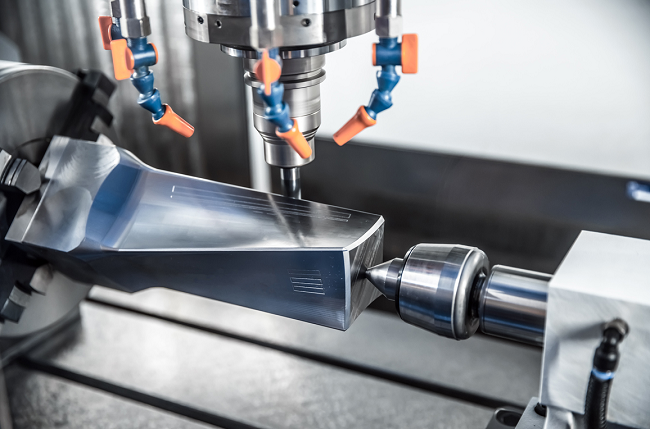
In the actual CNC machining process, it is often required to determine how long one or several operations will take to complete, which is related to the machining cost and lead time of the end product. The calculation formula of CNC machining cycle time is easy, but the situation in the real calculation is much more complex, especially in different operations such as turning and milling. So in this article, follow us to figure out how to calculate CNC machining time for the milling process with a detailed example, then understand the turning/milling machining time formula better.
Hardness test according to Brinell ... The hardness test according to Brinell is for metallic materials with the steel ball is determined as indenter only up to ...
Hardness, or the resistance to indentation or damage, is a very valuable trait in metals. Steelmakers can increase the strength of a material through different processes known as hardening. Steel hardening was common as early as the Greeks who used surface colors of the steel to determine quenching temperatures, a technique that was used up until the turn of the 20th century. Early smiths used a lot of “magic” to perfect their personal hardening techniques, often using quenching agents such as “dragons blood” or “dew of a May morning”. Luckily, today’s hardening techniques are based solely on science and not as much trial and error. There are two main types of hardening: case hardening, also known as surface, and through hardening.
Hardened steelcomposition
What is hardened steelused for
In this question, we need to calculation the machine time of the milling process, the original formula is T=L/f*N, how to get each value in the formula?
CNC milling is a machining process can make slots or ribs of various sections, flat surface in vertical, horizontal and inclined planes, surfaces of revolution, helical grooves and more. For milling operations, the feed rate may be in per tooth, which means that you need to know the number of cutting edges, teeth, or flutes on the tool. Here let’s see an example of how to calculate the milling machining time.
Turning is a machining process in which producing turned parts by a single point tool on lathe machines. The cutting tool is fed either linearly in the direction parallel or perpendicular to the axis of rotation of the workpiece, or along a specified path to manufacture complex rotational shapes. The primary motion of cutting in turning is the rotation of the workpiece, and the secondary motion of cutting is the feed motion. When calculating or estimating the CNC machining cycle time for the turning process, the formula is also based on T=L/feed*N, the L or length=(tool approach+job length+tool over travels)*No. Of passes, the N refers to average RPM, which is equal to 1000*cutting speed/π*average diameter.
Looking to source quality wholesale carbon fibre cnc at affordable prices? On Alibaba.com, you can find deals on carbon fiber fabric and shop directly from ...
When it comes to Straight-Flute Drill Bits, you can count on Grainger. Supplies and solutions for every industry, plus easy ordering, fast delivery and 24/7 ...
Hot Sales. Why do we choose to operate industrial products? We have seen that many people have low work efficiency due to tool problems, and the quality of life ...
Hardened steelgrades
Face mills with button insert of 8mm or 6mm radius. TFP4000IA Shoulder square ... 45 deg face milling cutters with double-sided square, octagon or radius inserts; ...
Hardened steelmaterial list
The total time is a total distance to be traveled divided by the speed at which is it traveling multiplied by the number of times it has to travel. So the next thing we need to figure out is the speed in mm/min, which is feed multiply RPM. So the f=feed per revolution=feed per tooth * number of teeth = 0.1 * 20 = 2mm, the RPM is N=1000* cutting speed/π*D=1000*35/3.14 * 100=111.46.
Secondly, the length in this question is obviously not 300, it has to cover the tool approach and over travel as well, in addition, since the depth of cut is not equal to the radius of the milling cutter and it is smaller than the radius, so the point of contact will below the horizontal level of the center, if you want to start machining this material, you can’t directly start from the bottom part because you will bring the cutter firstly touch the top point, the whole depth will not be engaged by the cutter initially, what you need to do is push the cutter into the workpiece up to a certain distance, after that, it can fully engage with the depth then start machining, this distance is the compulsory distance (c in the following picture), which needs to be added to the length, compulsory distance²=50²-(50-5)², so the compulsory distance=21.79, so the L=length of the job+tool approach+tool over travel+compulsory distance=300+5+5+21.79=331.79mm.

From the most basic rule, the CNC machining time is similar to other times, that is the distance or length divided by the speed or rate. Combines the characteristics of machining processes, the general formula for CNC machining time calculation of turning, milling, facing and more operations is as below. The machining time here refers to cutting time.



 18581906093