Broken Hardened Art gallery - Hilo, HI - broken hardened
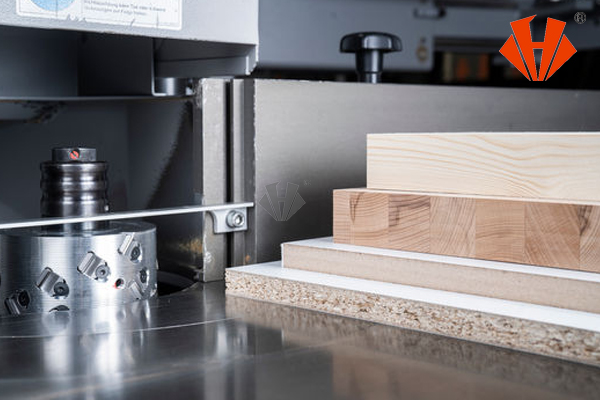
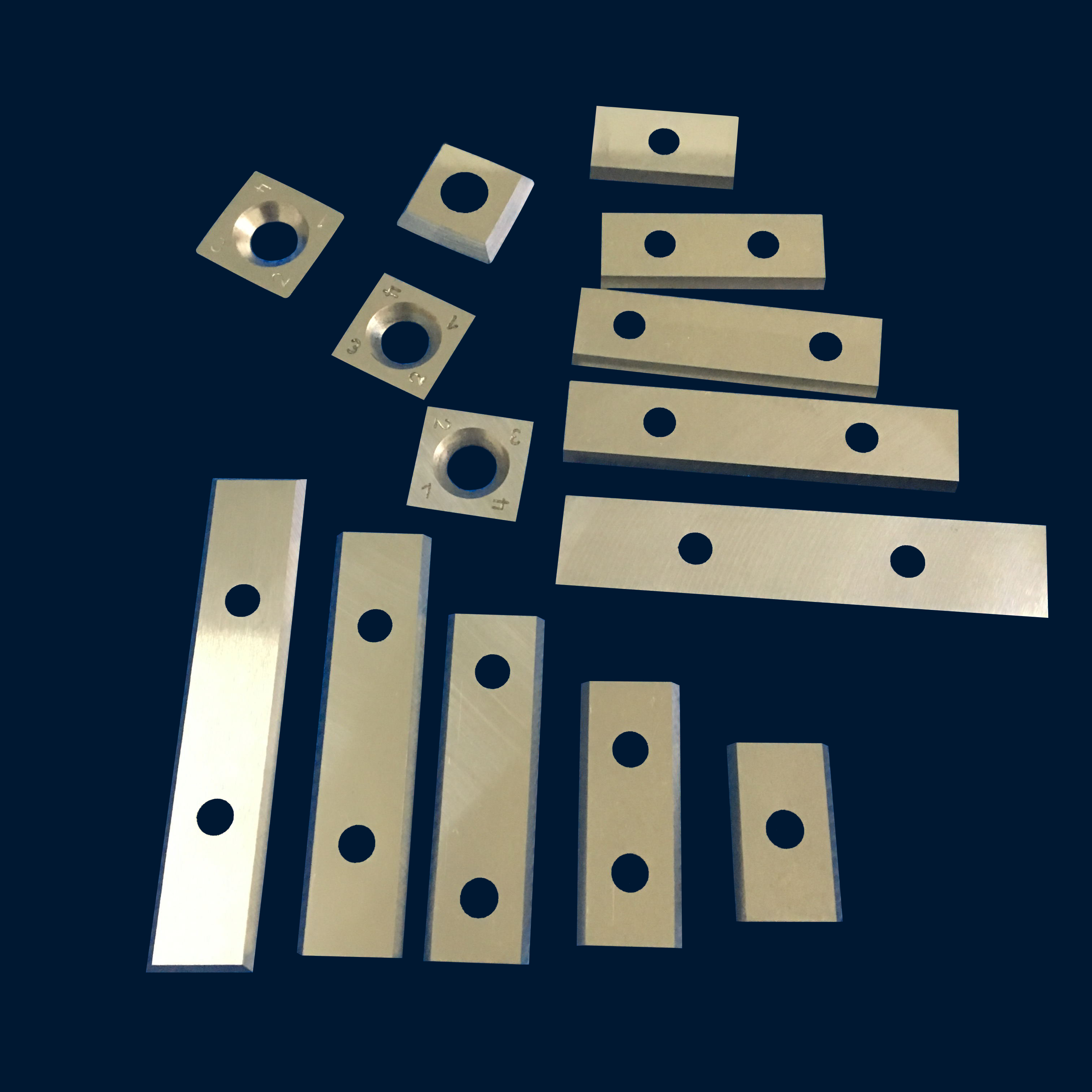
Applications: Carbide Turnover / Reversible Knives are often used in rebating & tenoning . Commonly used on Wadkin, SCM ,Laguna machines etc⦠Used in general joinery applications; knives come with 2 or 4 cutting edges. Our carbide inserts are excellent quality made by our own factory,all knives with strictly quality controls⦠welcome to request a quote!
Joining tungsten to itself or to other metals should be undertaken with caution and an understanding of the limitations involved. Tungsten can be welded to itself. However, the resulting weldment is always recrystallized and hence brittle. Even the use of a W/Re filler rod does not eliminate the brittleness of the metal adjacent to the heat-affected zone. On the other hand, if a leak-tight high temperature joint is required, welding is the only solution.
1. All standard sizes, with 1, 2 or 4 sided high wear resistance sharp cutting edges 2. Various standard grade of carbide in different hardness used for specific materials 3. Fast and easy knife replacement 4. Excellent finishing quality of the workpiece
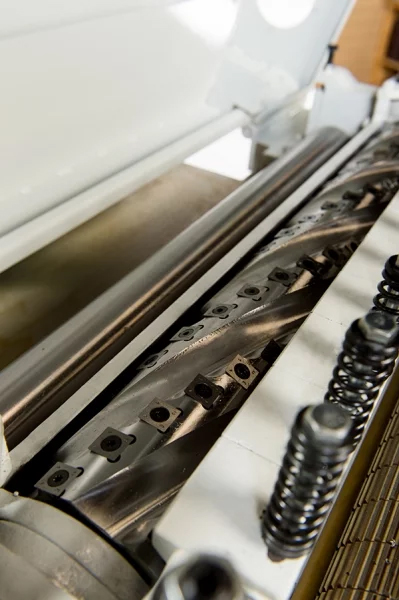
We have available inserts for most all major manufacturers cutters. Including spiral planers, edge banders, and brands like leitze, leuco, gladu, f/s tool, wkw, weinig, wadkins, Laguna and many more.They fit many Planer Heads, Planing Tools, Spiral Cutter head, Planer and Moulder machines.If you need a different grade or dimension for your applications please contact us freely.
For joints that do not have to be leak-tight but require good high temperature mechanical strength, the use of either tungsten or tantalum rivets has proven quite satisfactory. Tantalum rivets, while not as strong as tungsten rivets, are much easier to head.
Advantages: 1. Low noise while wood working 2. Less cutting force 3. 2 or 4 side cutting edges increased the working performance and saving cost 4. Corrosion resistance , Oxidation resistance , Abrasion resistance
The final shaping of tungsten parts is frequently done by grinding. Silicon carbide wheels with a hardness of J to L and a grain size of 100 to 120 have proven useful for most applications. Since tungsten is hard and brittle, surface checking can be a problem unless adequate cooling is used. An oil emulsion type coolant is recommended.
4. Tungsten has directional properties that relate to the rolling direction. Whenever possible, bends should be made perpendicular to the rolling direction of the sheet.
3. Tungsten is a notch sensitive material. The elimination of all stress-risers prior to fabrication is always a good practice.
Electrochemical polishing of tungsten can be performed in aqueous alkaline solutions containing oxidants with the tungsten serving as the anode. The following electrolyte solution is suggested (in 1000 ml of water. The optimum current density is .008 to .08 amps/in2):
The Carbide grade which we used for common turnover knives as below list for choice.Also some special grade not listed out .If you need ,just feel free to contact us for details.
If tungsten parts which are not to be exposed to very high temperatures are to be joined, brazing is preferred to welding. As long as the braze material has a melting point below the recrystallization temperature of tungsten (under 2200 oF), embrittlement can be avoided. Copper or silver alloys containing small proportions of nickel or iron are suitable for these applications.
Tungsten can be fabricated into many simple shapes and configurations. It can be folded, bent, formed, spun, flow-turned, sheared, stamped, punched, and riveted. On the other hand, tungsten is a strong, hard, crack-sensitive metal that is usually brittle at room temperature. It requires special handling and skill beyond that necessary for most metals and alloys.
Tungsten can be machined by turning, milling, or drilling. For thick-walled parts, slight preheating of the work to 400 oF is sometimes helpful, otherwise a highly chlorinated oil such as trichloroethylene is used.
2. Tungsten must not be heated above its recrystallization temperature unless the resulting brittle structure is of no consequence.
The most important rule to remember when working with tungsten is that it must be formed or cut at temperatures well above its transition temperature. Failure to follow this rule will generally result in cracked or laminated parts. Care should be taken to insure that the metal remains at this temperature throughout the entire forming process. The use of cold tooling which rapidly chills the metal can be as harmful as not preheating the material.
Tungsten surfaces may be cleaned by the chemical treatment using aqueous alkaline solutions or molten caustic soda with additions of sodium nitrite.
Tungsten carbide woodworking reversible knives,indexable knives are suitable for different cutting heads and spiral planning cutter, such as: groove cutter, multi-function cutter, planing cutter and spindle moulder and so on, for cutting, grooving and rebating with a long life time.



 18581906093