Browse By Tool Type - harvey cutting tools
Home › Forums › General Questions › End mill rpm This topic has 10 replies, 9 voices, and was last updated 25 January 2024 at 19:46 by old mart. Viewing 11 posts - 1 through 11 (of 11 total) Author Posts 18 January 2024 at 18:18 #708269 Dougie SwanParticipant @dougieswan43463 Hi I have blunted more end Mills than I care to remember I’ve just bought a new 1/2″ dia hss one and wondered if anyone can give me a ballpark figure of the correct spindle rpm for this on En1a steel Thanks Dougie Advert 18 January 2024 at 18:44 #708270 JasonBModerator @jasonb If you took a rule of thumb of 100ft / min cutting speed for steel with HSS that put you at 770rpm. Depends a bit on the cut as to whether you are flattening the top of a part or milling the side, top you may want to go a bit slower and also reduce the feed a bit depending on stepover.. 18 January 2024 at 19:00 #708275 Ramon WilsonParticipant @ramonwilson3 Hi, You may find this simple chart of use Dougie. I wrote it out when I first started training and has done me fine ever since You can simplify the formula to an approximation – Cutting Speed x 4 divided by the diameter of the cutter in inches so your 1/2″ end mill at 100 ft per min would be 800 – just adjust it to suit the conditions/type of steel at the time Tug PS I should have said this is for HSS – carbide could be up to 5 times more if the machine is capable 18 January 2024 at 19:10 #708284 Gary YeadonParticipant @garyyeadon51936 Good Evening Dougie – Do you have a copy of Machinery’s Hand book you can refer to? This shows how to calculate your cutting speed from the formula V=Vopt x Ff x Fd I can send you copies if needed. Regard Gary 18 January 2024 at 19:25 #708295 duncan webster 1Participant @duncanwebster1 Make sure you keep the tooth load up, feeding too slow causes the cutter to rub and go blunt very quickly Tubal Cain Workshop Handbook has useful info 18 January 2024 at 19:54 #708303 JasonBModerator @jasonb If its HSS coated with something like TiAIN then you can run faster, say 150ft/min plus which is 1200rpm Here is a 10mm at nearer 180ft/min, 10mm vertical DOC x 0.5mm horizontal DOC. 18 January 2024 at 20:18 #708311 Martin ConnellyParticipant @martinconnelly55370 If you have a table of rpm for drills then the same rpm can be used for mills of equal diameter as well. As Duncan says above not cutting fast enough will quickly overheat and blunt the edges. You should be getting chips coming off as waste, if it is very fine slivers or dust then you are feeding too slowly. Martin C 25 January 2024 at 10:25 #709931 Nigel McBurney 1Participant @nigelmcburney1 The speed /feeds recomended above ,are correct,but they are based on industrial use,with a good rigid machine and no doubt assume pumped suply of soluble oil, you do not state your machine,a lightweight hobby machine can be a bit light on spindle rigity so try reducing the speed down to 70/80 ft per min with sufficient feed to avoid rubbing,and decent tool lubrication, reducing speed does not harm HSS ,it will increase tool life,the job takes longer ,so what its a hobby not a production line. 25 January 2024 at 14:29 #709955 Tony Pratt 1Participant @tonypratt1 The ‘Little machine shop’ website has a useful speeds/feeds calculator. Tony 25 January 2024 at 15:21 #709963 JasonBModerator @jasonb The only downside with reducing cutting speed on a benchtop hobby machine is you loose some grunt from the motor if it’s an electronic variable speed. I tend to favour upping the spindle speed, keep the same modest chip load which therefore needs an increase in feed rate but reduce DOC if rigidity is a problem. 70ft/min on a 1/2″ cutter could be 20 to 25% motor speed so not where it is going to be putting out it’s full potential 25 January 2024 at 19:46 #710038 old martParticipant @oldmart I am afraid to use HSS endmills on steel and always use solid carbide or shell mills with carbide inserts if appropriate. The HSS are kept for aluminium or the finishing cuts on steel. Not being able to sharpen HSS is the main reason for keeping them for best. Used solid carbides sometimes com up on ebay and I have got some bargains, and reground ones are usually better value for home use especially if they are slightly undersize. Lubricant of some type should always be used with HSS to prolong the life and slower speeds are safer. Solid carbide always gets max rpm when I use it as manual mills cannot get anywhere near the speed ideal for this type of tooling. Author Posts Viewing 11 posts - 1 through 11 (of 11 total) Please log in to reply to this topic. Registering is free and easy using the links on the menu at the top of this page.
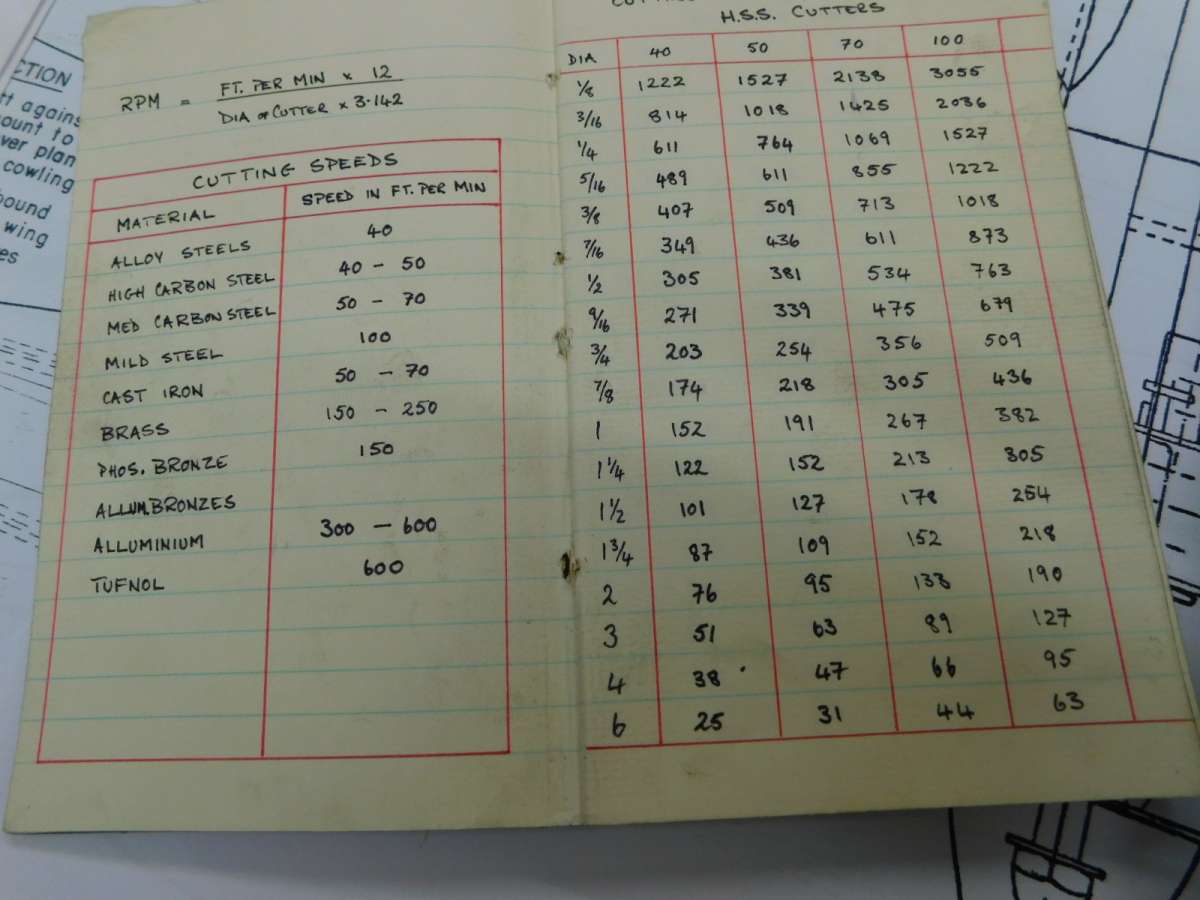
Hi, You may find this simple chart of use Dougie. I wrote it out when I first started training and has done me fine ever since
Titaniummachining near me
You can simplify the formula to an approximation – Cutting Speed x 4 divided by the diameter of the cutter in inches so your 1/2″ end mill at 100 ft per min would be 800 – just adjust it to suit the conditions/type of steel at the time
If you have a table of rpm for drills then the same rpm can be used for mills of equal diameter as well. As Duncan says above not cutting fast enough will quickly overheat and blunt the edges. You should be getting chips coming off as waste, if it is very fine slivers or dust then you are feeding too slowly.
Machiningtitaniumlathe
Search for: Home › Forums › General Questions › Topics Viewing 25 topics - 1 through 25 (of 25 total) Topic Voices Posts Last Post 30 Year old MOTORUN 3 Phase Static converter 1 2 Started by: mr fixit in: Introduce Yourself – New members start here! 11 40 3 November 2024 at 00:45 mr fixit Stuck Tich piston Started by: Mark Salzedo 1 in: Beginners questions 9 20 2 November 2024 at 23:02 Andrew Moyes 1 Special/impossible bolts Started by: jimmy b in: The Tea Room 6 6 2 November 2024 at 22:19 Nicholas Farr Rotary vice advice required. Started by: teucher in: General Questions 9 12 2 November 2024 at 21:05 Chris Mate Stuart Dynamo 1 2 3 4 Started by: Steve Rowbotham in: Beginners questions 13 99 2 November 2024 at 20:48 Michael Gilligan er collet holder for pultra Started by: mark smith 20 in: Workshop Tools and Tooling 7 16 2 November 2024 at 19:46 Michael Gilligan Tap alignment in the mill and lathe? Started by: Bo’sun in: Workshop Tools and Tooling 11 15 2 November 2024 at 19:45 Neil Lickfold Help with Model Engine Identification Started by: hicksid in: Help and Assistance! (Offered or Wanted) 2 2 2 November 2024 at 18:29 noel shelley What did you do Today 2024 1 2 … 17 18 Started by: JasonB in: The Tea Room 65 435 2 November 2024 at 18:06 Brian Baker 2 Screw threads again Started by: Michael Gilligan in: Clocks and Scientific Instruments 10 22 2 November 2024 at 17:31 Michael Gilligan Jones and Shipman 540 tight spindle Started by: Aris V in: Workshop Tools and Tooling 12 20 2 November 2024 at 11:22 Ian P Hall’s Stationary Engine Started by: Steve Rowbotham in: Stationary engines 2 3 2 November 2024 at 10:12 Steve Rowbotham 3 phase plugs for 240volt? 1 2 Started by: chris bond 1 in: Electronics in the Workshop 12 26 2 November 2024 at 09:19 Robert Atkinson 2 SC2 mini lathe pops RCD when turned on? 1 2 3 Started by: andy198712 in: General Questions 10 54 1 November 2024 at 22:01 andy198712 Variable speed motor for Atlas 12 ” lathe ? Started by: Rich2502 in: Manual machine tools 10 15 1 November 2024 at 19:40 Robert Atkinson 2 Model Turbines 1 2 … 22 23 Started by: Turbine Guy in: Stationary engines 28 564 1 November 2024 at 18:37 Turbine Guy The last NiCad standing ? Started by: Michael Gilligan in: Electronics in the Workshop 1 1 1 November 2024 at 14:32 Michael Gilligan Drill Sharpeners Compared. 1 2 3 Started by: peak4 in: Workshop Tools and Tooling 23 52 1 November 2024 at 12:47 bernard towers Cheap and effective lapping compound Started by: Mick Bailey in: Hints And Tips for model engineers 10 16 1 November 2024 at 11:39 Bazyle Tool room humour Started by: Ian Johnson 1 in: The Tea Room 4 4 1 November 2024 at 11:17 Vic Help with bevel gear calculations Started by: Zan in: Help and Assistance! (Offered or Wanted) 4 8 1 November 2024 at 10:23 Les Riley Myford super 7 saddle removal Started by: grahammarch in: Beginners questions 8 13 1 November 2024 at 10:14 JohnF Southbend Change Gears Started by: Paul Lousick in: Workshop Tools and Tooling 12 16 31 October 2024 at 20:31 Paul Lousick Clarkson Single Acting Vertical 12×12 Started by: JasonB in: Stationary engines 3 12 31 October 2024 at 20:20 JasonB Warco wm240v Started by: Nic Bertelsen in: Help and Assistance! (Offered or Wanted) 13 22 31 October 2024 at 17:02 Ian Rolfe Viewing 25 topics - 1 through 25 (of 25 total)
Machiningtitaniumwithout coolant

Why istitaniumhard to machine
There are a number of different cutters, end mills and drilling tools you can use on titanium, but they all face the same issues. These are heat, chatter, and tool wear.
I am afraid to use HSS endmills on steel and always use solid carbide or shell mills with carbide inserts if appropriate. The HSS are kept for aluminium or the finishing cuts on steel. Not being able to sharpen HSS is the main reason for keeping them for best. Used solid carbides sometimes com up on ebay and I have got some bargains, and reground ones are usually better value for home use especially if they are slightly undersize.
The only downside with reducing cutting speed on a benchtop hobby machine is you loose some grunt from the motor if it’s an electronic variable speed. I tend to favour upping the spindle speed, keep the same modest chip load which therefore needs an increase in feed rate but reduce DOC if rigidity is a problem.
Turningtitanium
30 Year old MOTORUN 3 Phase Static converter Stuck Tich piston Special/impossible bolts Rotary vice advice required. Stuart Dynamo er collet holder for pultra Tap alignment in the mill and lathe? Help with Model Engine Identification What did you do Today 2024 Screw threads again
Home / Titanium Resources / Titanium Machining And Cutting / Machinability Of Titanium / Troubleshooting Common Problems Milling Titanium
Alter the axial depth when you are cutting. At the depth of cut, oxidisation and other reactions can actually damage the tooling. By altering the axial depth, the problem is spread so that no one piece needs to absorb all the punishment.

Machiningtitaniumvs aluminum
Good Evening Dougie – Do you have a copy of Machinery’s Hand book you can refer to? This shows how to calculate your cutting speed from the formula V=Vopt x Ff x Fd
Model Engineer and Model Engineers' Workshop are leading magazines for modellers, with reputations for bringing you the best tips, tricks, and inspiration from the model engineering world. From miniature steam locomotives to clocks and tools, get the most out of your hobby with Model Engineer and Model Engineer's Workshop.
Start by arcing in. When arcing into titanium, the blade is not trying to cut using a full 180 degrees of its cutting surface. This ensures you get a smoother transition into the cut. Use a chamfer at the end of the cut. This allows tooling to ease out of the material. Rely on a secondary relief style tooling to help reduce forces.
Lubricant of some type should always be used with HSS to prolong the life and slower speeds are safer. Solid carbide always gets max rpm when I use it as manual mills cannot get anywhere near the speed ideal for this type of tooling.
The speed /feeds recomended above ,are correct,but they are based on industrial use,with a good rigid machine and no doubt assume pumped suply of soluble oil, you do not state your machine,a lightweight hobby machine can be a bit light on spindle rigity so try reducing the speed down to 70/80 ft per min with sufficient feed to avoid rubbing,and decent tool lubrication, reducing speed does not harm HSS ,it will increase tool life,the job takes longer ,so what its a hobby not a production line.
Machiningtitaniumvs stainless steel
I’ve just bought a new 1/2″ dia hss one and wondered if anyone can give me a ballpark figure of the correct spindle rpm for this on En1a steel
Tool chatter can ruin an end mill in seconds. The vibration can shatter a tool, dull the cutting edges and damage the titanium being machined (milled). The violent vibration could also damage fixtures or spindles, which costs time and money to replace.
Titanium millingmachine
Depends a bit on the cut as to whether you are flattening the top of a part or milling the side, top you may want to go a bit slower and also reduce the feed a bit depending on stepover..
KYOCERA SGS Precision Tools Europe Ltd. 10 Ashville Way, Wokingham, Berkshire, RG41 2PL United Kingdom
Tooling used incorrectly can wear faster and cause work hardening. This is often caused by working the same part of the tool for long periods or in the same way. It can also be caused by improper speed and feed settings.
Check the speeds and feeds are correct for the tooling. Incorrect cutting speed can generate too much friction and an improper feed rate can overload the cutters. Keep the radial engagement low. With less of the tool’s surface cutting it has more time to cool. Use a tool with a higher number of flutes. The more flutes on the end mill, or cutting surfaces in general, the better the heat is dispersed. Ensure that the thick to thin chip method is being used. The thick chips at the start of a cut will carry away more heat and the thin chips at the end of a cut will be less likely to weld to the cutter. When milling small pockets, use tooling much smaller than the pocket itself. This means the tool is using less of its cutter area at any one time and can cool properly.
Heat is possibly the hardest factor to deal with when milling. Titanium has a very low thermal conductivity. This means, unlike working with steel or other metals, the block of titanium and the chips do not absorb much heat. Most of the heat generated by friction builds up in the tooling. When the tool gets hot, the edge softens and the tool becomes useless. This is called plastic deformation wear. When the tool dulls, it increases the cutting forces, which, if left unchecked, destroys the tool.



 18581906093